Beginner Coral Guide
Starting with corals feels exciting and scary. You can succeed with a simple plan.
This guide focuses on hardy beginner corals. It also covers basic care and smart choices.
Before buying anything, understand your tank. Stable water is more important than fancy gear.
Check Your Tank Is Ready
Corals hate sudden changes. They need stable, mature systems.
- Wait at least two to three months after cycling finishes.
- Keep salinity between 1.024 and 1.026 specific gravity.
- Hold temperature steady around 77–79°F (25–26°C).
- Keep ammonia and nitrite at zero at all times.
- Keep nitrate under 20 ppm for most soft corals.
Test weekly at first. Record results in a simple log or app.
For more tank basics, see our Saltwater Aquarium Setup Guide.
Best Beginner Coral Types
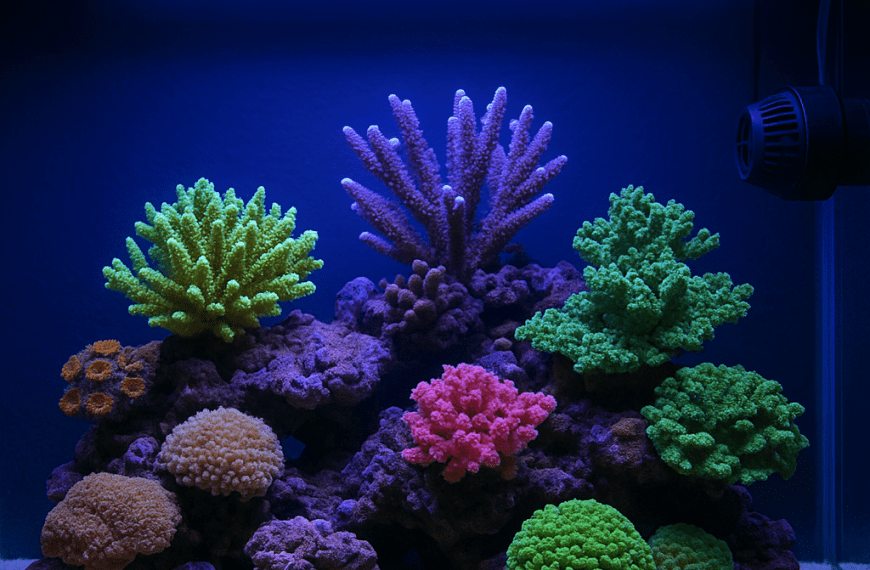
Start with soft corals and some large polyp stony corals. They forgive small mistakes.
Soft Corals for New Hobbyists
- Zoanthids and palythoas: Colorful, hardy, and fast growing.
- Green star polyps: Great movement. Can spread quickly on rock.
- Kenya tree coral: Very tough. Tolerates slightly dirtier water.
- Leather corals: Toadstool and finger leathers handle beginner conditions.
Place fast growers on their own rocks. This prevents them from taking over.
Tip: Isolate green star polyps on a single rock. Keep that rock off the main reef.
Easy LPS Corals
- Duncan corals: Gentle sweepers. Accept meaty foods.
- Hammer, frogspawn, torch: Euphyllia corals with flowing tentacles.
- Trumpet or candy cane corals: Compact heads. Good for small tanks.
Give LPS corals space. Their sweeper tentacles can sting neighbors at night.
For stocking ideas, visit our Beginner Reef Stock List.
Light, Flow, and Feeding
Lighting Basics
Most beginner corals do well under moderate LED lighting.
- Use a reef-capable LED, not a basic freshwater light.
- Aim for 8–10 hours of light each day.
- Acclimate new corals by starting with lower intensity.
If corals stretch upward, they may want more light. If they shrink, reduce intensity.
Water Flow
Corals need flow to bring food and remove waste.
- Aim for gentle, random flow for soft corals.
- Keep strong, indirect flow for Euphyllia and other LPS.
- Avoid blasting any coral directly with a powerhead.
Feeding Corals
Many beginner corals use light and nutrients from water. Some enjoy extra feeding.
- Target feed LPS with small meaty foods once or twice weekly.
- Do not overfeed. Extra food raises nitrate and phosphate.
- Turn off pumps briefly while feeding, then restart.
For nutrient control tips, see our Reef Tank Maintenance Schedule.
Buying and Placing New Corals
Choose healthy frags. Avoid damaged or melting tissue.
- Look for good polyp extension and normal color.
- Quarantine if possible to avoid pests.
- Dip new corals using a reef-safe coral dip.
Place new corals low and in shade at first. Then move them slowly to brighter spots.
Make one change at a time. Watch the coral for several days before adjusting again.
With patience and small steps, your first corals can thrive for years.
 By
By