Building a reef cleanup crew is one of the easiest ways to keep your saltwater aquarium cleaner, healthier, and more enjoyable to maintain. A well-chosen mix of snails, hermit crabs, and other invertebrates helps control algae, leftover food, and detritus so you spend less time scraping glass and more time enjoying your reef.
What Is a Cleanup Crew and Why Do You Need One?
A cleanup crew (often called a CUC) is a group of invertebrates that naturally graze on algae, film, and waste in your tank. They don’t replace water changes or good filtration, but they do support stability and reduce daily maintenance.
For a new hobbyist, a cleanup crew helps with:
- Algae control: Many snails and crabs graze on film algae, diatoms, and nuisance growth on rock and glass.
- Detritus removal: Scavengers eat leftover food before it decays and harms water quality.
- Sand bed health: Burrowing species keep the sand turned over and oxygenated.
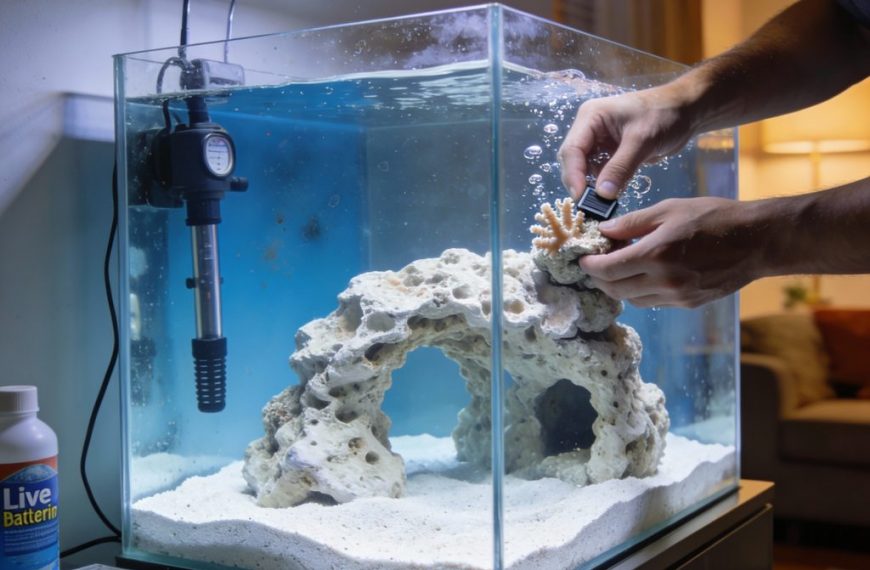
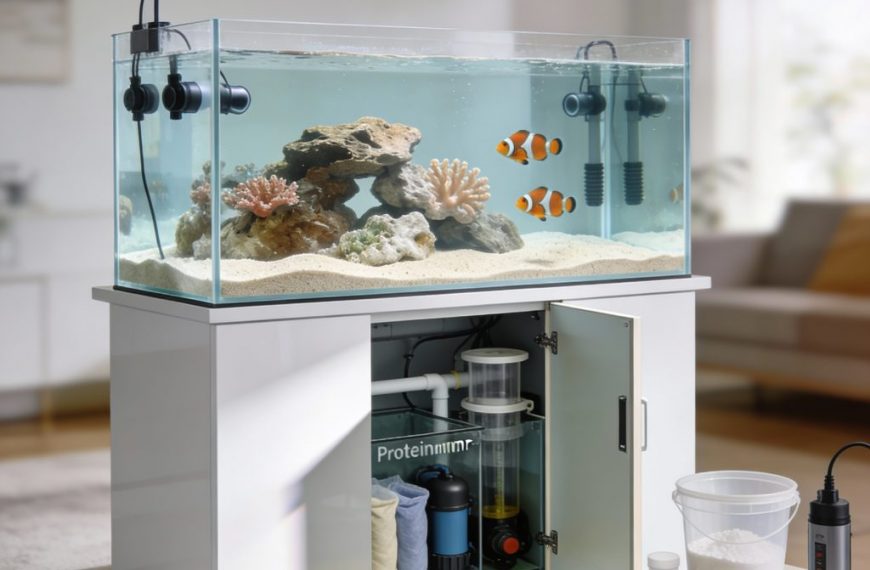
If you are still planning your first saltwater system, be sure to read our guide on Beginner Reef Tank Setup, so your cleanup crew goes into a stable, cycled aquarium.
Best Beginner Cleanup Crew Members
Start with hardy, peaceful species that are widely available and proven in home aquariums. You don’t need to add everything at once—build your crew slowly as the tank matures and algae appear.
Essential Snails
- Trochus snails: Excellent for glass and rockwork, active day and night, and they can flip themselves over if they fall.
- Nassarius snails: Live in the sand and come out when they smell food, helping clean up meaty leftovers and keeping the substrate stirred.
- Cerith snails: Small but versatile; they graze on film algae and help with light sand turnover.
A simple starting ratio is 1–2 snails per gallon, added gradually over several weeks.
Hermit Crabs and Other Scavengers
- Blue-leg or dwarf red-leg hermits: Active, entertaining, and good at picking algae and detritus from tight spaces. Provide spare shells to reduce shell-related aggression.
- Cleaner shrimp (Lysmata species): Great for leftover food and fun to watch, often interacting with fish during “cleaning” sessions.
- Emerald crab: Useful if you struggle with bubble algae; keep only one in smaller tanks and monitor behavior.
For a typical 20–40 gallon beginner reef, many hobbyists start with 5–10 hermits and 1–2 shrimp, then adjust based on algae and leftover food.
How and When to Add Your Cleanup Crew
Timing matters. Your tank should be fully cycled and showing some algae before you introduce a cleanup crew. Adding them too early can starve them.
Tip: Wait until you see a light coating of brown diatoms or green film algae on the glass and rocks before adding most grazers.
When you are ready to add them:
- Acclimate slowly: Use drip acclimation for 30–60 minutes to match temperature and salinity.
- Avoid overstocking: Too many cleaners lead to starvation and die-off. Add a few, observe for a week or two, then add more if needed.
- Feed lightly: A cleanup crew is not an excuse to overfeed. If you see lots of leftover food on the sand, reduce feeding.
As your reef grows, you may want to tailor your crew to specific challenges like hair algae or cyano. Our article on Controlling Reef Algae explores broader strategies beyond invertebrates.
Final Thoughts: Keep It Simple and Observe
A beginner reef cleanup crew doesn’t need to be complicated. Focus on hardy snails, a few small hermits, and perhaps a cleaner shrimp or emerald crab if needed. Add slowly, watch how they behave, and let your tank’s algae and waste levels guide future additions. Combined with good husbandry and the right reef tank maintenance schedule, your cleanup crew will be a quiet but essential partner in keeping your aquarium thriving.
Sources
- Sprung, J. & Delbeek, J. C. The Reef Aquarium, Vol. 1–3. Ricordea Publishing.
- Michael, S. (2008). Reef Invertebrates. TFH Publications.
- Fenner, R. (2001). The Conscientious Marine Aquarist. Microcosm Ltd.
 By
By