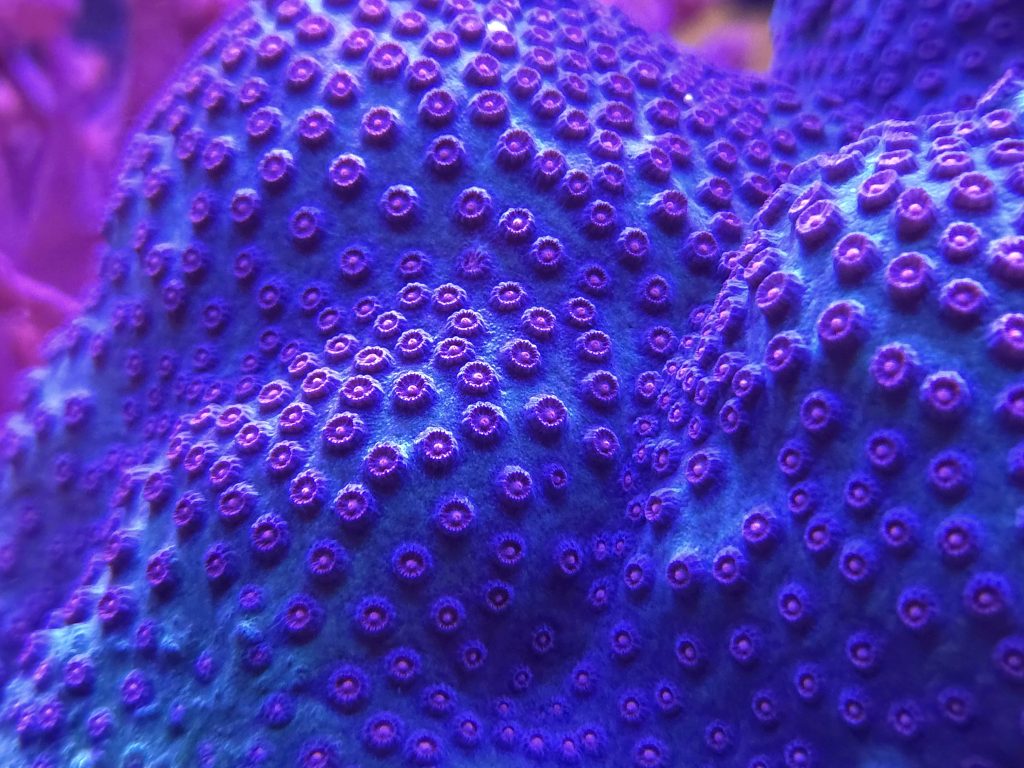

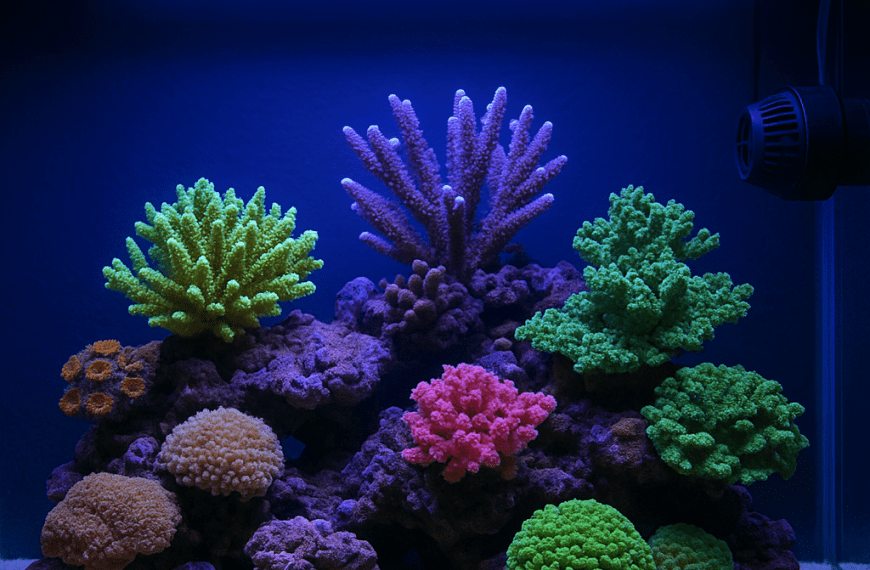
Among SPS enthusiasts, the Blue Acropora Staghorn is one of the most striking corals you can add to a reef tank. Its branching structure and vivid blue coloration make it a true centerpiece, but it also demands stable conditions and attentive care. If you’re ready to step up your SPS game, this coral can reward you with fast growth and incredible color.
Blue Acropora Staghorn Care Requirements
Before bringing home a Blue Acropora Staghorn, make sure your system is already mature and stable. If you’re still in the soft coral or LPS stage, you may want to review our guide to beginner SPS coral care first.
Lighting & Placement
Blue Acropora Staghorn typically prefers medium to high PAR (250–400 PAR) with a strong blue spectrum for best coloration.
- Place higher in the rockwork, away from shadowed areas.
- Acclimate to light slowly using your LED ramping features or light diffusion.
- Aim for moderate spacing from neighboring SPS to prevent shading as it grows.
Flow & Tank Stability
This coral thrives in strong, random flow that keeps its branches clean and well-oxygenated.
- Use alternating or pulsing modes on wavemakers to avoid direct, laminar blasts.
- Ensure detritus does not settle on the base or between branches.
Just as important is overall stability. For long-term success, maintain:
- Alkalinity: 8.0–9.0 dKH (avoid daily swings)
- Calcium: 420–450 ppm
- Magnesium: 1300–1400 ppm
- Temperature: 77–79°F (25–26°C)
- Nitrate: 5–15 ppm; Phosphate: 0.03–0.08 ppm
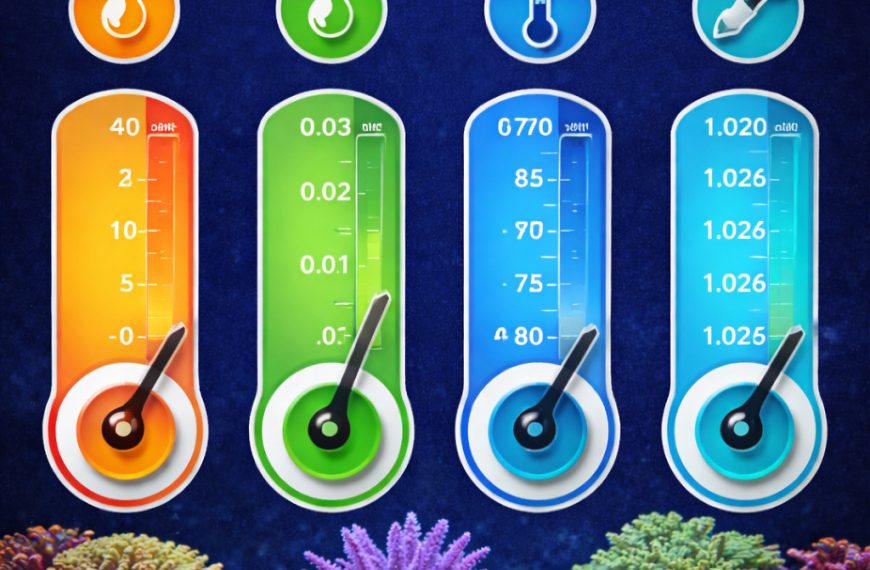
Tip: If you’re dialing in parameters for SPS, our reef tank parameter chart is a helpful quick reference.
Feeding, Growth, and Coloration
Feeding & Nutrients
Blue Acropora Staghorn relies heavily on its zooxanthellae, but it also benefits from targeted nutrition:
- Dose high-quality amino acids 1–3 times per week.
- Feed fine particulate foods (e.g., rotifer-sized) during low-flow periods.
- Maintain low but not zero nutrients; ultra-sterile systems can wash out color.
Maximizing Blue Color
Deep, saturated blue tones are strongly influenced by lighting and water quality.
- Emphasize blue and royal blue channels (around 420–470 nm).
- Keep glass and lenses clean to avoid PAR loss and spectrum shift.
- Run fresh activated carbon in moderation to maintain water clarity without stripping nutrients.
For more detail on dialing in SPS coloration, see our article on how to improve SPS coral color.
Troubleshooting Common Issues
Even experienced reefers run into challenges with Blue Acropora Staghorn. Watch for these warning signs:
- Tissue recession from the base: Often linked to unstable alkalinity or pests.
- Faded or brown color: Usually due to low light, elevated nutrients, or both.
- Burnt tips: Sudden alkalinity spikes or rapid lighting increases.
When problems appear, test parameters first, then adjust slowly. Large, sudden corrections often do more harm than good. Stability over perfection is the key mindset with this coral.
With the right light, flow, and consistent water chemistry, a Blue Acropora Staghorn can quickly become the architectural highlight of your reef, providing height, movement, and a vivid blue contrast that few other corals can match.
Sources
- Borneman, E. H. (2001). Aquarium Corals: Selection, Husbandry, and Natural History. TFH Publications.
- Delbeek, J. C., & Sprung, J. (1994–2005). The Reef Aquarium Vols. 1–3. Ricordea Publishing.
- Riddle, D. (2018). Lighting & PAR discussions in advanced reef-keeping literature and hobby publications.
 By
By