Adding a new reef fish is exciting. It is also a common point of failure. A calm, planned process prevents disease and stress.
Prep work before the fish arrives
Start with stability. Keep salinity at 1.025–1.026 specific gravity. Hold temperature at 77–79°F. Aim for pH 8.1–8.4 and alkalinity 8–9 dKH.
Confirm nutrients are reasonable for your reef. Keep ammonia and nitrite at 0 ppm. Keep nitrate at 2–15 ppm for mixed reefs. Keep phosphate at 0.03–0.10 ppm.
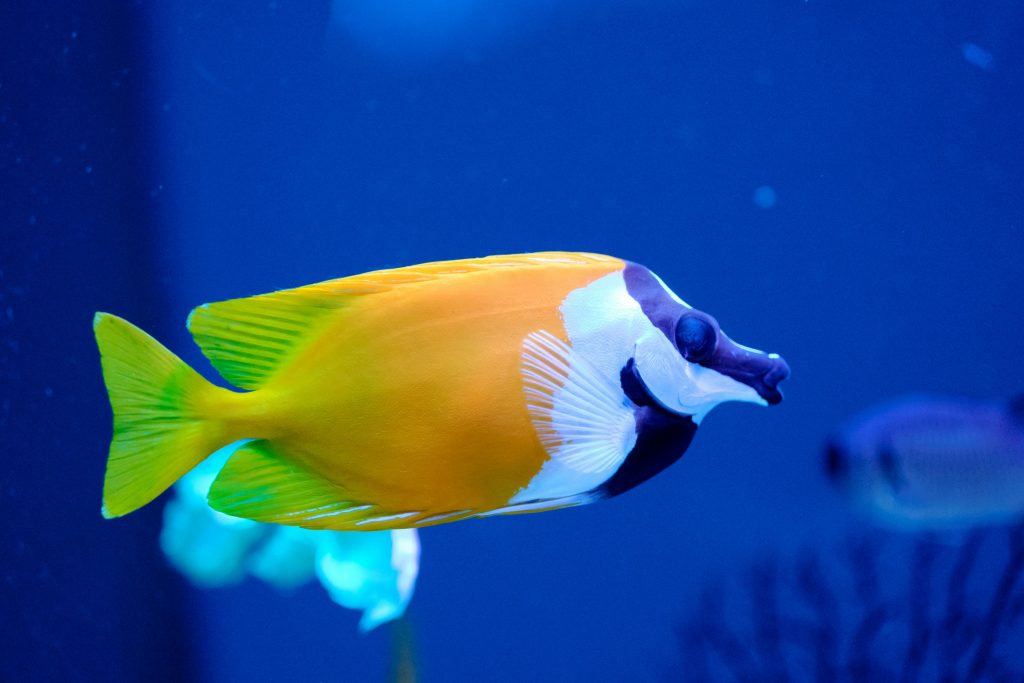
Plan for the fish’s adult size and behavior. A 3-inch wrasse may become 5 inches. A tang needs long swimming lanes. Rearrange a few rocks if territories are tight.
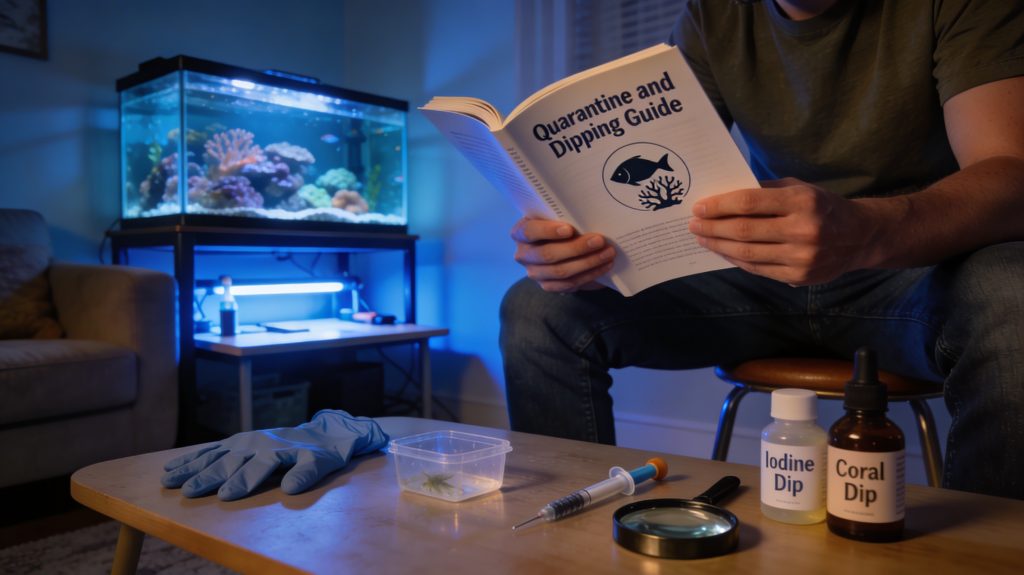
Set up a quarantine tank if you can. A 10–20 gallon tank fits most small fish. Use a heater, sponge filter, and PVC elbows. Seed the sponge in your sump for two weeks.
- Mix 5–10 gallons of new saltwater for emergencies.
- Have an ammonia badge and liquid test ready.
- Pre-cut nori and thaw frozen foods before arrival.
For more on stable systems, review reef tank water parameters. If you plan quarantine, see quarantine tank setup.
Acclimation day: reduce stress and avoid shock
Dim the lights before you open the bag. Turn off bright room lights too. This lowers cortisol and reduces frantic swimming.
Match temperature first. Float the sealed bag for 15–20 minutes. Then open the bag and test salinity. Many stores run 1.018–1.022 to reduce parasites.
Use drip acclimation when salinity differs by more than 0.002. Aim for a 30–45 minute drip. Use 2–4 drops per second. Double the bag volume once, then net the fish.
Do not pour bag water into your tank. It can carry ammonia and pathogens. Net the fish into a specimen container. Then release it near rockwork or a cave.
- Keep pumps running, but reduce flow near the release point.
- Skip feeding for 6–12 hours after introduction.
- Cover the tank if you add jump-prone fish.
If you have aggressive residents, use an acclimation box. Leave the new fish inside for 24–72 hours. This lets others see it without contact. Learn more in managing reef fish aggression.
First two weeks: feeding, observation, and troubleshooting
Feed small amounts twice daily for the first week. Offer a mix of frozen mysis, enriched brine, and pellets. Add nori for herbivores. Remove uneaten food after five minutes.
Watch breathing and posture. Rapid gilling can signal low oxygen or parasites. Add surface agitation and point a powerhead up. Keep dissolved oxygen high at night.
Check for flashing, spots, and frayed fins. Ich often appears after stress. Velvet can kill within 24–48 hours. If symptoms appear, move the fish to quarantine fast.
Test ammonia daily if you quarantine. Keep ammonia at 0 ppm. Use water changes if it rises above 0.25 ppm. Dose a detoxifier only as a short-term bridge.
- Offer a “safe food” first, like mysis or clam.
- Soak food in vitamins twice weekly for four weeks.
- Log behavior changes in a simple notes app.
Common mistake: adding multiple fish at once. This spikes stress and aggression. Add one fish every 2–4 weeks in smaller systems. In a 75-gallon reef, two small fish can work if peaceful.
Another mistake is chasing perfect numbers. Fish need stability more than tiny tweaks. Adjust salinity no more than 0.001 per day. Adjust temperature no more than 1°F per day.
Example scenario: a new clownfish hides and refuses food. Keep lights low for two days. Offer tiny pellets and frozen mysis. Place food near its cave. Most begin eating by day three.
Sources: Humblefish Disease Guides (general husbandry references); Fenner, “The Conscientious Marine Aquarist”; Paletta, “The New Marine Aquarium”.

 By
By