Ich can show up fast in reef tanks. It often follows stress, new fish, or swings in water quality. The hard part is that many “reef safe” cures do not work.
Spotting ich early and confirming the cause
Marine ich is usually Cryptocaryon irritans. It looks like small white grains on fins and body. Fish may scratch on rocks and pumps. Breathing can speed up during heavy outbreaks.
Do not assume every white dot is ich. Sand can stick after digging or sleeping. Lymphocystis looks like cauliflower bumps. Velvet looks like fine dust and causes rapid decline. If fish gasp at the surface, suspect velvet first.
Watch the pattern over 3 to 7 days. Ich spots often appear, then vanish, then return. That cycle matches the parasite’s life stages. A “clean” fish can still carry ich in the gills.
Check stress triggers at the same time. Aim for 1.025 specific gravity and 77–79°F. Keep pH 8.1–8.4 and alkalinity 8–9 dKH. Keep ammonia and nitrite at 0 ppm at all times.
- Inspect fish under blue and white light for better contrast.
- Log symptoms, feeding, and breathing rate each day.
- Test salinity with a calibrated refractometer, not a swing arm.
For baseline husbandry, review your reef tank water parameters. Stable numbers reduce outbreaks. Stress control is not a cure, but it matters.
Reef-safe reality: what works in a display and what does not
There is no proven reef-safe medication that eradicates ich in a display tank. Copper and chloroquine work, but they are not reef safe. Many bottled “reef safe” remedies only reduce symptoms. Some can irritate corals or crash oxygen levels.
In a reef display, your best moves are supportive care and containment. Feed more often and improve nutrition. Add extra aeration and surface agitation. Clean the skimmer cup often and keep the skimmer running.
Use UV as a tool, not a cure. A properly sized UV can reduce free swimmers. Target a slower flow for parasites. Many hobbyists aim for 180,000–300,000 µW·s/cm². Follow your unit’s chart for that dose.
Avoid common mistakes during an outbreak. Do not drop salinity in a reef tank. Hyposalinity harms invertebrates and can destabilize alkalinity. Do not raise temperature above 80°F to “speed the cycle.” That can worsen oxygen stress.
- Feed 2–3 small meals daily during outbreaks.
- Soak foods in vitamins and HUFA for 10 minutes.
- Run carbon if you try any additive, and watch coral response.
If you need a clean plan for new arrivals, see our saltwater fish quarantine setup. Quarantine prevents most ich disasters. It also protects your inverts from copper exposure.
The proven path: remove fish, treat, and run fallow
If you want eradication, remove all fish from the display. Treat them in a hospital tank. Then run the display tank fallow, meaning fishless. This breaks the parasite’s life cycle.
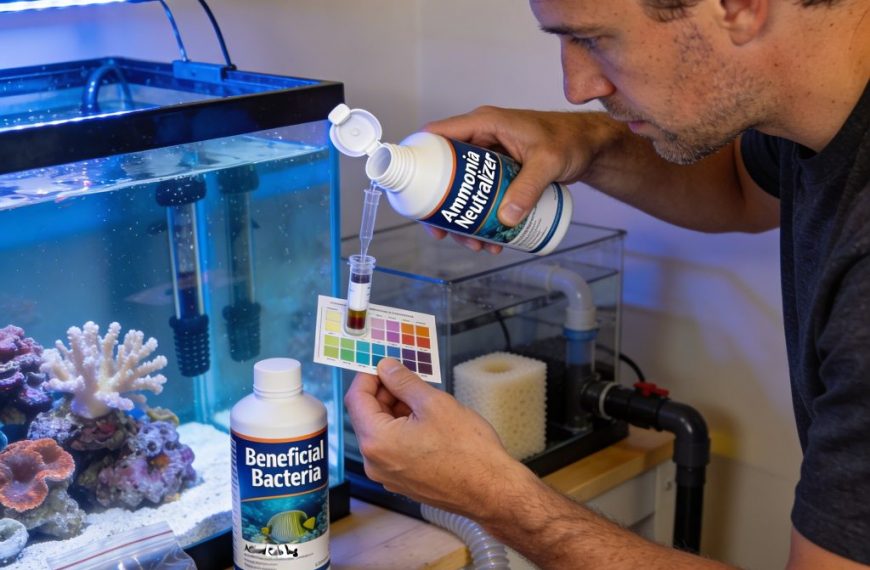
Set up a bare hospital tank of 10–40 gallons. Use a heater, sponge filter, and PVC elbows. Match salinity and temperature to the display. Use an ammonia alert badge and test daily.
Copper is the most common treatment. Use a chelated copper made for marine fish. Keep it at the label range, often 2.0–2.5 ppm for Copper Power. Verify with a matching test kit. Hold therapeutic copper for 14–30 days, based on the product and protocol.
Leave the display fallow for 76 days for high confidence. Some hobbyists use 45–60 days, but risk is higher. Keep feeding the tank lightly to maintain bacteria. Keep up with water changes and normal reef parameters.
- Use separate nets and tools for hospital and display tanks.
- Do small water changes if ammonia rises above 0.25 ppm.
- Observe fish for 2 weeks after treatment before reintroduction.
Plan your re-entry to avoid a repeat. Add fish slowly over weeks. Keep aggression low with proper territory and hiding spots. Use a reef tank acclimation guide to reduce stress on day one.
Conclusion: Ich management starts with fast identification and stable conditions. Real eradication requires treating fish outside the reef and running the display fallow. With a repeatable quarantine routine, ich becomes a rare event instead of a constant threat.
Sources: Colorni, A. (1987) Biology of Cryptocaryon irritans; Noga, E.J. (2010) Fish Disease: Diagnosis and Treatment; HumbleFish community disease protocols (general methodology).
 By
By