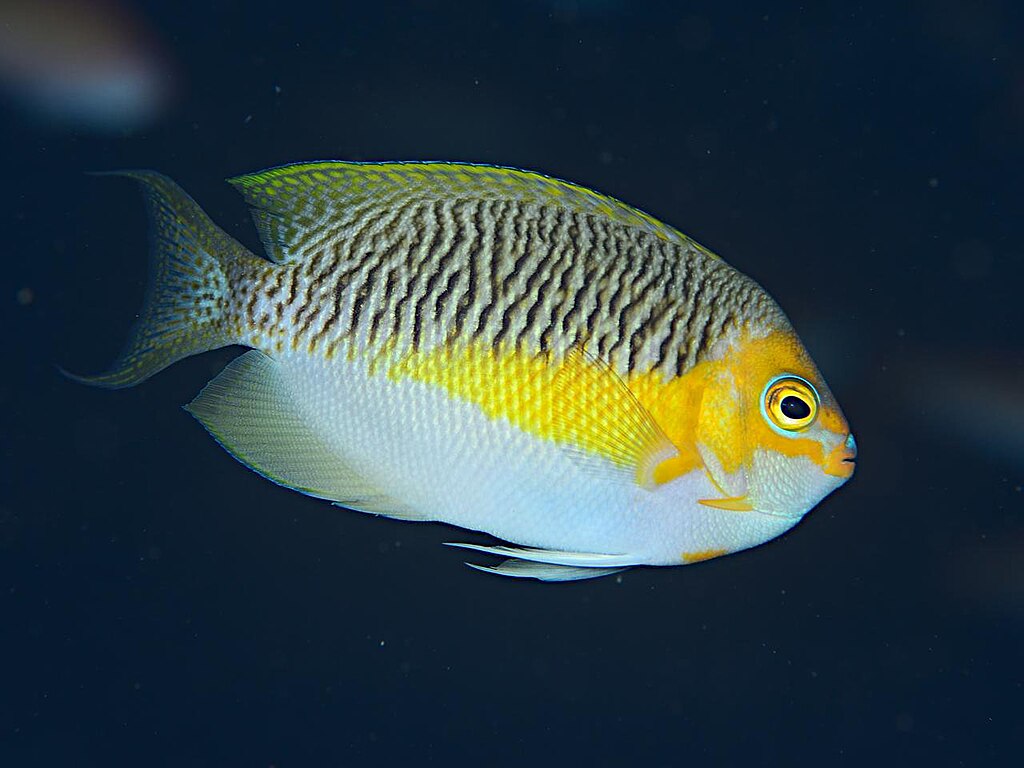
The masked swallowtail angelfish male is a calm, open-water grazer. It suits many reef tanks when you plan space, diet, and quarantine. This guide covers setup, care, and common pitfalls.
Identification, behavior, and tank size
Genicanthus semifasciatus is a planktivorous angelfish from deeper reefs. Males show stronger contrast and a bold “masked” face pattern. They swim in the water column more than most angels. They also pick less at corals than many dwarf angels.
Plan for an adult length near 7 inches in good conditions. Use a minimum 90-gallon tank for one male. A 120-gallon tank is better for long-term stability. Provide long lanes for cruising and moderate rockwork for shelter.
They are usually peaceful with tangs, wrasses, and anthias. Avoid housing with aggressive large angels in smaller tanks. Keep them with calm tankmates that do not outcompete at feeding time. Use a tight lid since they can jump when startled.
- Minimum tank: 90 gallons for one male, 120+ preferred
- Temperature: 76–79°F
- Salinity: 1.025–1.026 specific gravity
- Provide a covered top and strong surface agitation
If you want more background on angel compatibility, see reef-safe angelfish guide. For general stocking pacing, review how to stock a reef tank.
Feeding strategy and daily care
This species does best with frequent small meals. Feed 2 to 4 times daily in smaller portions. Aim for foods that stay suspended and drift. That matches their natural feeding style.
Use a mix of frozen mysis, brine enriched with HUFA, and finely chopped seafood. Add high-quality pellets sized 1–2 mm once they accept prepared foods. Include spirulina-based flakes to widen nutrition. Soak food in vitamins 2 to 3 times per week.
Watch body shape to judge success. A healthy male has a full belly and no pinched head. If it hides and refuses food, reduce flow near the feeding zone. Also dim lights for the first few days after introduction.
- Morning: frozen mysis or calanus, broadcast into flow
- Midday: small pellet feeding, 1–2 minutes of consumption
- Evening: mixed frozen blend plus vitamin soak
Keep nutrients controlled since feeding is heavy. Target nitrate 2–15 ppm and phosphate 0.03–0.10 ppm. Use a skimmer sized for your system and clean the cup weekly. If you need a refresher, read reef tank nutrient targets.
Quarantine, acclimation, and troubleshooting
Quarantine is worth the effort with this fish. Many arrive with flukes or early ich. Use a 20–40 gallon bare-bottom tank with PVC shelters. Match salinity and temperature to the store water on day one.
Run a 2 to 4 week quarantine when possible. Observe breathing rate and flashing behavior. For flukes, praziquantel is commonly used in two rounds, 5 to 7 days apart. For ich management, follow a proven method that fits your system.
Acclimate slowly to avoid osmotic stress. Use a drip acclimation for 30 to 45 minutes. Keep lights off for several hours after release. Offer food within the first day to build routine.
Common mistakes include underfeeding and placing them with fast eaters. Another issue is weak oxygenation in warm tanks. Add a powerhead aimed at the surface if breathing looks heavy. If color fades, check for bullying and low calorie intake.
- Rapid breathing: increase aeration, verify ammonia is 0 ppm
- Not eating: try live blackworms or clam-on-half-shell
- Hiding: reduce aggression, add more visual breaks in rock
With stable parameters and a steady feeding schedule, males settle fast. They reward patience with constant movement and bold patterning. Build a plan before purchase and you will avoid most losses.
Sources: Scott W. Michael, “Marine Fishes”; Fenner, “The Conscientious Marine Aquarist”; Delbeek & Sprung, “The Reef Aquarium” (volumes).
 By
By