Starting a reef aquarium is one of the most rewarding projects in the marine hobby. With the right plan, you can build a stable, colorful micro-reef at home that grows and thrives for years. This guide walks you through the key decisions and steps for a successful reef aquarium setup, from equipment choices to your first livestock.
Planning Your Reef Aquarium Setup
Before buying gear, define your goals. Do you want a soft coral garden, a mixed reef, or a high-demand SPS system? Your answer will guide tank size, lighting, and filtration.
Choosing the Right Tank and Location
- Tank size: For beginners, 40–75 gallons offers a forgiving water volume without being overwhelming.
- Location: Place the tank on a level stand, away from direct sunlight, vents, and high-traffic areas.
- Access: Make sure you can easily reach the back and top of the tank for maintenance.
For more on selecting your first marine tank, see our guide on beginner saltwater tank setups.
Core Equipment Checklist
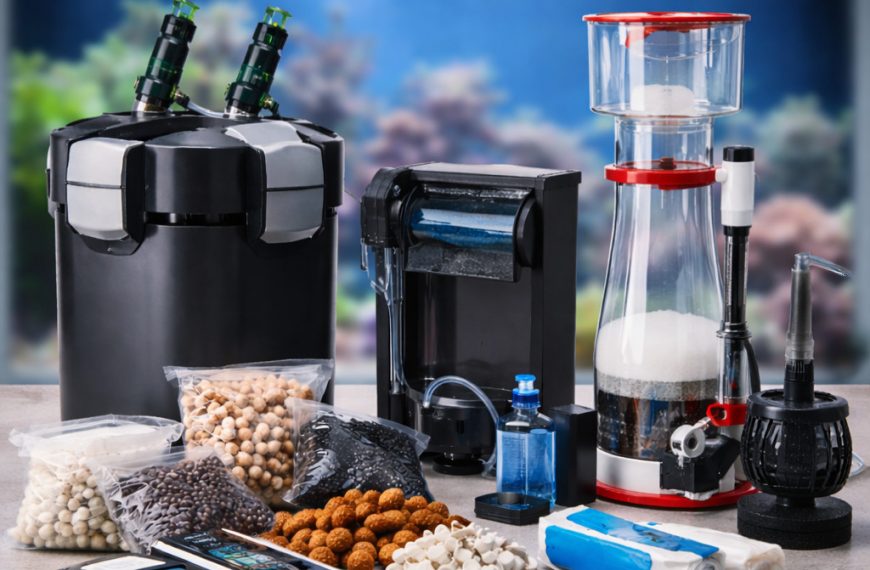
- Filtration: A sump with a quality protein skimmer is ideal. Include filter socks or cups and some biological media.
- Lighting: Reef-capable LEDs with adjustable intensity and spectrum make dialing in coral-friendly light much easier.
- Flow: Use 2+ wavemakers to create random, turbulent flow. Aim for 20–40x tank turnover per hour.
- Heater & controller: A reliable heater paired with an external controller or temperature alarm boosts safety.
- RO/DI unit: Purified water is essential for long-term stability and algae control.
Building the Reef: Rock, Sand, and Cycling
Rock and Aquascape
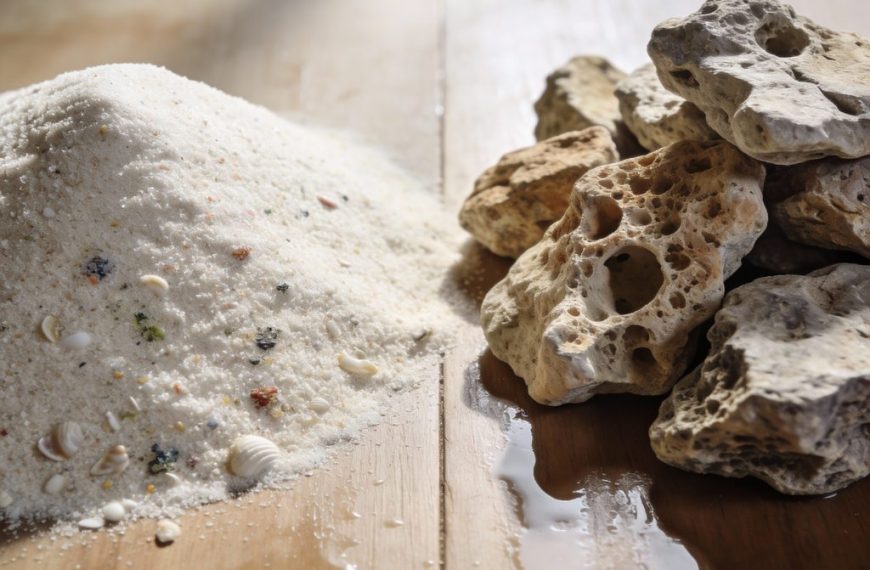
Your rockwork is both biological filter and visual centerpiece. Use porous dry rock or a mix of dry and high-quality live rock. Focus on:
- Open arches and caves for fish shelter and water circulation.
- Stable structures secured with epoxy or reef-safe cement.
- Plenty of flat platforms at different heights for future coral placement.
Sand Bed and Saltwater
- Sand depth: 1–2 inches of aragonite sand is easy to maintain and looks natural.
- Mixing saltwater: Use RO/DI water and a reputable reef salt; mix 24 hours with a powerhead and heater.
- Target parameters: Salinity 1.025–1.026, temperature 77–79°F, pH 8.0–8.3.
Cycling the Reef Tank
Once your rock, sand, and saltwater are in place, it’s time to cycle. Add a bottled bacteria product and a small ammonia source, then test regularly for ammonia, nitrite, and nitrate.
Tip: Patience is your best equipment. Allow 4–6 weeks for a solid cycle before adding your first fish.
Our saltwater tank cycling guide explains test schedules and how to know when your system is ready.
Stocking and Long-Term Stability
Adding Fish and Corals Slowly
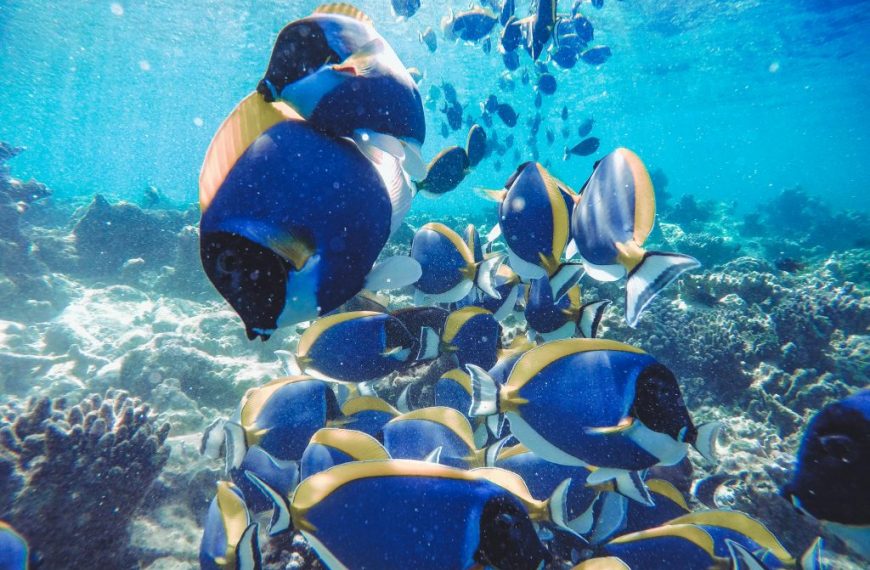
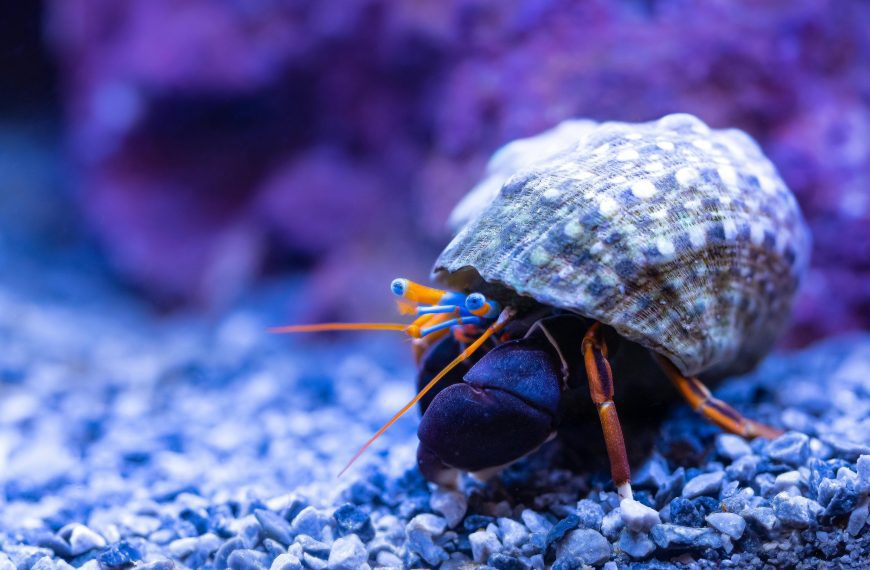
- Start with hardy, peaceful fish and a small clean-up crew (snails, hermits, maybe a shrimp).
- Introduce corals gradually, beginning with soft corals and hardy LPS before moving to more demanding species.
- Quarantine new arrivals whenever possible to avoid pests and disease.
Maintenance Habits That Keep Reefs Thriving
- Perform 10–15% weekly water changes, or 20% every two weeks.
- Test salinity, alkalinity, calcium, and nitrate regularly.
- Clean pumps, skimmer, and overflows monthly to maintain strong flow and gas exchange.
- Top off evaporated water with RO/DI only, or install an auto top-off system.
For a deeper dive into routine care, read our reef tank maintenance schedule so you can build habits that keep your system stable.
With thoughtful planning, quality equipment, and consistent care, your reef aquarium setup can mature into a vibrant, living centerpiece full of movement and color. Take it slow, enjoy each stage, and you’ll be rewarded with a thriving slice of the ocean in your home.
Sources
- Sprung, J. & Delbeek, J.C. The Reef Aquarium, Vol. 1–3.
- Michael, S. Marine Fishes: 500+ Essential-To-Know Aquarium Species.
- Borneman, E. Aquarium Corals.
- Manufacturer documentation from major reef equipment brands (lighting, skimmers, pumps).
 By
By