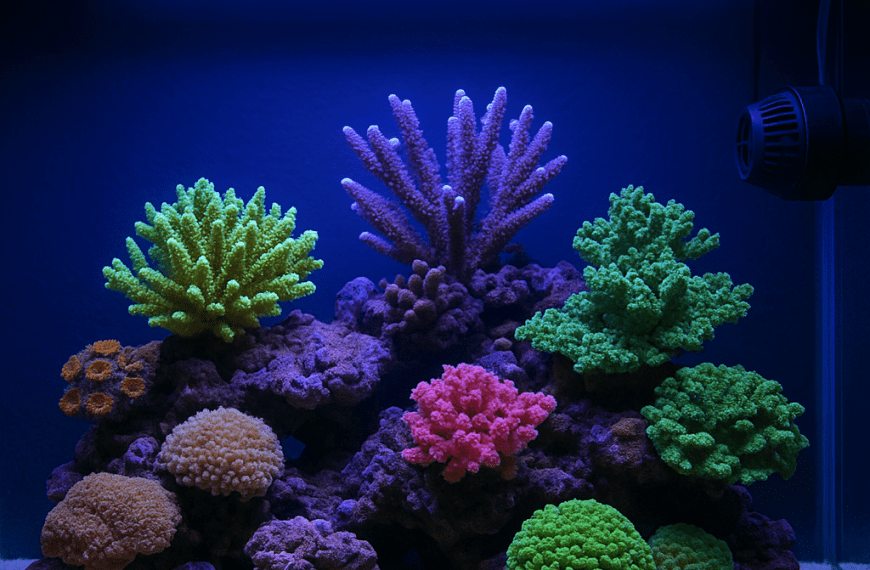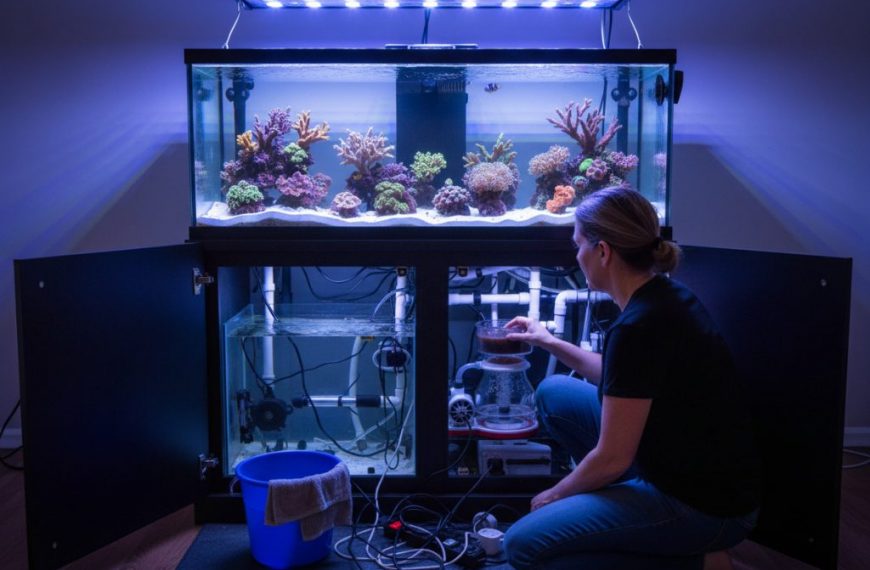
Solid rockwork keeps your reef safe and calm. It also protects pumps, corals, and glass from sudden collapses. This guide covers stable builds that still look natural.
Plan a stable layout before you stack
Start with the tank’s purpose and livestock. Fish need lanes for swimming. Corals need space for growth. Plan for your final size, not today’s frags.
Use a bare-bottom or sand-first decision early. Rock should sit on the glass or a support grid. Sand shifts under pressure. A shifting base causes slow tilts and sudden slides.
Leave clearance from all panes. Aim for 2–3 inches from the back glass. Keep 1–2 inches from the sides. This helps flow and makes algae scraping easier.
Build for flow paths and detritus control. Create arches and tunnels with open space. Keep at least 30–40% of the footprint open. Dead zones grow cyano and trap waste.
- Sketch top-down zones for fish, coral, and equipment access.
- Target 10–20x total turnover in mixed reefs.
- Test magnet cleaner reach before you commit.
For more setup basics, review reef aquascape basics. If you run high flow, also see powerhead placement for reef tanks.
Build methods that prevent rockslides
Use stable contact points, not tall piles. Place the largest rocks first. Set them flat and low. Wiggle each piece until it locks into place.
Pinning adds real strength. Use 3/8 inch acrylic rods or fiberglass driveway markers. Drill 3/8 inch holes 1.5–2 inches deep. Dry-fit the stack before bonding.
Bonding works best with a two-step approach. Use thick cyanoacrylate gel for tack. Then add reef-safe epoxy putty for bulk. Finish with hydraulic cement made for reefs, if needed.
Build outside the tank when possible. Use a cardboard template of the tank footprint. Keep the tallest point under two-thirds of tank height. This reduces leverage and toppling risk.
- Use three-point contact on every “bridge” rock.
- Avoid smooth round rocks as load-bearing bases.
- Let epoxy cure 24 hours before strong flow.
Check stability with a gentle push test. Push from multiple angles. Nothing should shift or click. If it moves dry, it will move worse underwater.
Long-term stability, safety, and troubleshooting
Stability changes over time due to biology. Snails can undermine sand. Urchins can pry frags and small rocks. Large fish can bump structures during feeding.
Inspect monthly with a flashlight. Look for new gaps and settling. Watch for sand scours under overhangs. Flow can dig pits that weaken supports.
Use practical targets for safe spacing and load. Keep rock at least 4 inches from heater intakes. Leave 3 inches around overflow teeth. Avoid resting rocks on return lines.
If detritus builds, adjust before you add more flow. Move a powerhead 1–2 inches and retest. Add a small deflector rock to redirect current. Consider a turkey baster routine twice weekly.
- Common mistake: stacking on sand without a base grid.
- Common mistake: tall spires with a narrow footprint.
- Quick fix: add a pinned “buttress” rock at the base.
When you need to rebuild, protect livestock. Mix new saltwater for a 20–30% change. Use a holding bin with a heater and air stone. Review coral handling and dipping guide before moving colonies.
Sources: Delbeek & Sprung, The Reef Aquarium (Vol. 1–3); Fenner, The Conscientious Marine Aquarist; Borneman, Aquarium Corals.
 By
By