Stable reef parameters prevent most common tank problems. They also make coral growth predictable. Use this checklist to test, log, and correct issues fast.
Section 1: Daily and weekly stability checks
Start with temperature, salinity, and pH. These swing the fastest in most homes. Keep temperature at 25–26°C (77–79°F). Aim for a daily swing under 0.5°C.
Keep salinity at 1.025–1.026 specific gravity. That equals about 35 ppt. Measure with a calibrated refractometer. Calibrate weekly with 35 ppt solution.
Target pH at 8.0–8.3. Focus on stability over chasing a number. Many tanks dip at night. Improve gas exchange before dosing buffers.
Log results in one place. Use the same test time each day. This makes trends obvious. If numbers drift, check top-off and room CO2 first.
- Daily: temperature, ATO function, quick salinity glance, livestock behavior.
- Twice weekly: pH, alkalinity spot check, inspect heaters and return pump.
- Weekly: calibrate refractometer, clean skimmer neck, change filter socks.
Need a routine? Follow our reef tank maintenance schedule. It pairs tests with simple cleaning tasks. That reduces missed steps.
Section 2: Core chemistry targets for coral growth
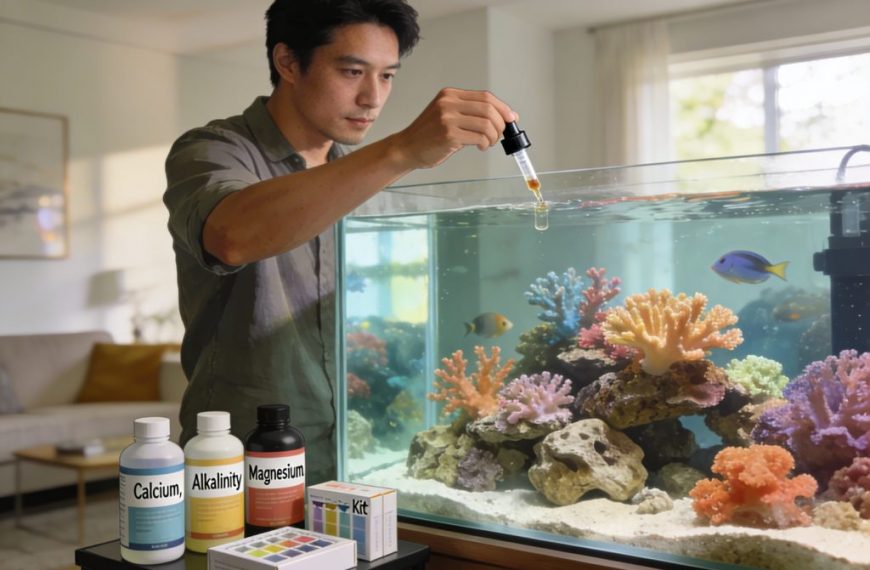
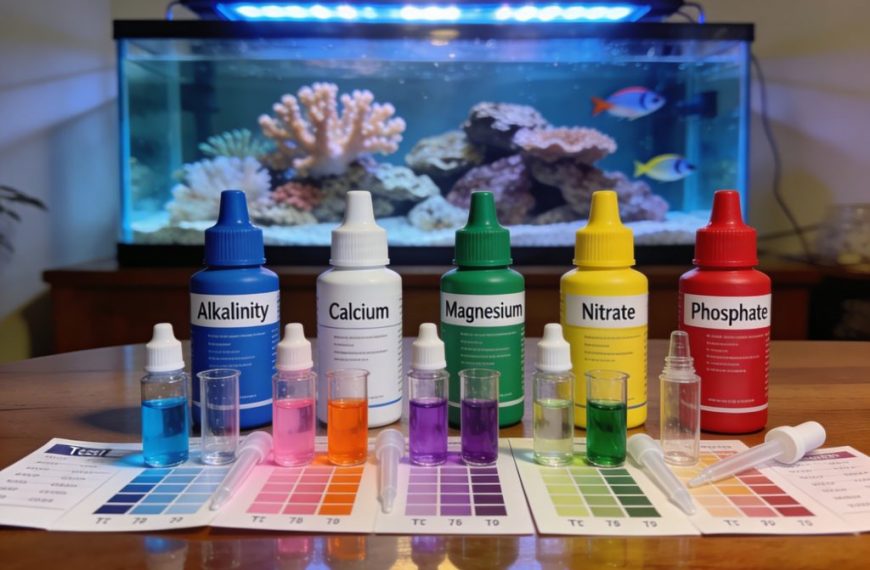
Alkalinity, calcium, and magnesium drive calcification. Test alkalinity 2–3 times weekly in SPS tanks. Keep alkalinity at 7.5–9.0 dKH. Limit daily change to 0.3 dKH.
Keep calcium at 400–450 ppm. Keep magnesium at 1250–1400 ppm. If magnesium is low, calcium and alkalinity become harder to hold. Correct magnesium first when all three drift.
Nutrients matter as much as “major” ions. Keep nitrate at 2–15 ppm for most mixed reefs. Keep phosphate at 0.03–0.10 ppm. Ultra-low nutrients can pale corals and stall growth.
Use a consistent dosing method. Two-part works well for many tanks. Kalkwasser helps pH and demand. For high demand, consider a calcium reactor. Learn the basics in our alkalinity stability guide.
- Test alkalinity at the same hour each time. Dosing shifts readings.
- Adjust dosing by 5–10% steps. Wait 48 hours before changing again.
- Mix saltwater to 35 ppt and match temperature before water changes.
Section 3: Troubleshooting swings and common mistakes
Rapid salinity change is a top mistake. Evaporation raises salinity daily. An ATO prevents this. If you must correct salinity, change no more than 0.001 SG per day.
Alkalinity swings often come from inconsistent dosing. They also come from new coral growth spurts. If dKH drops 1.0 in 24 hours, increase dosing and re-test tomorrow. Also check for precipitation on heaters and pumps.
High phosphate can follow heavy feeding or dirty filters. Start with mechanical export. Replace socks every 2–3 days. Wet skim for a week. Consider GFO only after fixing the source.
Low pH is often a ventilation issue. Open a window for an hour and re-test. If pH rises, indoor CO2 is the cause. A skimmer air line to fresh air can help. See our reef tank pH control tips for options.
- If corals look burnt: check alkalinity spikes and light intensity changes.
- If algae blooms: test nitrate and phosphate, then reduce import and boost export.
- If fish breathe fast: check temperature, oxygen, and ammonia immediately.
Sources: Randy Holmes-Farley, “Aquarium Chemistry” articles; Julian Sprung, The Reef Aquarium; Dana Riddle, reef lighting and coral nutrition articles.
Use this reef parameter checklist as a weekly habit. Stable numbers beat perfect numbers. Test, log, and make small corrections. Your corals will reward consistency.

 By
By