A clean sandbed helps your reef stay stable. It also keeps water clear and oxygen levels higher. Good sandbed care prevents algae blooms and bad smells.
Pick the right sand depth and grain size
Start with a sandbed that fits your goals. For most mixed reefs, use 1 to 2 inches. That is 2.5 to 5 cm. This depth is easy to clean.
Choose a grain size that matches your flow. Fine sand can blow around in strong pumps. Medium aragonite stays put better. Aim for 0.5 to 1.5 mm grains in many reef tanks.
Deep sand beds need a different plan. A true DSB is 4 to 6 inches. That is 10 to 15 cm. It can support denitrification, but it needs stable fauna and gentle cleaning.
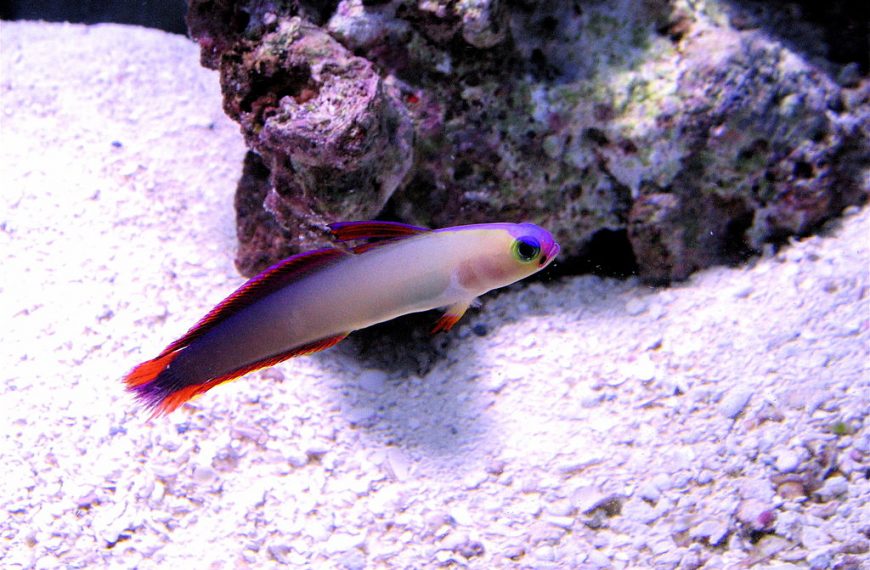
Match your sandbed to livestock needs. Jawfish and some wrasses need deeper zones. Many gobies sift constantly and keep the top layer loose. Plan around their behavior and feeding.
- Shallow bed: 1–2 inches for easy vacuuming and low risk.
- DSB: 4–6 inches, but avoid heavy stirring in lower layers.
- Grain size: 0.5–1.5 mm for stability and good burrowing.
For setup basics, review new reef tank setup checklist. For flow tuning, see reef tank flow guide.
Weekly cleaning that does not crash your tank
Clean the sandbed in small sections. Do 20% to 30% of the surface per week. This avoids releasing too much waste at once. It also protects beneficial bacteria.
Use a siphon sized for your tank. A 1/2 inch tube works well for 20 to 75 gallons. Use 3/4 inch for larger systems. Pinch the hose to control suction on fine sand.
Hover the siphon 1/2 inch above the sand. Let detritus lift into the tube. For coarse sand, you can lightly plunge the tube. Stop when sand starts to climb too high.
Time cleaning with water changes. Change 10% weekly or 20% every two weeks. Keep salinity stable at 1.025 to 1.026. Match temperature within 1°F to reduce stress.
- Vacuum only the top 1/2 inch in most reefs.
- Split work into zones and rotate each week.
- Run a filter sock for 2–4 hours after cleaning.
If your water clouds after cleaning, reduce stirring next time. Increase mechanical filtration for a few hours. Check skimmer performance and clean the neck. A dirty skimmer removes less waste.
Troubleshooting: algae, cyano, and compacted sand
Brown film and trapped debris often mean low flow at the bottom. Redirect a powerhead slightly downward. Aim for gentle movement across the substrate. Avoid sandstorms and bare spots.
Cyanobacteria likes dirty zones and high nutrients. Test nitrate and phosphate weekly. Many reefs do well at nitrate 2 to 15 ppm. Keep phosphate near 0.03 to 0.10 ppm. Reduce feeding if numbers climb fast.
Compacted sand can form dead pockets. You may see bubbles and dark patches. Stir only the top layer in that area. Add sand stirrers like nassarius snails. Consider a fighting conch in tanks over 30 gallons.
Old sand can hold bound nutrients. If you suspect this, replace slowly. Swap 10% of sand every two weeks. Rinse new aragonite until water runs mostly clear. Never replace all sand at once.
- Common mistake: deep stirring in mature beds, which releases waste.
- Common mistake: overstocked sand sifters that starve in clean tanks.
- Quick check: smell the siphoned water. Strong sulfur odor signals trouble.
For nutrient control steps, read nitrate and phosphate control. It pairs well with steady sandbed care.
Sandbed maintenance works best with consistency. Clean small areas on a schedule. Track nutrients and adjust flow and feeding. Your reef will look brighter and run more smoothly.
Sources: Randy Holmes-Farley, “Phosphate and the Reef Aquarium”; Julian Sprung, The Reef Aquarium (Vol. 1); Martin A. Moe Jr., The Marine Aquarium Handbook.
 By
By