Ask any successful reef keeper what their secret is, and you’ll hear the same answer again and again: stability. Stable reef parameters matter far more than chasing perfect numbers. Corals, fish, and invertebrates thrive when your water chemistry changes slowly and predictably, not when it swings up and down from day to day.
Core Reef Parameters to Keep Stable
Before dialing in fine details, focus on the big four parameters that drive coral health and growth:
- Salinity: Aim for 1.025–1.026 specific gravity (35 ppt) and avoid daily swings.
- Temperature: 77–79°F (25–26°C) is a safe range for most reef tanks.
- Alkalinity (dKH): 7–9 dKH is typical; pick a number and keep it steady.
- Calcium & Magnesium: Calcium 400–450 ppm, magnesium 1250–1400 ppm.
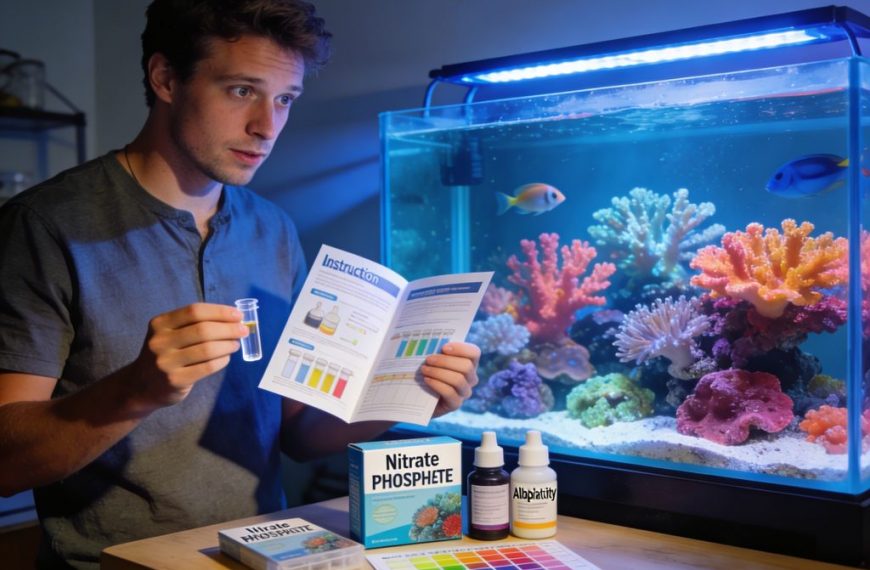
You don’t need to be at the exact middle of each range. What matters is that your tank stays close to the same values every day. If you’re still learning the basics of testing, check out our guide on beginner reef testing for step-by-step help.
Practical Habits That Create Stable Parameters
1. Keep Your Top-Off and Salinity Rock Solid
Evaporation is the easiest way to introduce instability. As water evaporates, salt stays behind, raising salinity. To keep it steady:
- Use an auto top-off (ATO) system with fresh RO/DI water.
- Check salinity with a calibrated refractometer once or twice a week.
- Mix new saltwater to the same salinity as your display tank before water changes.
2. Dose for Consistent Alkalinity and Calcium
Hard corals and coralline algae consume alkalinity and calcium daily. Letting these drop and then correcting them in one big dose is a recipe for stress. Instead:
- Test alkalinity at the same time of day for a full week.
- Calculate your tank’s daily consumption and set up a dosing schedule.
- Use a dosing pump for small, frequent additions rather than big manual doses.
Tip: Adjust dosing in small increments and retest after a few days. Chasing numbers with large corrections often causes the very swings you’re trying to avoid.
3. Control Temperature and Avoid Daily Swings
Even a 3–4°F swing each day can stress sensitive corals. To keep temperature stable:
- Run a reliable heater with an external controller for redundancy.
- Place the tank away from windows and heating/cooling vents.
- Use a fan or chiller in hot climates to prevent overheating.
For more detail on balancing equipment and heat, see our article on reef tank temperature control.
How to Make Changes Without Shocking Your Reef
Sometimes you do need to adjust parameters—maybe your alkalinity is low or nutrients are high. The key is to change things slowly:
- Limit alkalinity changes to no more than 0.5–1.0 dKH per day.
- Aim for gradual salinity shifts of 0.001 specific gravity per day if corrections are needed.
- Use smaller, more frequent water changes (10–15%) instead of large, occasional ones.
- Retest after each adjustment and give the system time to settle before making more changes.
If you’re troubleshooting issues like receding tissue or pale coloration, pairing this guide with our reef parameter troubleshooting checklist can help you pinpoint the cause without overreacting.
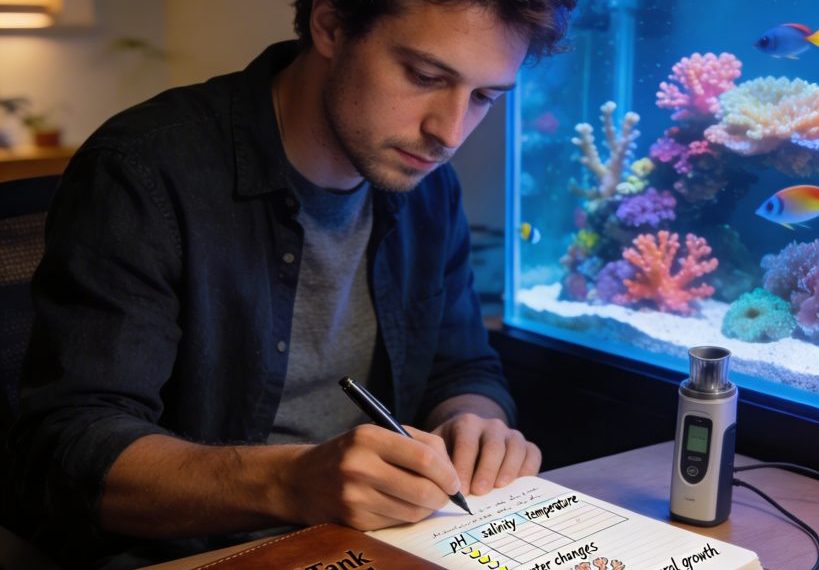
In the end, stable reef parameters come from consistent habits, not fancy gear or perfect numbers. Test regularly, log your results, and make small, measured adjustments. When your reef knows what to expect from day to day, corals color up, fish behave naturally, and the entire system becomes more resilient to the occasional mistake. Stability is the quiet foundation that makes every beautiful reef tank possible.
 By
By