
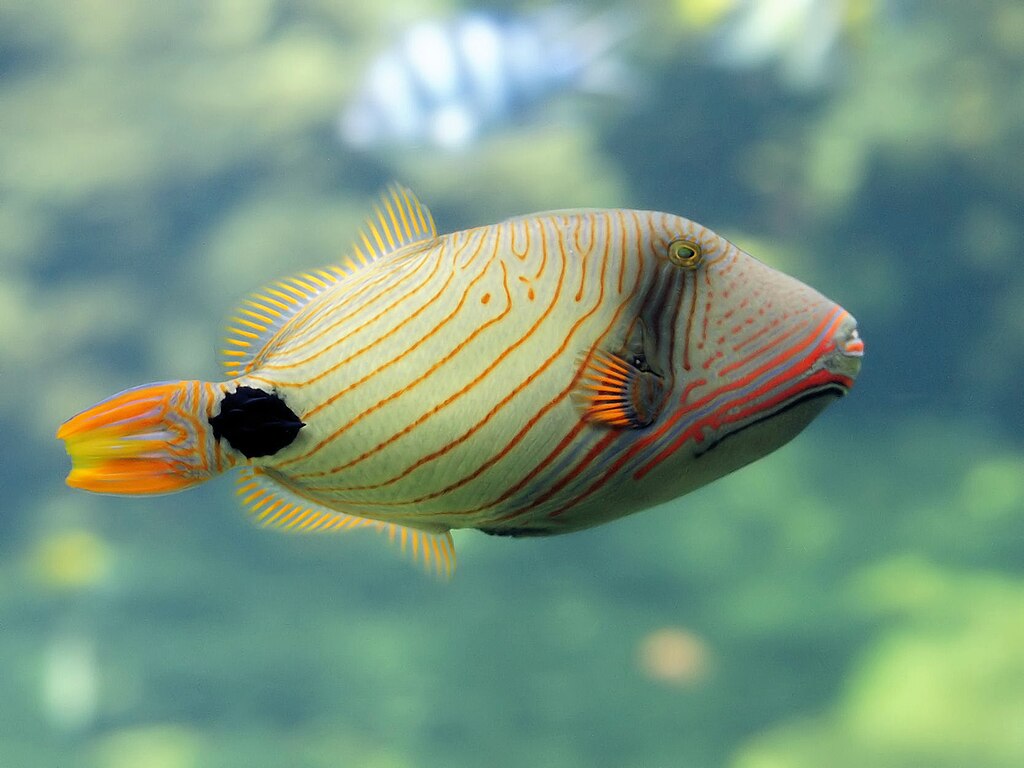
Undulated Triggerfish are bold, smart, and intense. They can be stunning show fish. They also demand planning and firm routines.
Temperament and tank planning
Balistapus undulatus is one of the most aggressive triggers. Many individuals attack tankmates without warning. Plan for a species tank from day one. Assume “reef safe” is not possible.
A 125-gallon tank is a realistic minimum for an adult. Larger is better for stress control. Aim for 6 feet of length if possible. Provide heavy rock structures and open swim lanes.
Use rock that is stable on the glass or on supports. Triggers can move rubble with ease. They also wedge into caves to sleep. Build at least two deep caves with tight entrances.
Choose gear with bite resistance in mind. Add a tight lid and covered overflows. These fish can jump when startled. They also spit water during feeding time.
- Tank size: 125 gallons minimum, 180+ gallons preferred.
- Temperature: 24–26°C (75–79°F) for steady metabolism.
- Salinity: 1.025–1.026 specific gravity for marine stability.
- Keep hands out during feeding. Use long tongs or a feeding stick.
For more on planning aggressive fish systems, see aggressive marine fish tankmates. For rockwork safety tips, read reef rockwork stability guide.
Water parameters, filtration, and daily care
Undulated Triggers are messy eaters. They produce heavy waste. Oversize filtration from the start. Target 10–20x turnover with strong, chaotic flow.
Keep ammonia and nitrite at 0 ppm at all times. Keep nitrate under 20 ppm, and under 10 ppm if possible. Maintain pH at 8.1–8.4 and alkalinity at 8–10 dKH. Stability matters more than chasing numbers.
Use a skimmer rated for at least double your tank volume. Add a filter roller or change socks every 2–3 days. Run carbon and replace it monthly. Do 15–20% water changes every week for best results.
Quarantine is not optional with this species. Use a 40–55 gallon bare-bottom tank. Provide PVC elbows for shelter. Observe for 14–30 days before display transfer.
- Test schedule: ammonia daily in QT, nitrate weekly in display.
- Maintenance: clean skimmer neck twice weekly for steady foam.
- Water change rule: increase frequency if nitrate rises above 25 ppm.
Need a step-by-step quarantine workflow? Use marine fish quarantine setup as your checklist.
Feeding, enrichment, and common problems
Feed adults once or twice daily, depending on body condition. Offer varied meaty foods with hard items. Good staples include shrimp, squid, clam, and marine fish flesh. Add shelled foods to support tooth wear.
Use portion control to limit nitrate spikes. A good starting portion is what they eat in 30–60 seconds. Remove leftovers right away. Soak foods in vitamins twice weekly.
Enrichment reduces boredom aggression. Rotate feeding tools and locations. Clip a half shell clam to a rock for picking. Add a “rubble zone” they can move safely.
Common mistakes include mixing with docile fish, weak lids, and unstable rock. Watch for frayed fins and missing scales on tankmates. That often signals early harassment. If biting starts, separation is usually the only fix.
- If the fish refuses food, check temperature and dissolved oxygen first.
- If it charges the glass, reduce reflections and add more caves.
- If teeth look overgrown, increase shelled foods and hard crustaceans.
Sources: FishBase (Balistapus undulatus species profile); Scott W. Michael, “Marine Fishes”; Fenner, “The Conscientious Marine Aquarist”.
The Undulated Triggerfish can be a rewarding centerpiece. It thrives with space, structure, and strict routines. Set expectations early, and build the system around the fish.
 By
By
.jpg)