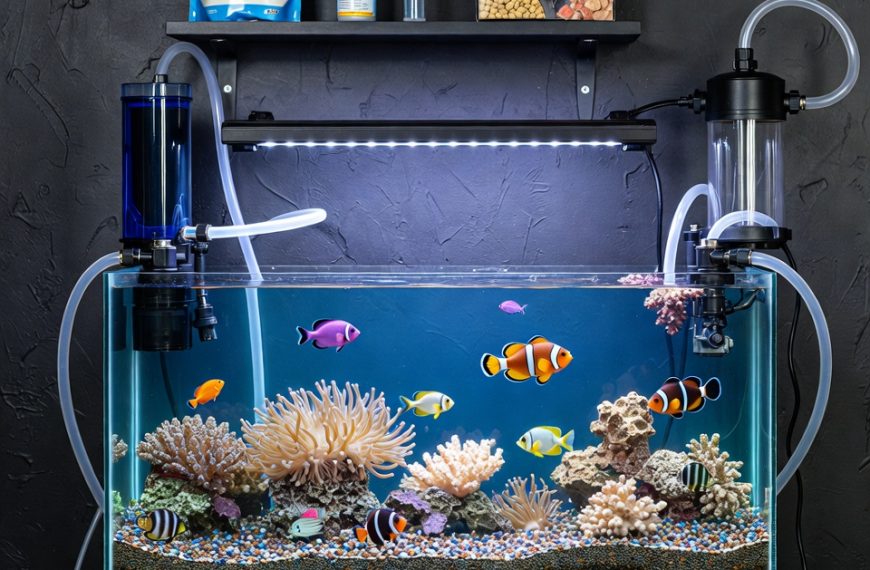
Feeding reef fish feels simple until problems show up. Poor color, thin bodies, and algae blooms often start with diet. This guide gives a practical plan for common reef fish.
Build a balanced reef fish menu
Most reef tanks need a mixed diet each week. Use three core food types. Combine frozen, dry, and fresh options. This covers protein, fats, and vitamins.
Match food to mouth size and feeding style. Small planktivores need tiny particles. Think anthias and chromis. Larger wrasses and angels take bigger chunks.
Use a simple ratio as a starting point. Aim for 60% marine-based frozen foods. Add 30% quality pellets or flakes. Keep 10% as algae sheets or fresh blends.
Soak dry foods when you can. Use tank water for 2 minutes. Add vitamins 2 to 3 times weekly. This helps prevent HLLE in tangs and angels.
- Frozen staples: mysis, brine with enrichment, chopped shrimp, roe
- Dry staples: 0.5–1 mm pellets for small fish, 1–2 mm for larger fish
- Algae foods: nori sheets, spirulina flakes, herbivore blends
For more on herbivore needs, see our tangs and rabbitfish feeding guide. For picky eaters, check getting fish to eat. These plans reduce waste and improve consistency.
Feeding schedules, portions, and water quality
Feed small amounts more often. Two feedings daily works for most tanks. Anthias often need 3 to 5 small feedings. Use an auto-feeder for midday pellets.
Portion control protects your nutrients. Offer what fish finish in 30 to 60 seconds. For frozen cubes, start with 1 cube per 20 to 30 gallons. Adjust by observation.
Thaw frozen food before adding it. Use a cup with tank water for 5 minutes. Pour off the cloudy liquid if nutrients run high. Then target feed with a baster.
Track key parameters tied to feeding. Keep nitrate near 2–15 ppm for mixed reefs. Keep phosphate near 0.03–0.10 ppm. If algae spikes, reduce portions by 20%.
- Feed pellets in the morning and frozen at night for better response.
- Clip nori for 2 to 4 hours, then remove leftovers.
- Rinse frozen foods if phosphate rises above 0.15 ppm.
If nutrients stay high, increase export before starving fish. Clean the skimmer cup twice weekly. Change 10% water weekly. Review reef nutrient control for step-by-step tuning.
Common diet mistakes and quick troubleshooting
One common mistake is feeding only brine shrimp. Plain brine is mostly water. Use enriched brine or switch to mysis. Add a vitamin soak for 30 seconds.
Picky fish often fail due to stress, not food choice. Dim lights for the first day. Offer small foods like roe or finely chopped mysis. Feed near cover, not in open flow.
Watch body shape for clues. A pinched belly means not enough calories. A thick neck and thin tail can mean parasites. Quarantine and treat if weight drops for 7 days.
Also watch coral response and film algae. Heavy feeding can cloud water. Add mechanical filtration on feeding days. Change filter socks within 24 hours for best results.
- Fish ignores food: try smaller particles, reduce flow, and feed after lights dim.
- Cloudy water: thaw and strain frozen food, then cut portions by 15%.
- Faded color: add algae foods, rotate proteins, and dose vitamins 3 times weekly.
Sources: NOAA Fisheries general marine fish nutrition overviews; FAO Aquaculture feed and nutrient guidance; Fenner B. marine fish husbandry articles (archived); Delbeek & Sprung, The Reef Aquarium feeding and nutrient sections.
A reef fish diet works best when it is consistent and varied. Start with small portions and stable schedules. Then adjust based on fish weight and tank nutrients.
 By
By