Why Algae Takes Over Saltwater Aquariums
Algae is a normal part of every saltwater aquarium, but when it coats your rocks and glass, it can smother corals and ruin the look of your reef. Controlling algae in saltwater aquariums starts with understanding why it appears: excess nutrients, too much light, and an imbalance in your tank’s ecosystem. The goal isn’t to remove algae completely, but to keep it in check so your corals and fish thrive.
Most nuisance algae outbreaks are fueled by:
- High nutrients: Elevated nitrate (NO3) and phosphate (PO4) from overfeeding and waste buildup.
- Excess light: Long photoperiods or intense white light, especially in young tanks.
- Immature systems: New setups often go through “ugly stages” with diatoms, film algae, and hair algae.
If you’re still planning your system, make sure to read our guide on setting up a saltwater aquarium so you can design algae control into your build from day one.
Core Strategies to Control Algae
1. Manage Nutrients, Don’t Chase Zero
Healthy reef tanks usually have low but detectable nutrients. Aim for roughly:
- Nitrate: 2–15 ppm
- Phosphate: 0.03–0.10 ppm
To keep nutrients in this range:
- Feed carefully: Offer what your fish will eat in 30–60 seconds and avoid constant “just in case” feeding.
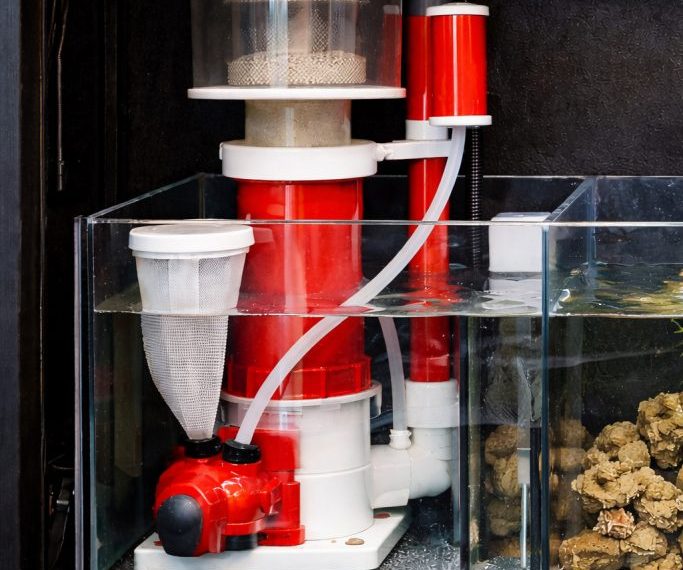
- Export waste: Use an efficient protein skimmer and perform regular water changes with high-quality RO/DI water.
- Use media: GFO, phosphate resin, or macroalgae refugiums can help control phosphate and nitrate.
Tip: Test nitrate and phosphate weekly when battling algae. Stable, consistent levels beat wild swings from aggressive media use.
2. Dial In Your Lighting
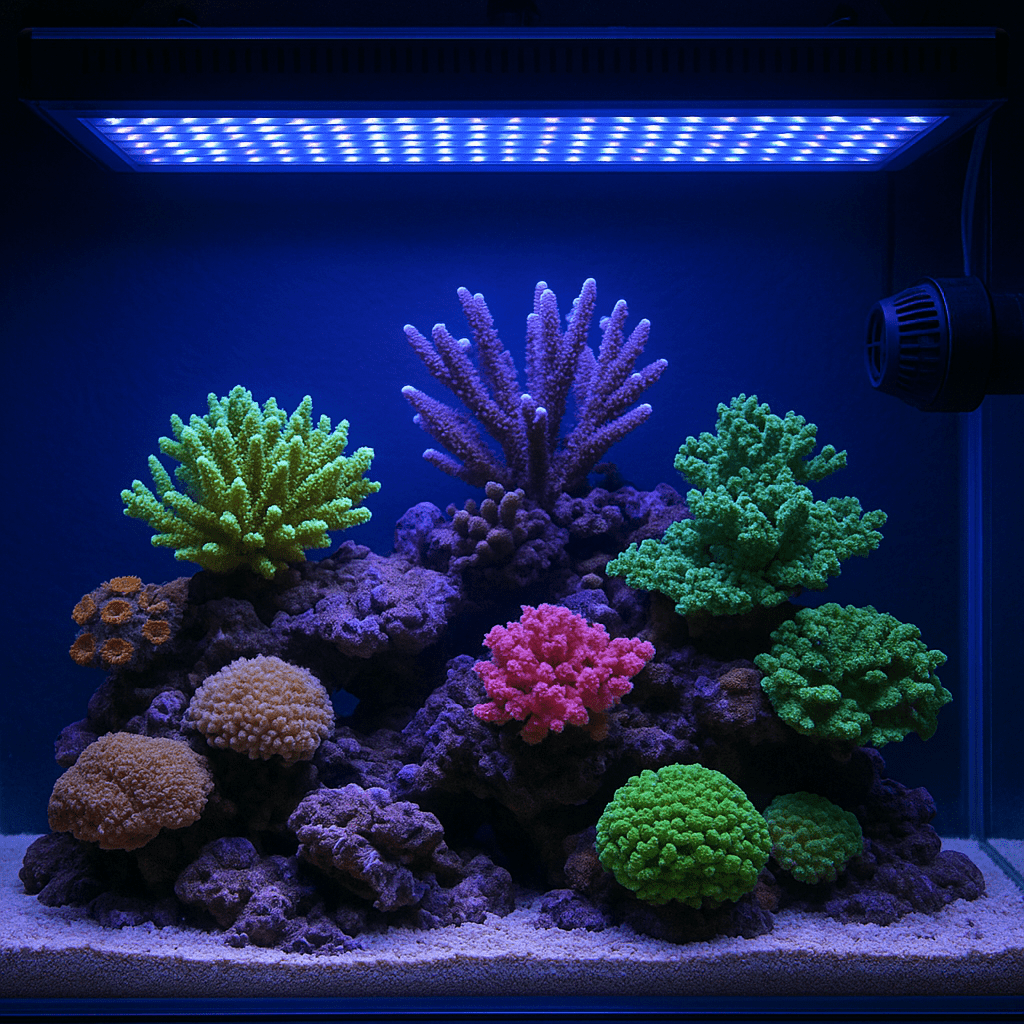
Algae loves intense, prolonged light. Corals do too—but within reason. To reduce algae pressure:
- Limit your main photoperiod to 8–10 hours per day.
- Favor blue-heavy spectrums and reduce excess white/red channels.
- Replace old T5 or fluorescent bulbs that may have shifted spectrum.
If you’re unsure how long to run your lights or how to acclimate corals to new LEDs, see our detailed lighting guide in the beginner saltwater aquarium guide.
3. Build a Strong Clean-Up Crew and Good Flow
A balanced clean-up crew (CUC) can keep nuisance algae cropped short before it spreads. Mix different grazers so they cover more surfaces:
- Snails: Trochus, turbo, and astraea snails for rocks and glass.
- Hermit crabs: Blue-leg or scarlet hermits for tight crevices (in moderation).
- Specialists: Emerald crabs for bubble algae, urchins for stubborn film and hair algae.
Strong, random flow also helps by keeping detritus suspended so your filtration can remove it, instead of letting it settle and feed algae on the rocks.
Targeting Specific Algae Types
Different algae respond to different tactics:
- Green hair algae: Manually remove during water changes, then reduce nutrients and increase CUC grazers.
- Diatoms: Common in new tanks; usually fade as silicates are used up, especially with good RO/DI water.
- Cyanobacteria (red slime): Improve flow, reduce excess nutrients, and avoid leaving lights on too long.
Whatever the type, avoid quick chemical fixes as your only solution. They may knock algae back temporarily but won’t solve the underlying imbalance.
In the end, controlling algae in saltwater aquariums is about consistency: steady maintenance, thoughtful feeding, and patience. If you pair those habits with a well-planned system, you’ll spend far more time enjoying your reef than scraping glass. For more help planning your next build or upgrade, don’t miss our overview on the best saltwater aquarium fish for beginners, which can also influence how much waste—and algae—you’ll be dealing with.
Sources
- Borneman, E. H. Aquarium Corals: Selection, Husbandry, and Natural History. TFH Publications.
- Sprung, J. & Delbeek, J. C. The Reef Aquarium series. Ricordea Publishing.
- Holmes-Farley, R. “Nitrate and Phosphate in the Reef Aquarium.” Advanced Aquarist (archived articles).
Was this helpful?
Related Posts
Protein Skimmer Reef Tank Guide
Learn how a protein skimmer works, how to size one, and how to tune it for a cleaner,…
 By
By
Reef Aquarium Water Parameters
Learn the ideal reef aquarium water parameters, safe ranges, and how to keep salinity, alkalinity, nutrients, and pH…