Essential Aquarium Equipment for a Healthy Saltwater Tank
Building a thriving saltwater aquarium starts with choosing the right equipment. Good gear doesn’t just make the tank look better; it keeps your fish, corals, and invertebrates alive and stable over the long term. Whether you’re planning a simple fish-only setup or a full reef, investing wisely in a few key pieces of equipment will save you money, time, and frustration later on.
Core Life-Support Equipment
Every saltwater aquarium, from nano tanks to large reef systems, relies on a few core life-support tools. Before you add livestock, make sure these are in place and tested.
1. Aquarium, Stand, and Sump
The display tank and stand form the backbone of your system. Choose a tank with:
- Tempered glass or acrylic for strength and clarity.
- Overflow and drilled drains if you plan to use a sump.
- Level, sturdy stand that can safely support the full weight of water, rock, and equipment.
A sump (a secondary tank below the display) adds water volume, hides equipment, and improves stability. If you’re new to sumps, read our guide on beginner saltwater tank setup before drilling or plumbing anything.
2. Filtration and Protein Skimmer
Saltwater systems produce a lot of organic waste. Efficient filtration keeps ammonia, nitrite, and nitrate in check.
- Biological filtration: Live rock and bio-media in your sump provide surfaces for beneficial bacteria.
- Mechanical filtration: Filter socks, sponges, or roller mats physically remove debris before it breaks down.
- Protein skimmer: A quality skimmer strips dissolved organics from the water, helping maintain low nutrients and better gas exchange.
Hobbyist tip: Size your skimmer for at least 1.5× your display volume. An “oversized” skimmer is usually more forgiving than one that’s barely adequate.
3. Heaters, Thermometers, and Flow
Stable temperature and strong, random water movement are non-negotiable for marine life.
- Heater: Use two smaller heaters instead of one large unit; if one fails, the other can prevent major swings.
- Thermometer: A simple digital thermometer lets you verify the heater’s accuracy.
- Powerheads or wavemakers: Aim for 20–40× tank volume in total flow for most reef tanks. Adjust intensity for delicate corals and sandbeds.
For more on how flow affects coral health, check out our article on Reef Water Flow Basics.
Lighting, Testing, and Support Gear
Once the basics are covered, focus on lighting and water quality monitoring. These pieces of equipment help you move from “just surviving” to truly thriving.
4. Reef-Safe Lighting
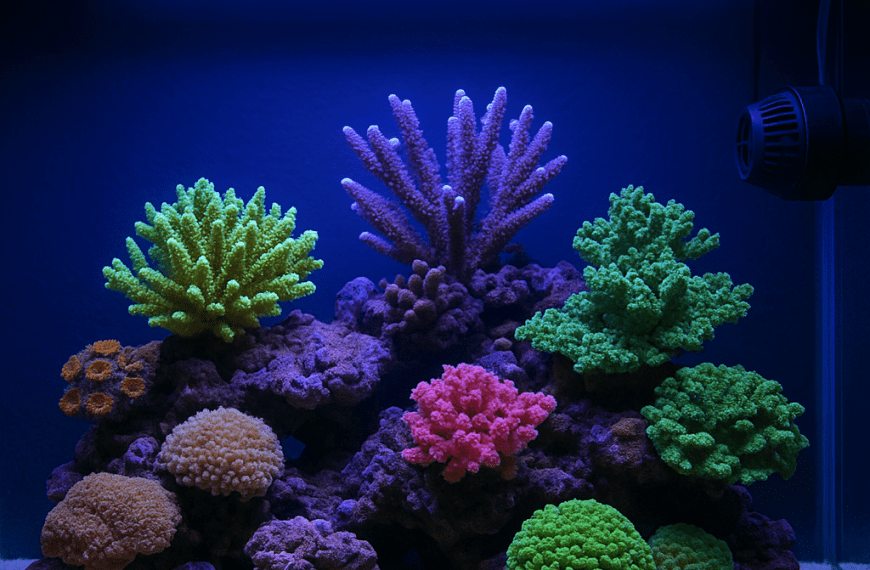
If you keep only fish, moderate lighting is fine. For corals, proper spectrum and intensity are critical:
- LED fixtures are the most common choice: energy efficient, programmable, and customizable.
- PAR and spectrum: Aim for blue-heavy spectrum and PAR appropriate to your coral types (softies need less, SPS need more).
Hobbyist tip: Start with lower intensity and increase slowly over several weeks. Many new reefers bleach corals by turning lights up too quickly.
5. Test Kits, Refractometer, and RO/DI
Good testing and water preparation tools protect your investment in livestock.
- Refractometer: Essential for accurate salinity; hydrometers are often unreliable.
- Test kits: At minimum, keep tests for ammonia, nitrite, nitrate, pH, and alkalinity. Reef tanks also benefit from calcium and magnesium tests.
- RO/DI filter: Produces pure water, free from chlorine, chloramines, and excess nutrients that fuel algae.
With these tools, you can follow a simple maintenance routine like the one in our saltwater aquarium maintenance checklist.
6. Helpful Extras
While not strictly mandatory, these extras make reefkeeping smoother:
- Auto top-off (ATO): Keeps salinity stable by automatically replacing evaporated water.
- Power backup or battery air pump: Protects your tank during power outages.
- Timers or controllers: Automate lighting, dosing, and other equipment for consistency.
Putting together the essential aquarium equipment may feel like a lot up front, but each piece plays a role in long-term stability. Start with solid life-support gear, add reliable testing and lighting, and then expand as your reef grows. With the right foundation, your saltwater aquarium will be easier to maintain and far more rewarding for years to come.
Sources
- Sprung, J. & Delbeek, J. C. The Reef Aquarium, Vol. 1–3.
- Fenner, R. The Conscientious Marine Aquarist.
- Borneman, E. Aquarium Corals.
 By
By