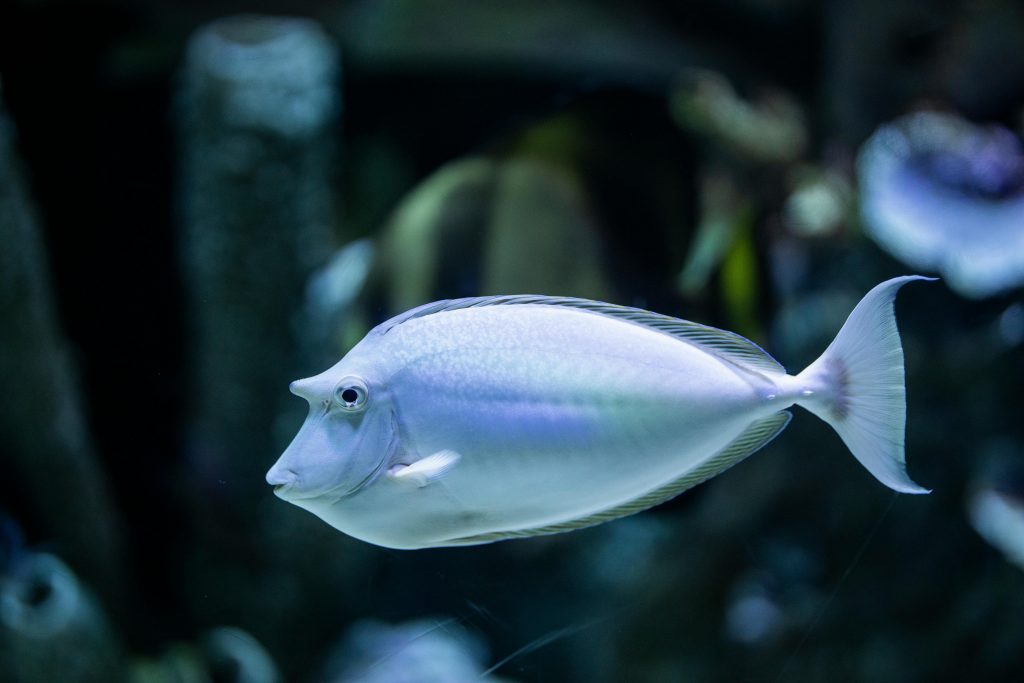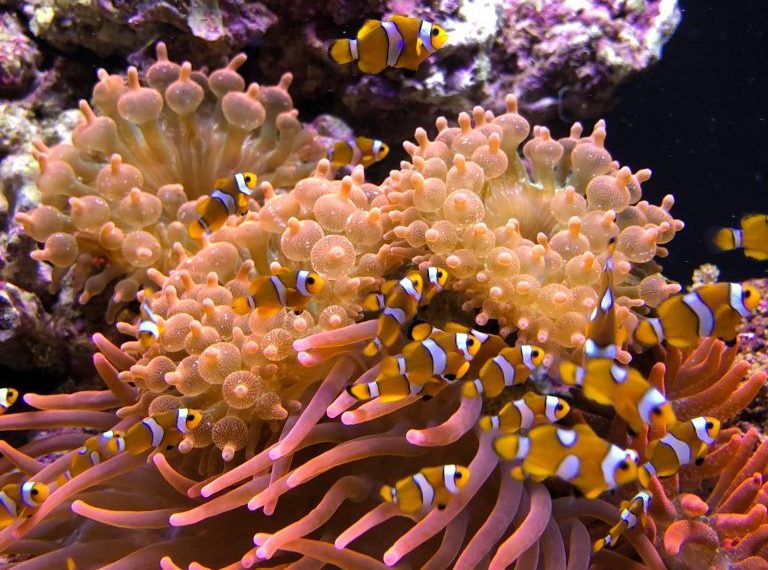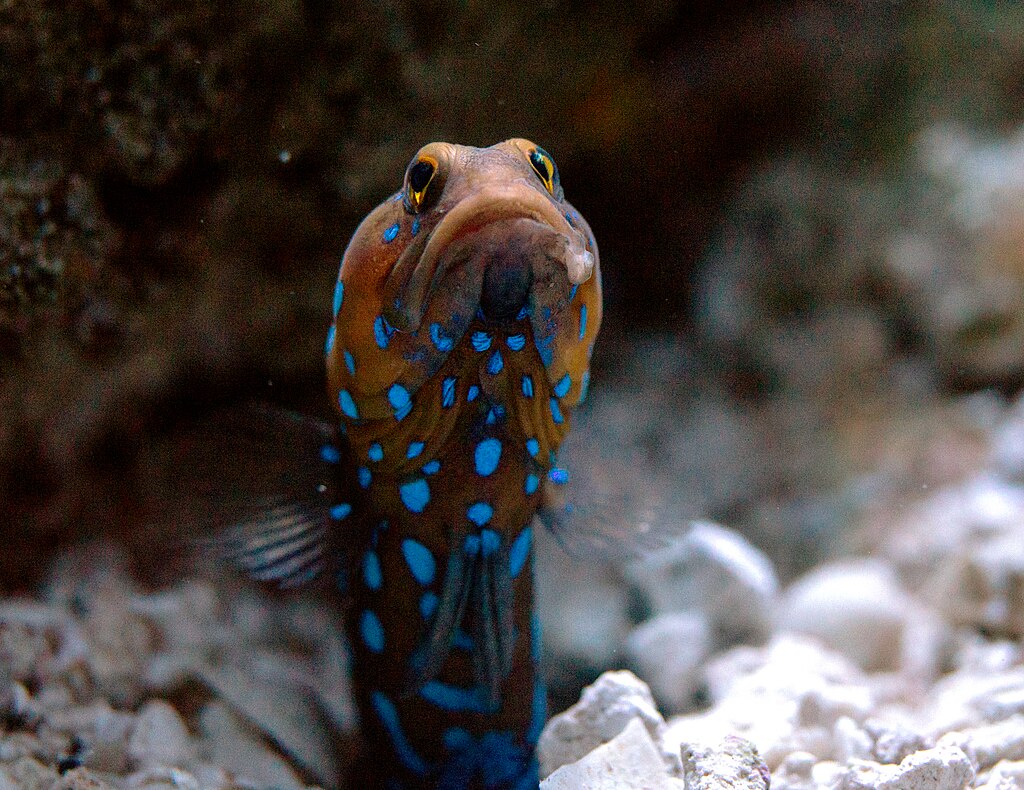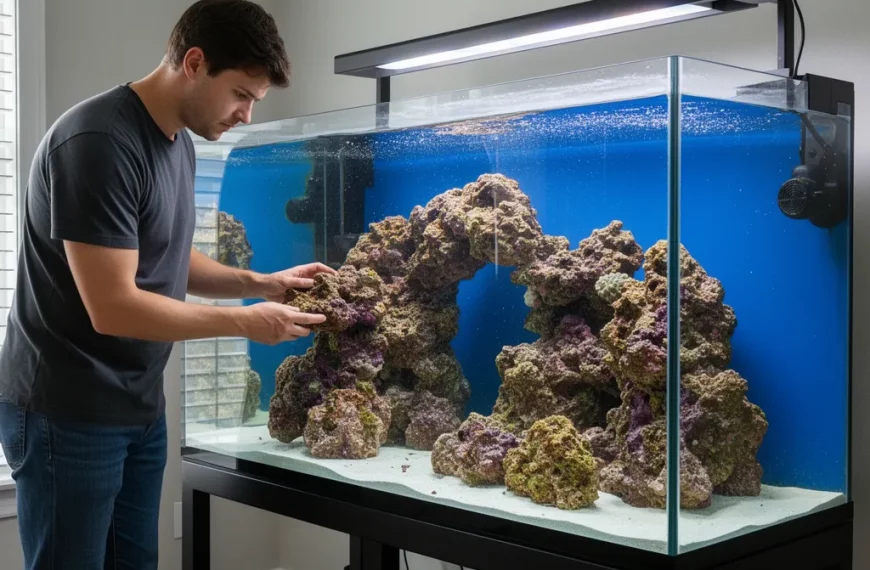
Fish Only with Live Rock, or FOWLR, blends beauty with resilience. You get bold fish and natural rock filtration. It also stays simpler than many reef tanks.
Why FOWLR works and what to plan first
FOWLR uses live rock as your main biofilter and habitat. The rock hosts nitrifying bacteria and microfauna. It also buffers small mistakes better than bare setups.
Start with tank size based on adult fish size. A 75-gallon tank suits many community predators. A 125-gallon tank suits angels and larger tangs. Plan for at least 1 to 1.5 pounds of live rock per gallon.
Target stable parameters from day one. Keep salinity at 1.025 specific gravity. Hold temperature at 77–78°F. Aim for pH 8.1–8.4 and alkalinity 8–10 dKH. Keep ammonia and nitrite at 0 ppm at all times.
Use a strong protein skimmer and good flow. Aim for 10–20x turnover per hour. Add a sump if you can. It boosts water volume and hides gear. For more on stability, see saltwater aquarium water parameters.
- Choose fish based on adult size, not store size.
- Build rock structures with caves and swim lanes.
- Buy the best skimmer you can fit and maintain.
Step-by-step setup, cycling, and stocking
Rinse dry sand in RO/DI water until it runs clearer. Add sand, then place rock on the glass. This prevents rock shifts from burrowing fish. Fill with mixed saltwater and start heaters and pumps.
Cycle the tank before any fish go in. Add an ammonia source to reach 2 ppm. Test every two days with reliable kits. The cycle is done when ammonia and nitrite hit 0 within 24 hours. Nitrate often lands at 10–40 ppm after cycling.
Do a large water change after the cycle. Replace 30–50% to cut nitrate and organics. Add a clean-up crew only if you will feed them. Many FOWLR fish eat snails and crabs.
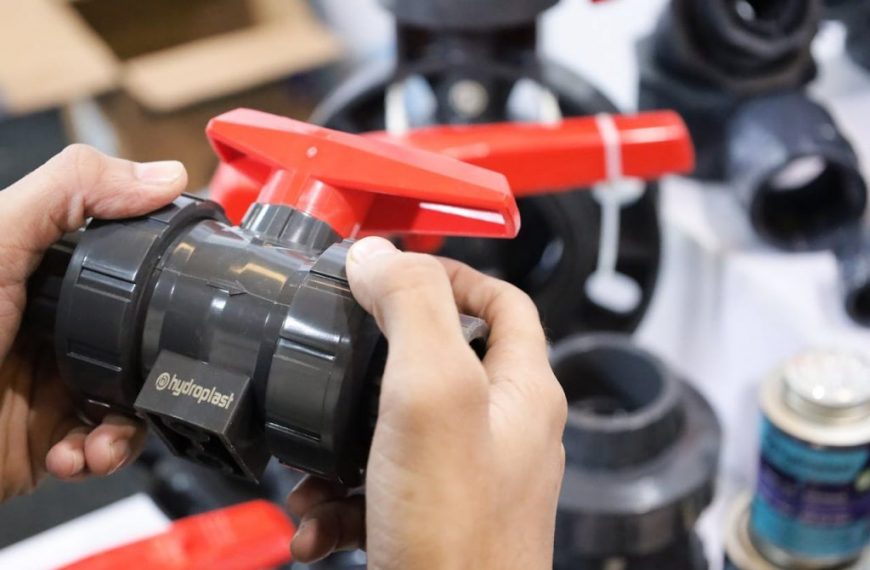
Stock slowly to protect the biofilter. Add one fish every 2–3 weeks. Quarantine each fish for 30 days in a bare tank. Use PVC for shelter and test ammonia daily. Our marine fish quarantine guide helps you avoid outbreaks.
- Cycle with 2 ppm ammonia and confirm a 24-hour clear.
- Do a 30–50% water change before first fish.
- Add fish every 2–3 weeks and monitor nitrate weekly.
Maintenance, feeding, and common troubleshooting
FOWLR tanks run “dirtier” than reefs, but stability still matters. Keep nitrate under 40 ppm for most fish. Keep phosphate under 0.30 ppm to reduce algae. Test salinity weekly and calibrate refractometers monthly.
Feed smaller portions twice daily instead of one big meal. Use a mix of pellets, frozen mysis, and seafood blends. Add nori sheets for tangs and angels. Remove uneaten food after five minutes. Overfeeding is the top cause of cloudy water.
Do 10–15% water changes each week, or 20% every two weeks. Siphon detritus from bare spots and sump areas. Clean skimmer cups twice weekly. Replace filter socks every two to three days. For algae control basics, read nuisance algae control.
Watch for warning signs and act fast. Heavy breathing can mean low oxygen or ammonia. Add surface agitation and check ammonia immediately. White spots often signal ich. Move fish to quarantine and treat there. Do not medicate the display with live rock.
- Cloudy water: reduce feeding and clean mechanical filters.
- High nitrate: increase water changes and improve skimming.
- Green hair algae: lower phosphate and shorten light time to 6–8 hours.
A Fish Only with Live Rock setup rewards patience and planning. Build strong filtration, cycle fully, and stock slowly. With steady care, your fish stay healthy and your rock stays beautiful.
Sources: Spotte, S. “Captive Seawater Fishes”; Fenner, R. “The Conscientious Marine Aquarist”; Tullock, J. “Natural Reef Aquariums”; Delbeek & Sprung, “The Reef Aquarium” (water chemistry sections).
 By
By