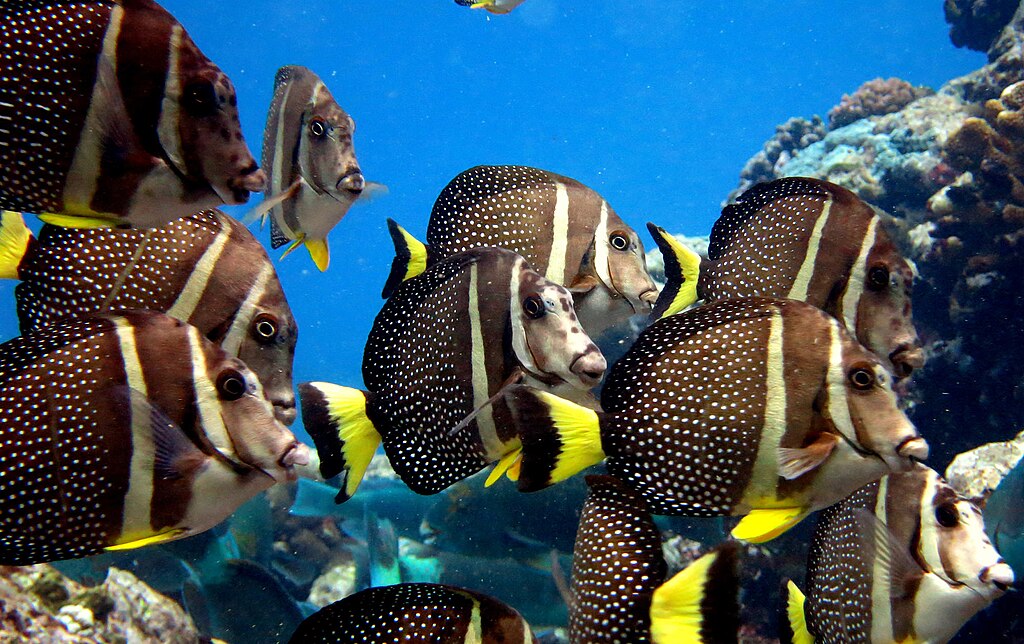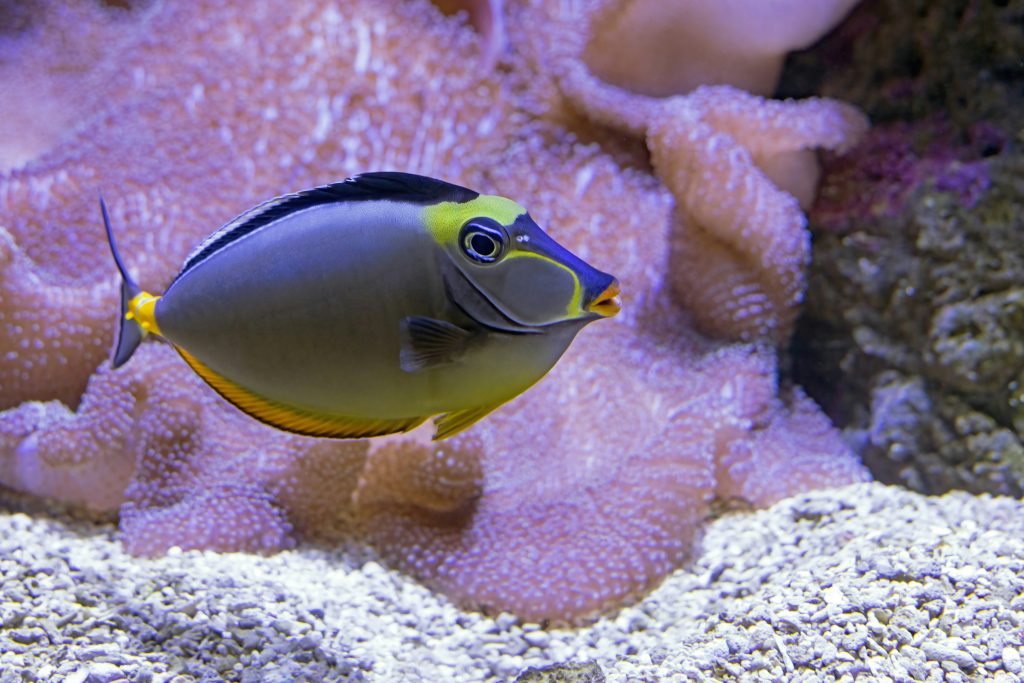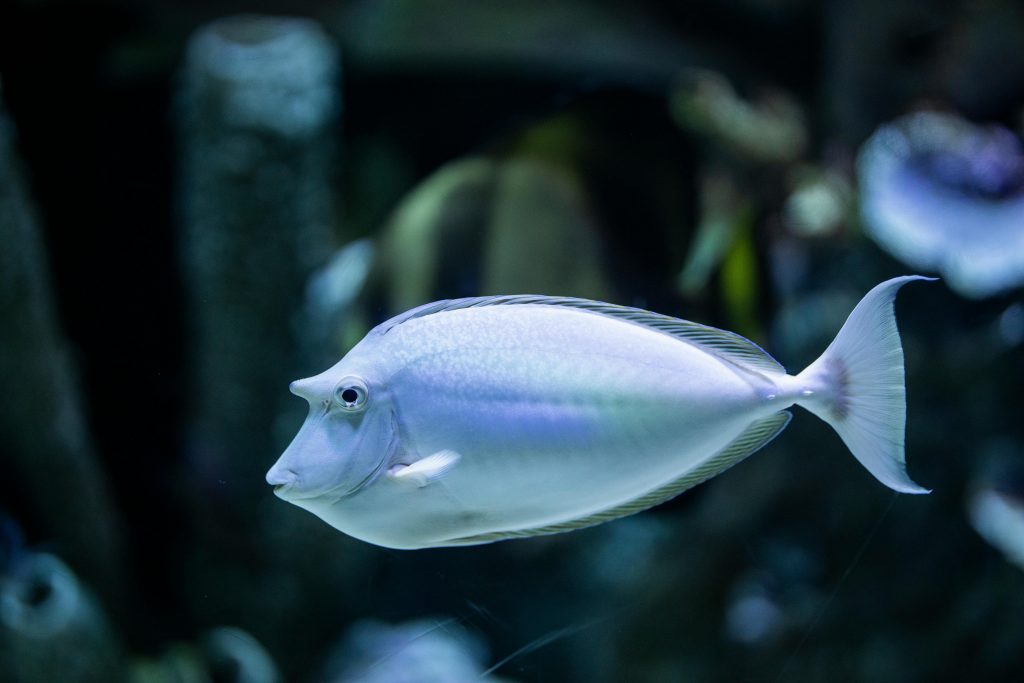
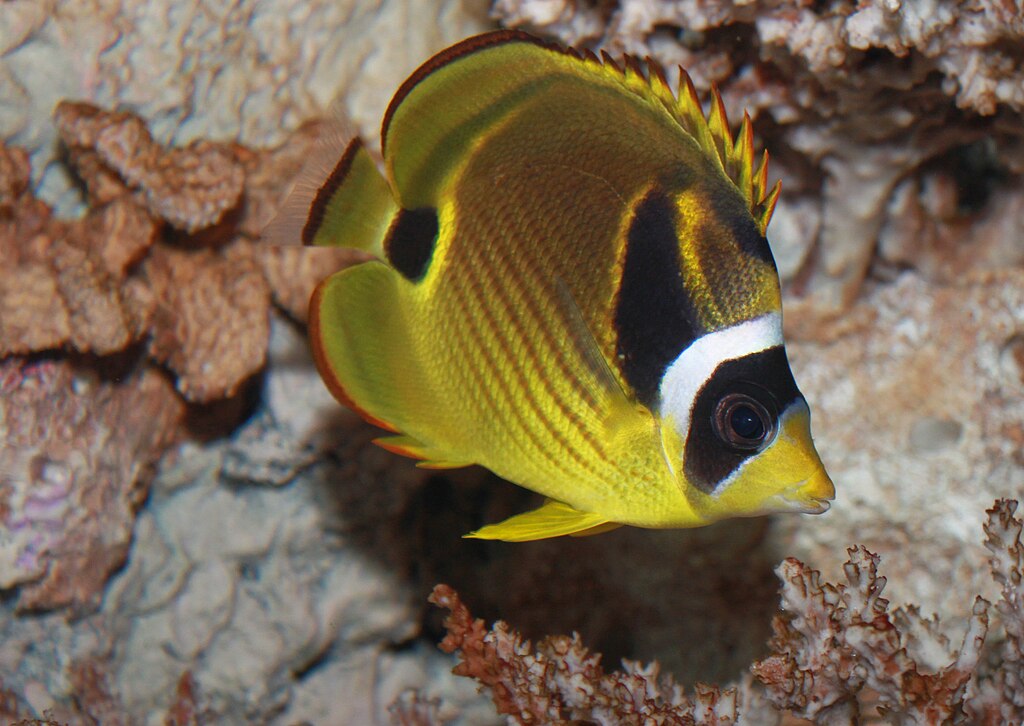
Raccoon Butterflyfish (Chaetodon lunula) is a bold, hardy butterfly with a big appetite. It can be a great fish-only showpiece, but it needs planning and space.
This guide covers tank size, feeding, compatibility, and common problems. Use it to decide if this species fits your goals.
Tank setup, size, and water parameters
Start with a tank of 125 gallons or larger. Adults reach about 8 inches. They also need long swimming lanes. Use a 6-foot tank if possible.
Build stable rockwork with caves and overhangs. Leave open sand and front-to-back lanes. Add a tight lid. Raccoons can jump when startled.
Keep temperature at 76–79°F. Aim for salinity at 1.025 specific gravity. Maintain pH at 8.1–8.4. Keep alkalinity at 8–10 dKH. Hold nitrate under 20 ppm. Keep phosphate under 0.10 ppm.
Use strong filtration and steady oxygen. Target 10–20x turnover with mixed flow. Do weekly 10–15% water changes. Test ammonia and nitrite after any new fish. Review your reef tank cycling guide if your tank is new.
- Quarantine for 21–28 days in a bare tank with PVC hides.
- Provide a dim corner for the first week to reduce stress.
- Acclimate slowly over 30–45 minutes to avoid pH shock.
Feeding plan and getting a new fish to eat
Raccoon Butterflyfish is an eager feeder once settled. Feed 2–3 small meals per day. This reduces aggression and keeps weight stable.
Start with frozen mysis, chopped clam, and enriched brine. Offer small pieces that drift past its face. Use a feeding clip with nori for variety. Many individuals learn to graze sheets within a week.
Soak foods in vitamins twice per week. Add HUFA enrichment three times per week. This supports immune function and color. Rotate foods to avoid picky behavior.
If a new fish refuses food, reduce light and flow at feeding. Try live blackworms or fresh clam on the half shell. Place it near a favorite cave. Remove leftovers after 10 minutes to protect water quality. For more strategies, see quarantine and acclimation tips.
- Morning: mysis or chopped shrimp, about 1–2% body weight.
- Evening: clam, squid, or a quality marine pellet.
- Twice weekly: vitamin soak and a small nori sheet.
Compatibility, reef safety, and troubleshooting
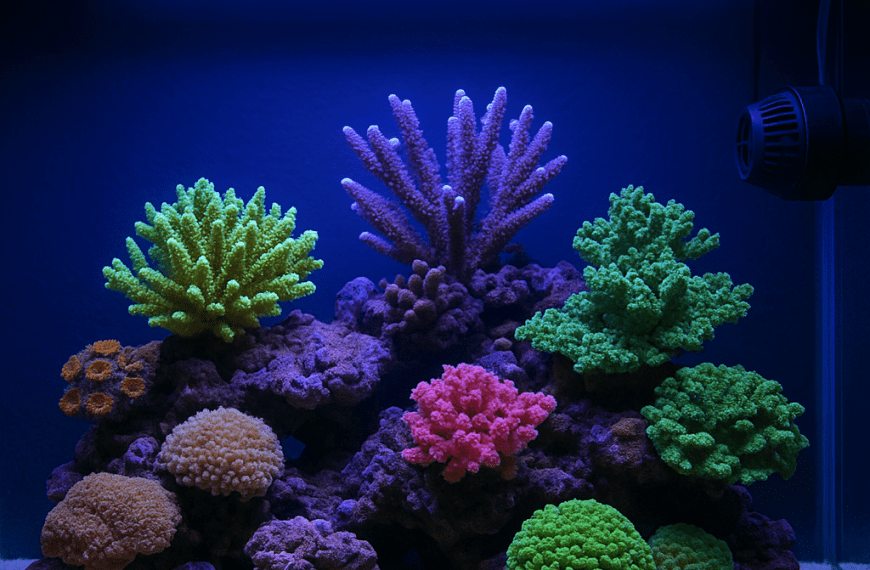
This species is not reef safe in most tanks. It often nips LPS, soft corals, and zoanthids. It may also eat feather dusters and tube worms. Some keepers succeed in sparse reefs, but risk stays high.
In fish-only systems, it pairs well with larger angels, tangs, and wrasses. Avoid tiny shrimp and small ornamental crabs. Watch for bullying from triggers and large dottybacks. Add the raccoon before the most aggressive fish.
Common mistakes include undersized tanks and low feeding frequency. Another issue is copper stress during quarantine. Use a test kit and stay in therapeutic range. Keep copper stable and avoid sudden changes.
Watch for ich and flukes during the first month. Scratching and cloudy eyes are warning signs. A freshwater dip can confirm flukes. Follow with praziquantel in quarantine. Learn the basics in marine ich treatment guidance.
- Rapid breathing: check ammonia, oxygen, and temperature first.
- Fin nips: add more caves and feed smaller meals more often.
- Coral nipping: move the fish to fish-only, not the coral.
Raccoon Butterflyfish rewards good planning with bold behavior and easy feeding. Give it space, stable parameters, and a varied diet. Choose tankmates carefully, and assume it will nip sessile invertebrates.
When kept in a roomy fish-only system, it can thrive for many years. Take quarantine seriously and keep water quality steady.
Sources: FishBase (Chaetodon lunula species summary); Scott W. Michael, “Marine Fishes”; Humann & DeLoach, “Reef Fish Identification.”
 By
By