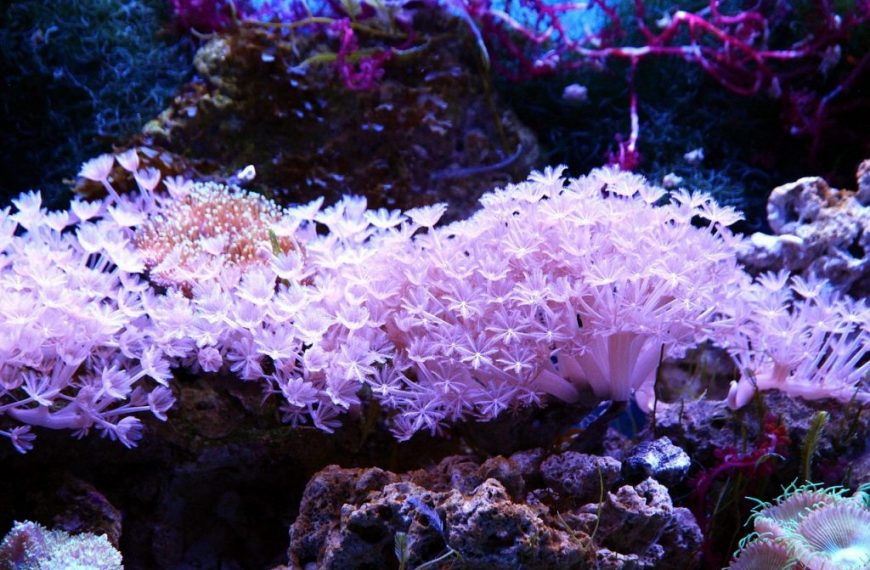
Reef algae shows up in every saltwater tank. The key is learning what type you have. Then you can fix the cause, not just the look.
Step 1: Identify the algae and confirm the trigger
Start with a close look under white light. Green film wipes off glass fast. Hair algae feels like wet fur. Bubble algae looks like shiny green grapes. Cyanobacteria forms red or purple sheets with trapped bubbles.
Next, test your water with numbers you can act on. Target nitrate at 2–15 ppm for most reefs. Keep phosphate at 0.03–0.10 ppm. Aim for alkalinity at 7.5–9.0 dKH. Hold salinity at 1.025–1.026 and temp at 77–79°F.
Use trends, not one test result. Test nitrate and phosphate twice weekly for two weeks. Log the results after feeding and after water changes. A rising phosphate line often points to food, detritus, or rock leaching.
Check your light schedule and spectrum. Many tanks run too long. Keep total photoperiod at 8–10 hours. Keep peak intensity stable for at least two weeks. Sudden changes can trigger blooms.
- Quick ID tip: If it peels off in sheets, suspect cyano.
- Quick test tip: If phosphate reads 0.00, verify with a fresh reagent.
- Quick light tip: Reduce white channel first, not blue.
For setup basics, review reef tank water parameters. For nutrient testing routines, see how to test nitrate and phosphate.
Step 2: Fix nutrients, flow, and filtration without shock
Most nuisance algae is a nutrient and detritus problem. Feed less for 10 days and watch fish condition. A good starting point is two small feedings daily. Each feeding should be eaten in 30–60 seconds.
Increase export in simple steps. Clean the skimmer neck every 2–3 days. Replace filter floss every 2–4 days. Vacuum the sand lightly during weekly changes. Change 10–15% weekly until numbers stabilize.
Improve flow where algae collects. Aim for 20–40x tank volume per hour in mixed reefs. Redirect pumps to remove dead spots behind rock. Cyano often fades when flow increases and detritus stops settling.
Add a controlled phosphate remover if needed. Start with half the recommended dose of GFO. Re-test phosphate after 48 hours. A drop larger than 0.05 ppm in two days can stress corals. Go slower if you keep LPS.
- Rinse frozen foods in a fine net before feeding.
- Empty and clean the skimmer cup twice weekly.
- Blow detritus off rocks with a turkey baster before water changes.
If you run a refugium, harvest macroalgae weekly. Remove 25–50% each trim. This exports nutrients in a measurable way. For equipment tuning, read protein skimmer tuning guide.
Step 3: Targeted removal and common algae-specific mistakes
Manual removal speeds success. Scrape glass daily for one week. Pull hair algae with tweezers during water changes. Siphon the loosened strands out. Leaving it in the tank feeds the next wave.
Use clean-up crews as support, not the main plan. Start with 1 trochus or turbo per 10 gallons. Add 1–2 nassarius per 10 gallons for leftover food. Avoid overstocking hermits in small tanks. They can kill snails.
Bubble algae needs careful handling. Pop as few bubbles as possible. Remove whole clusters with a small chisel tool. Run fresh carbon for 48 hours after a big session. This helps water clarity and odor.
Common mistakes cause repeat blooms. Chasing “zero nutrients” often backfires. Corals pale and algae shifts to dinos. Another mistake is big light changes. Reduce intensity by 5–10% per week at most.
- Hair algae keeps returning: check for trapped detritus in rock caves.
- Green dust on sand: shorten light by one hour for two weeks.
- Cyano after new sand: increase flow and siphon daily for seven days.
Sources: Randy Holmes-Farley, “Phosphate and the Reef Aquarium” (Reefkeeping Magazine); Dana Riddle, “Light in the Reef Aquarium” (Advanced Aquarist); Craig Bingman, “Nutrients and the Reef Aquarium” (Reefkeeping Magazine).
Reef algae control works best with steady steps. Identify the algae, confirm the trigger, and adjust one variable at a time. Within four to six weeks, most tanks show clear, lasting improvement.
 By
By