Taming Common Problems in Your Saltwater Aquarium
Even experienced reef keepers run into issues: cloudy water, algae explosions, stressed fish, or corals that just won’t open. The good news is that most saltwater aquarium problems follow predictable patterns and can be fixed with a calm, step-by-step approach. This troubleshooting guide will help you quickly identify what’s going wrong, stabilize your tank, and prevent the same issues from coming back.
Diagnosing Problems: Start With the Basics
When something looks off in your saltwater aquarium, resist the urge to add chemicals or new equipment right away. Instead, run through a simple diagnostic checklist:
- Test your water parameters – Ammonia, nitrite, nitrate, pH, salinity, and temperature should be checked first. For reef tanks, also test alkalinity, calcium, and magnesium.
- Review your maintenance routine – When was your last water change? Have you cleaned mechanical filters or replaced carbon recently?
- Observe livestock behavior – Rapid breathing, hiding, or gasping at the surface can point to oxygen or toxin issues.
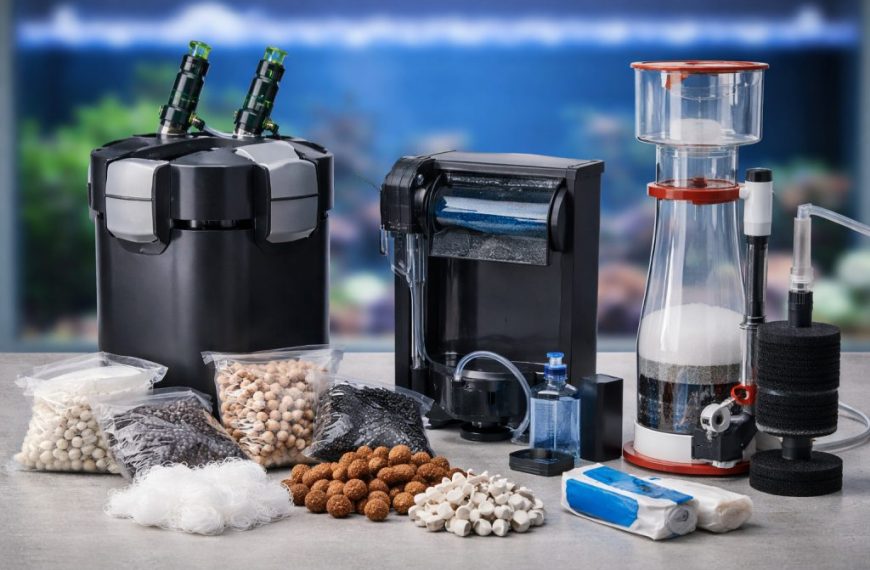
- Check equipment – Verify heaters, return pumps, wavemakers, and skimmers are running properly and not clogged.
If you’re unsure what “normal” should look like, compare your results to the baseline recommendations in your tank setup notes or your usual log. If you haven’t kept a log before, now is a great time to start.
For a deeper dive into getting your salt mix and salinity right, see our guide on Mixing Saltwater for a Marine Tank.
Fixing Specific Saltwater Aquarium Issues
Cloudy or Milky Water
Cloudy water usually comes from a bacterial bloom, overfeeding, or disturbed substrate.
- Stop or reduce feeding for 24–48 hours.
- Clean filter socks or mechanical media.
- Perform a 10–20% water change, matching temperature and salinity carefully.
- Avoid stirring deep sand beds; siphon only the top layer.
If the tank is new, some cloudiness is normal and will clear as bacteria populations stabilize.
Algae Blooms (Green Hair, Film, or Cyano)
Algae problems almost always trace back to excess nutrients and light.
- Reduce nutrients – Feed smaller portions, rinse frozen foods, and consider adding a refugium or better protein skimming.
- Improve source water – Use RO/DI water for top-off and mixing saltwater.
- Adjust lighting – Shorten the photoperiod and avoid direct sunlight on the tank.
- Manual removal – Gently pull or siphon algae during water changes.
Pair nutrient control with a balanced clean-up crew. For stocking ideas, check out our article on the best clean-up crew for reef tanks.
Stressed or Sick Fish
Fish that are breathing heavily, hiding, or showing spots often suffer from poor water quality or sudden changes.
- Test ammonia and nitrite immediately; any reading above zero is an emergency.
- Confirm temperature stability within 1–2°F across the day.
- Look for aggression from tank mates or overcrowding.
- Quarantine new fish before adding them to your display to prevent disease outbreaks.
Tip: When in doubt, prioritize stability. Slow, consistent corrections are safer than drastic changes.
For long-term success, build your stocking list with compatibility in mind. Our guide to beginner saltwater fish can help you choose hardy species less prone to stress.
Keeping Problems From Coming Back
Most saltwater aquarium troubleshooting comes down to prevention. A simple weekly routine can stop many issues before they start:
- Test key parameters and log the results.
- Change 10–15% of the water with well-mixed, aerated saltwater.
- Clean glass, empty skimmer cups, and rinse mechanical filters.
- Visually inspect corals, rockwork, and all equipment for early warning signs.
By building consistent habits and responding quickly to small changes, you’ll spend less time fighting problems and more time enjoying a thriving reef. Troubleshooting is simply part of the hobby—and each issue you solve makes you a more confident, capable reef keeper.
Sources
- Sprung, J. & Delbeek, J. C. The Reef Aquarium, Vols. 1–3.
- Fenner, R. M. The Conscientious Marine Aquarist.
- Paletta, M. The New Marine Aquarium.
 By
By