Starting a reef tank is one of the most rewarding projects in the aquarium hobby. You’re creating a living slice of the ocean in your home, filled with colorful corals, active fish, and fascinating invertebrates. With a bit of planning and patience, your first reef can thrive for years.
Planning Your First Reef Tank
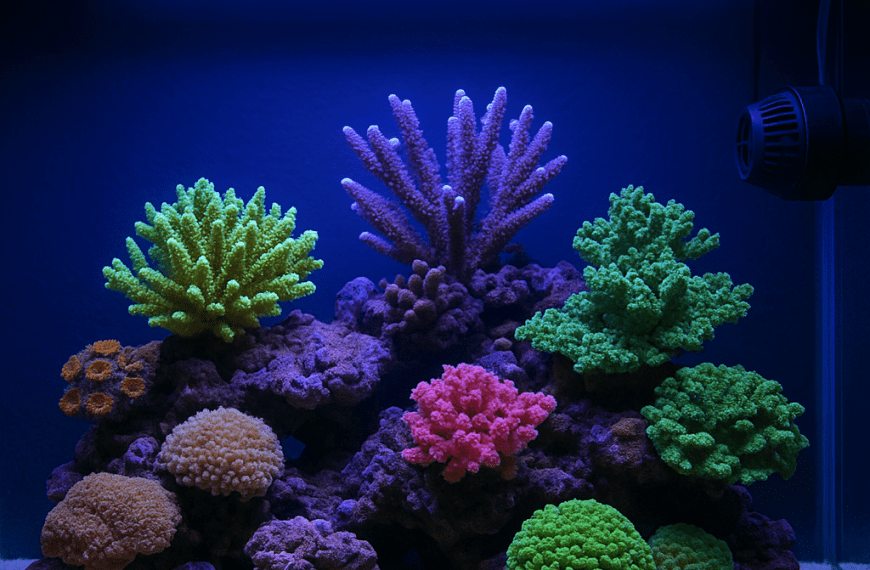
Before buying equipment, decide what kind of reef you want: a soft coral beginner tank, a mixed reef, or a more demanding SPS-focused system. Your answer will guide every choice that follows.
Choosing the Right Tank and Location
For beginners, a tank in the 20–40 gallon range offers a good balance between stability and cost. Too small and water parameters swing quickly; too large and equipment gets expensive fast.
- Location: Place the tank away from windows and heaters to reduce temperature and algae issues.
- Stand and support: Make sure the stand is level and rated for the full weight of the tank, rock, and water.
- Future access: Leave room behind and above the tank for maintenance and cable management.
If you’re still comparing sizes and layouts, check out our guide on choosing your first saltwater aquarium for more detailed tank selection tips.
Essential Equipment for a Stable Reef
At minimum, a reliable reef system needs:
- Quality lighting suitable for coral growth (LED reef lights are the most flexible for beginners).
- Protein skimmer or strong mechanical/biological filtration to export nutrients.
- Heater and thermometer (and ideally a backup heater) to keep temperatures 77–79°F (25–26°C).
- Powerheads for water movement; aim for varied, turbulent flow rather than a single strong jet.
- RO/DI water source to avoid introducing unwanted nutrients and contaminants.
Pro tip: Buy the best test kits you can for salinity, ammonia, nitrite, nitrate, alkalinity, calcium, and magnesium. Consistent testing is more important than chasing “perfect” numbers.
Cycling, Stocking, and Early Coral Care
Rock, Sand, and the Nitrogen Cycle
Live rock (or dry rock seeded with bacteria) and a shallow sand bed form the biological backbone of your reef. Set up your aquascape first, then add saltwater and start the nitrogen cycle using bottled bacteria or a small ammonia source.
- Expect the cycle to take 3–6 weeks.
- Do not add fish or corals until ammonia and nitrite are consistently zero.
- Perform small water changes if nutrients climb too high, but avoid constantly disrupting the cycle.
Once your tank is cycled, you can introduce a small clean-up crew. Our article on beginner reef clean-up crews covers snails, hermits, and other useful invertebrates to add first.
Adding Fish and Beginner Corals
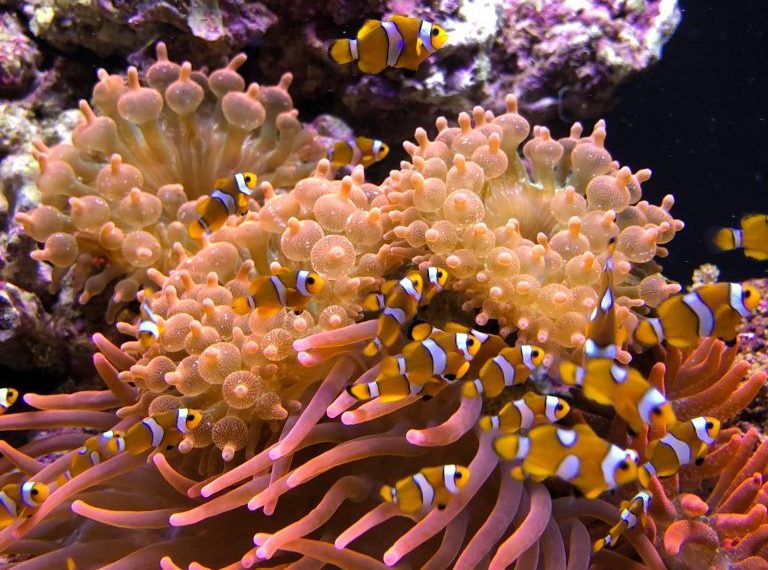
Stock your reef slowly. Add one or two hardy fish at a time, quarantining when possible. Clownfish, gobies, and some wrasses make excellent first choices.
For your first corals, look for hardy, forgiving species such as:
- Soft corals like mushrooms, leathers, and zoanthids.
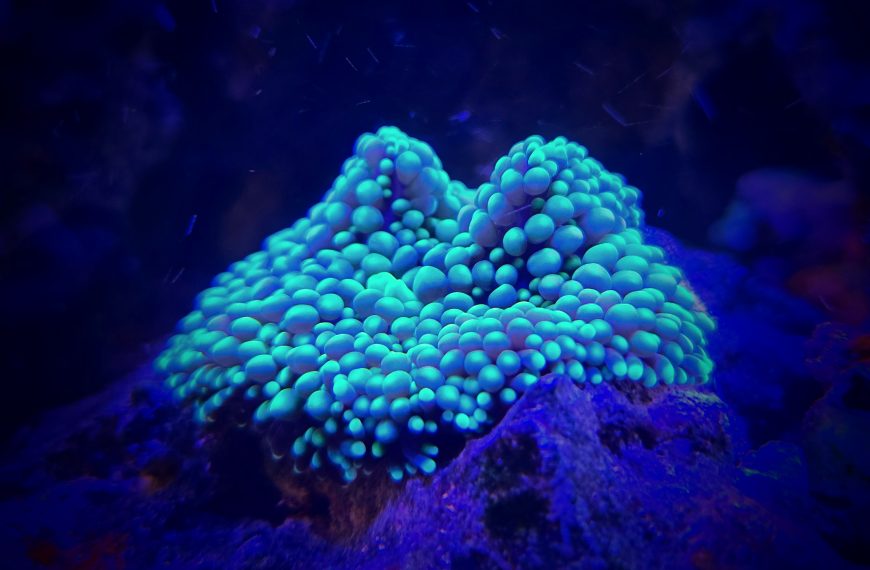
- LPS corals such as hammer, frogspawn, and candy cane, once you’re comfortable with basic parameters.
Pro tip: Stability beats perfection. Slightly elevated nutrients with steady parameters are better than constantly changing salinity, alkalinity, or temperature.
Long-Term Success and Maintenance Habits
Successful reef tanks are built on routine. Create a simple schedule and stick to it:
- Daily: Check temperature, equipment, and livestock behavior.
- Weekly: Test key parameters, clean glass, and perform a 10–15% water change if needed.
- Monthly: Deep-clean pumps and skimmers, replace filter media, and review your stocking and feeding.
As your corals grow, you’ll need to maintain calcium, alkalinity, and magnesium through water changes or dosing. When you’re ready to take that next step, our guide to reef tank water parameters walks through ideal ranges and simple dosing strategies.
Starting a reef tank isn’t about perfection on day one; it’s about learning, observing, and making small, consistent improvements. With thoughtful planning, patient stocking, and steady maintenance, your first reef can become a thriving, colorful centerpiece in your home for years to come.
Sources
- Sprung, J. & Delbeek, J. C. The Reef Aquarium, Vol. 1–3. Ricordea Publishing.
- Borneman, E. H. Aquarium Corals: Selection, Husbandry, and Natural History. TFH Publications.
- Fenner, R. The Conscientious Marine Aquarist. TFH Publications.
 By
By