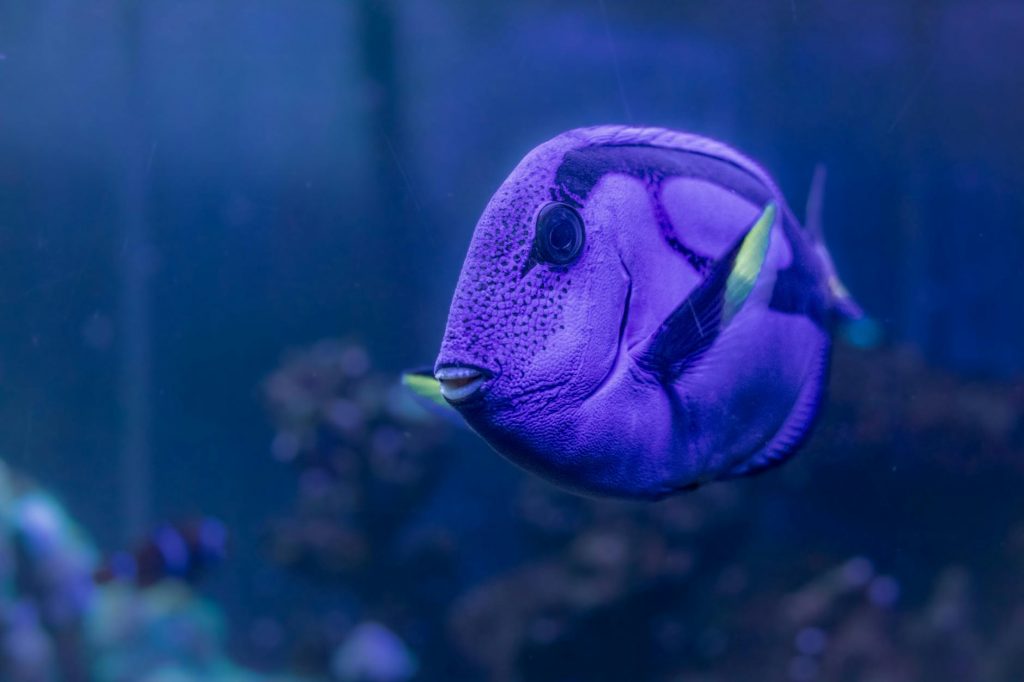
The blue (hippo) tang is a reef icon with big personality. It is also a demanding fish that needs space and stability. With the right plan, it can thrive for years.
Tank size, aquascape, and water parameters
Plan for an adult, not a cute juvenile. A 125-gallon tank is a solid minimum. Many keepers prefer 180 gallons for long-term comfort. The fish can reach 10 to 12 inches.
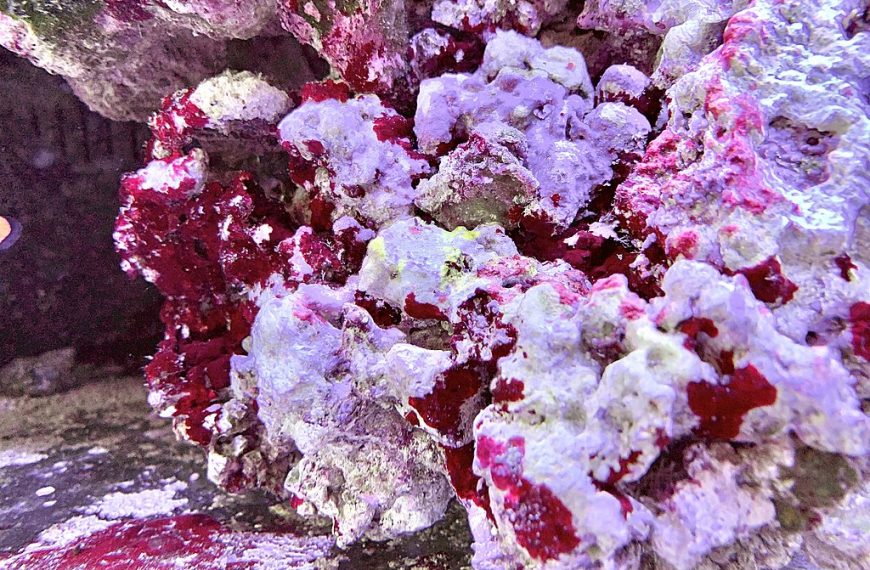
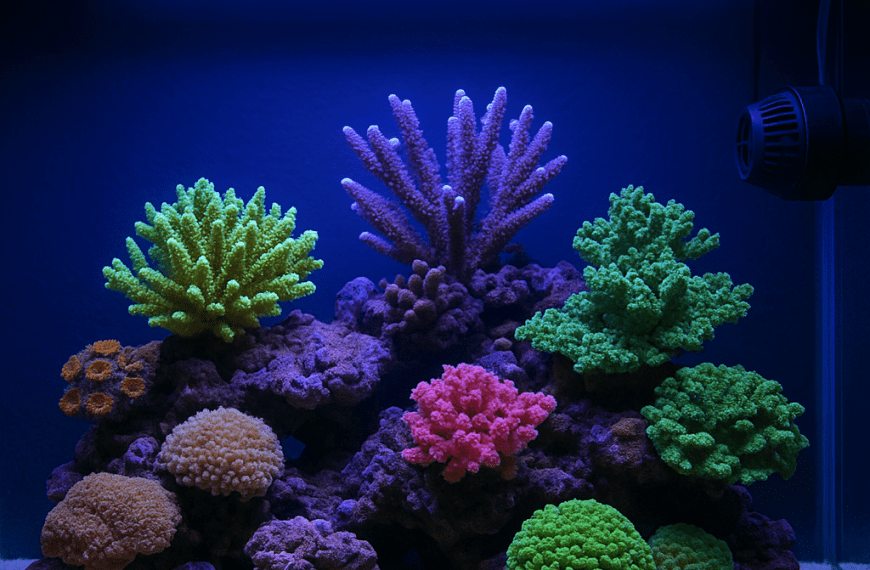
Give it long swim lanes and safe retreat spots. Use 80 to 150 pounds of porous rock in a 125-gallon. Build arches and caves, but keep open water in front. Strong flow helps, but avoid blasting one hiding area.
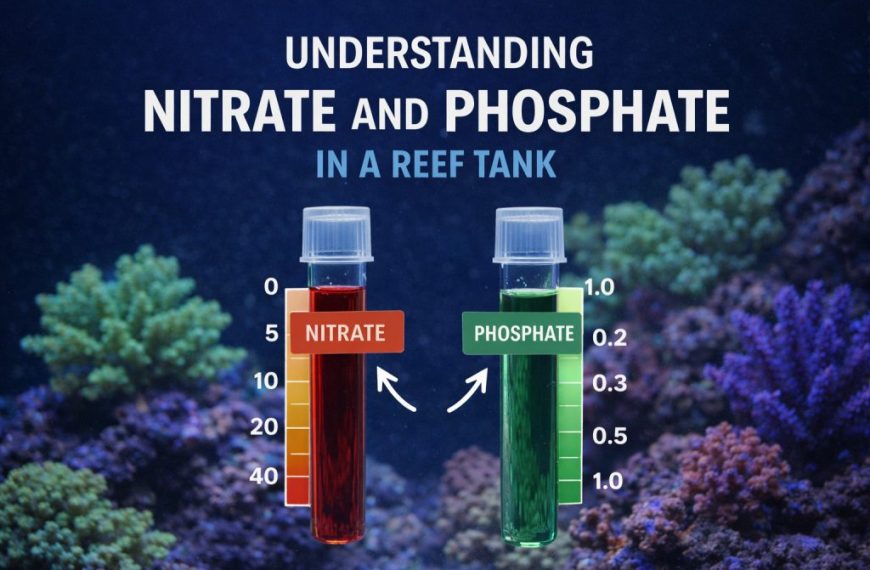
Keep parameters stable and boring. Aim for 76–79°F, salinity 1.025–1.026, and pH 8.1–8.4. Keep alkalinity 8–9 dKH and nitrate 5–15 ppm in reefs. Keep phosphate around 0.03–0.10 ppm for coral systems.
Oxygen matters more than many realize. Use a skimmer sized for 1.5 to 2 times tank volume. Add surface agitation and clean filter socks often. Review reef tank water parameters if your numbers drift.
- Use a tight lid or mesh top to prevent jumps.
- Provide a “sleep cave” that stays dim at night.
- Target 10–20x turnover, plus random powerhead flow.
Diet, feeding schedule, and nutrition for color
Hippo tangs are constant grazers. A once-a-day feeding often fails over time. Feed two to three times daily in smaller portions. This reduces aggression and keeps weight steady.
Start with algae-based foods as the foundation. Offer a 2×3 inch sheet of nori on a clip each morning. Replace it after 4–6 hours to avoid fouling. Rotate red, green, and brown algae sheets.
Add protein for growth and immune support. Feed frozen mysis or brine plus spirulina in the evening. Use about one cube per 75 gallons, then adjust. Soak food in vitamins twice weekly, especially in new fish.
Watch the belly and the dorsal line. A pinched belly signals underfeeding or parasites. Pale color can also mean stress or low nutrition. For more options, see our reef fish feeding guide.
- Feed nori daily, but remove leftovers before lights out.
- Use an auto-feeder for pellets when you travel.
- Mix foods to avoid “single diet” deficiencies.
Quarantine, disease risks, and compatibility
Blue tangs are prone to marine ich and velvet. Many arrive stressed from shipping. Quarantine is not optional if you want long-term success. A 20–40 gallon bare tank works for juveniles.
Run quarantine for 30 days, minimum. Keep temperature at 78°F and salinity at 1.025. Add PVC elbows for shelter and a seeded sponge filter. Test ammonia daily for the first week.
Use observation plus a clear plan. If you see white spots, rapid breathing, or flashing, act fast. Many hobbyists use copper for ich and velvet in fish-only quarantine. Follow the product’s target range with a reliable test kit.
In the display, choose tankmates carefully. Avoid adding it last with other tangs already established. Add it before aggressive surgeonfish when possible. Use an acclimation box for 2–5 days to reduce attacks. Learn more in our tang compatibility guide.
- Common mistake: adding a hippo tang to a 75-gallon “for now.”
- Troubleshoot fin damage by increasing hiding spots and feeding.
- Reduce stress by keeping lights low for the first 24 hours.
The blue (hippo) tang rewards patient keepers with bold color and constant motion. Give it a large tank, stable parameters, and frequent algae-rich meals. Quarantine and smart introductions prevent most long-term problems.
Sources: Froese, R. & Pauly, D. (eds.) FishBase (Paracanthurus hepatus species summary); Fenner, R. (The Conscientious Marine Aquarist); Hemdal, J. (Diseases of Marine Fishes)
 By
By