Cycling is the first real test of a reef tank. It builds the bacteria that process toxic waste. Do it right and your first fish will thrive.
What “cycling” means and what to measure
A reef cycle grows nitrifying bacteria in your rock, sand, and filter. These bacteria convert ammonia into nitrite, then nitrate. Ammonia and nitrite can burn gills fast. Your goal is zero of both.
Use reliable test kits or a calibrated digital checker. Test ammonia, nitrite, nitrate, and pH. Track salinity and temperature daily. Stability matters more than chasing perfect numbers.
Target parameters during cycling are simple. Keep salinity at 1.025 to 1.026 specific gravity. Hold temperature at 77 to 79°F. Keep pH between 7.9 and 8.3. Aim for alkalinity near 8 to 9 dKH.
Expect nitrate to rise as the cycle completes. Nitrate under 20 ppm is fine for early fish. For a reef, many hobbyists aim for 5 to 15 ppm. You can lower it later with water changes and export.
- Test ammonia and nitrite every 2 to 3 days at first.
- Write results in a simple log or spreadsheet.
- Do not add animals until ammonia and nitrite read 0 ppm.
If you need a refresher on instruments, see reef tank water parameters. For early planning, reef tank beginner setup helps avoid common gear mistakes.
Step-by-step fishless cycle with a bottled bacteria boost
Start with mixed saltwater and running equipment. Run the return pump, heater, and powerheads. You can run the skimmer, but it may remove bacteria. Many hobbyists leave it off for 48 hours.
Add your bacteria product per the label. Then add an ammonia source. Pure ammonium chloride is easy to control. Dose to 2.0 ppm ammonia nitrogen, then test after 30 minutes. Adjust in small amounts.
Wait and test. Ammonia should fall first. Nitrite may spike next. When both hit 0 ppm, do a “proof dose.” Add enough ammonia to reach 1.0 ppm. If it returns to 0 within 24 hours, the biofilter is ready.
After the proof dose passes, reduce nitrate before livestock. Do a 25% to 50% water change. Match salinity and temperature closely. Then add carbon if you used any curing rock. Keep lights low to limit algae.
- Use 2.0 ppm ammonia to start, then 1.0 ppm for the proof dose.
- Keep strong flow and surface agitation for oxygen.
- Do a 25% to 50% water change before your first fish.
Troubleshooting, timelines, and first livestock choices
Most fishless cycles take 10 to 30 days. Bottled bacteria can shorten it. Dry rock often cycles slower than live rock. Cold water also slows bacteria growth. Keep the tank at 78°F for best speed.
If ammonia will not drop, check pH and temperature first. Low pH can stall bacteria. Improve aeration and verify salinity. Also confirm your test kit is not expired. Retest with a second brand if results look odd.
If nitrite stays high for weeks, be patient. Nitrite oxidizers can lag behind. Avoid huge ammonia doses that keep nitrite extreme. Keep ammonia under 2 ppm during the process. A 10% water change can reduce stress on the biofilter.
When the cycle is done, add livestock slowly. Start with one hardy fish in a quarantined plan. A pair of ocellaris clownfish is a common choice. Feed lightly for the first week. Test ammonia daily after adding fish.
- Common mistake: adding a full clean-up crew before the tank has algae.
- Common mistake: turning lights on full power during the cycle.
- Common mistake: adding three fish at once “because tests look good.”
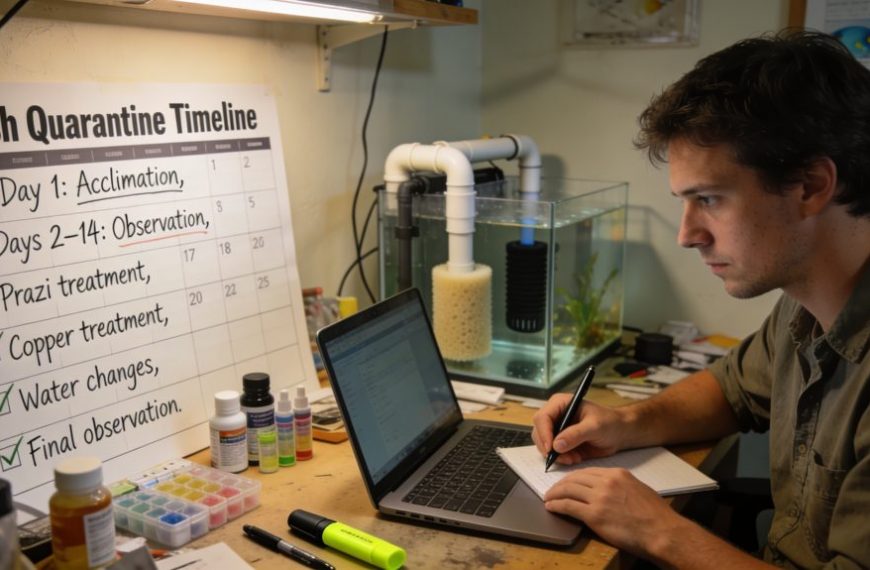
For safer stocking, review quarantine saltwater fish. It prevents ich and other parasites from entering your display.
Cycle with patience and consistent testing. Prove the biofilter with a 24-hour ammonia check. Then stock slowly and keep parameters stable. Your reef will reward you for the careful start.
Sources: Hovanec & DeLong (1996) nitrifying bacteria in aquaria; Spotte, “Captive Seawater Fishes”; Delbeek & Sprung, “The Reef Aquarium” Vol. 1.
 By
By