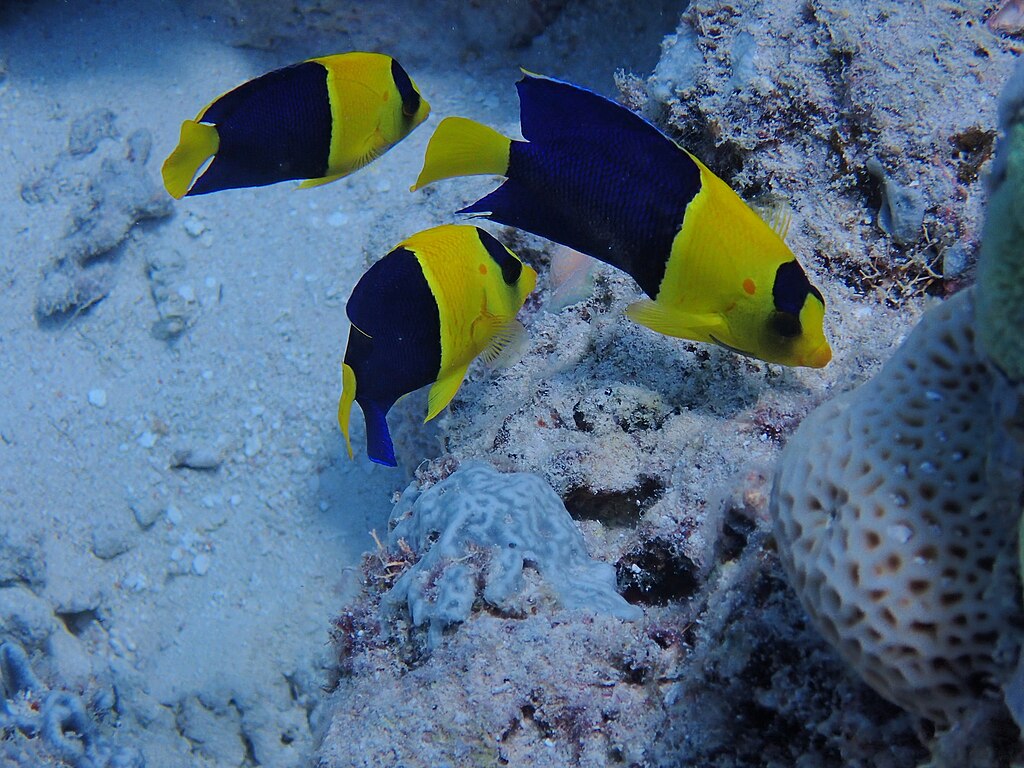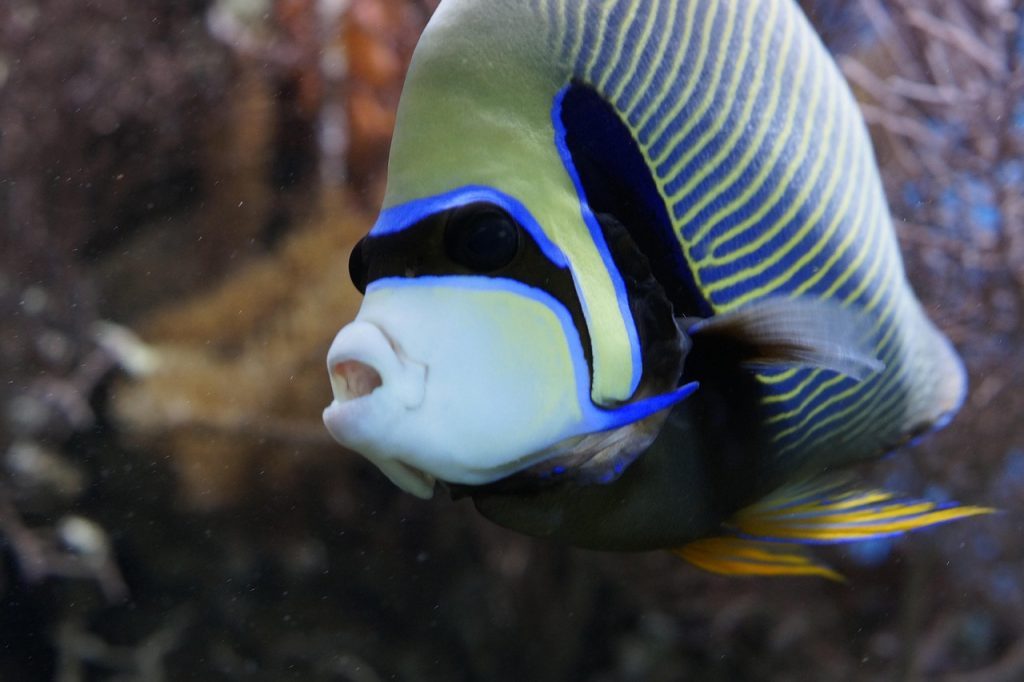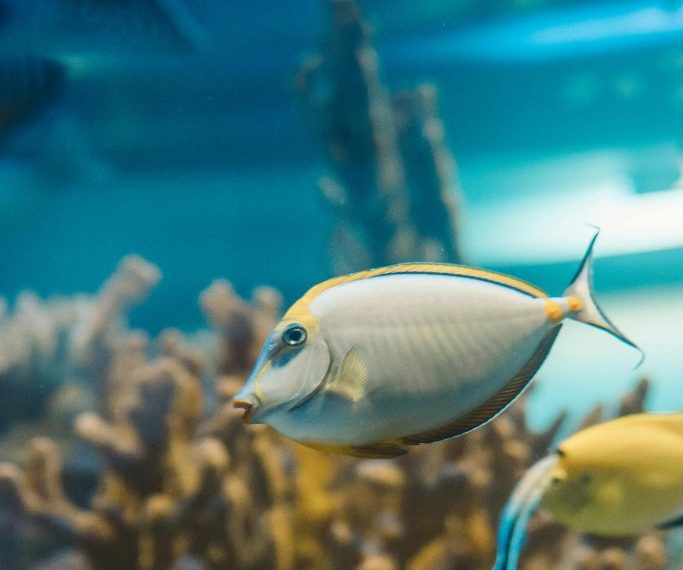
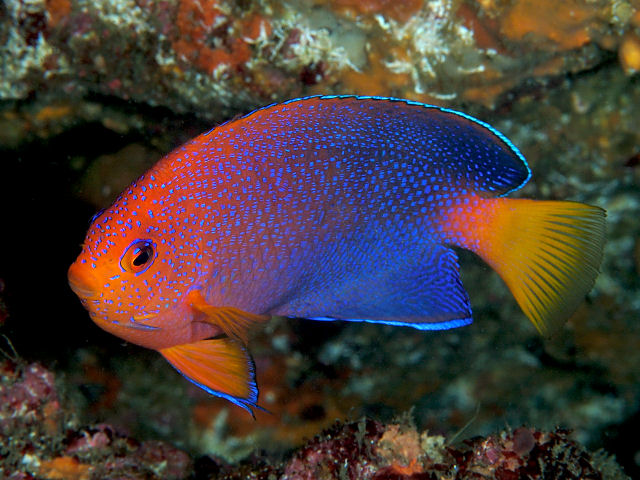
Japanese Angelfish (Centropyge interrupta) is a rare dwarf angel with big presence. It rewards patient keepers with bold color and smart behavior. This guide focuses on tank setup, feeding, and long-term success.
Tank size, aquascape, and water targets
Plan for at least 70 gallons for one adult fish. Larger is better for stability and grazing space. Many keepers prefer 90 gallons or more. This reduces stress during acclimation.
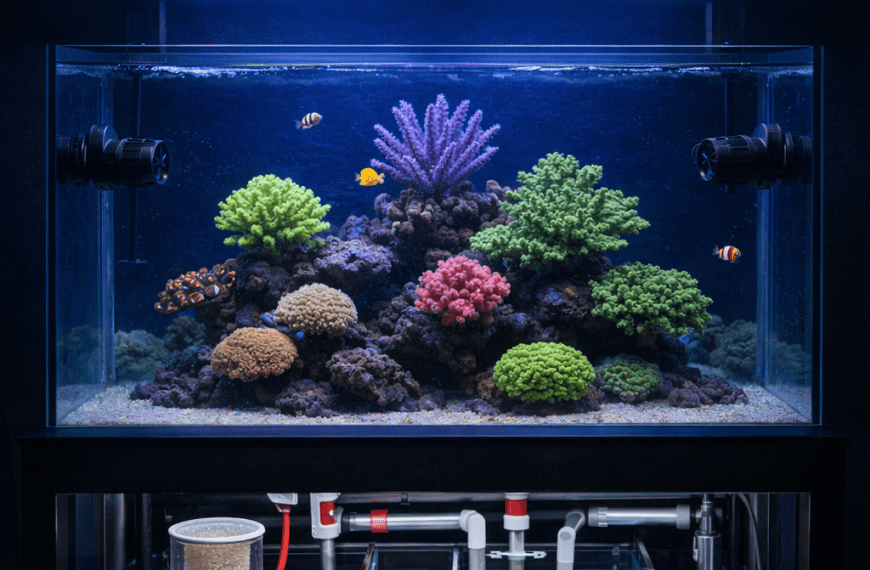
Build a rockscape with caves and shaded ledges. Leave open lanes for short bursts of swimming. Use 1 to 1.5 pounds of live rock per gallon. Add a few tight crevices for sleeping security.
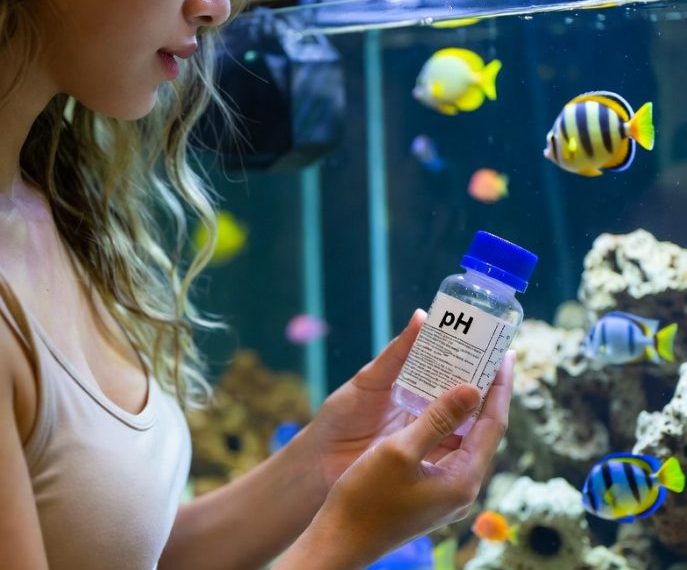
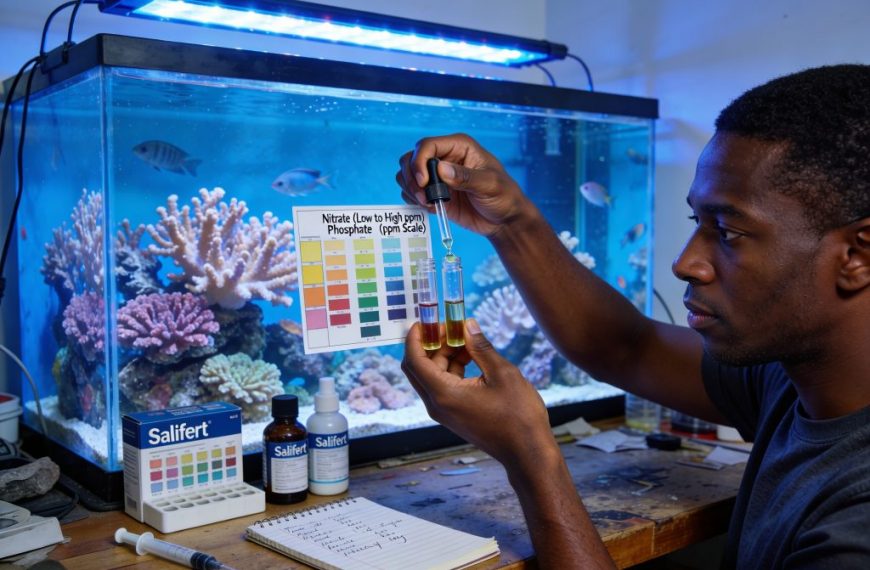
Keep parameters stable and predictable. Aim for 25–26°C (77–79°F) and salinity 1.025–1.026. Maintain pH 8.1–8.4 and alkalinity 8–9 dKH. Keep nitrate 5–15 ppm and phosphate 0.03–0.10 ppm.
Strong filtration matters for this constant grazer. Use a skimmer rated for 1.5x your tank volume. Provide moderate, varied flow. Sudden swings trigger hiding and missed meals.
- Use a tight lid or mesh top to prevent jumping.
- Run carbon and change it every 2–4 weeks.
- Do 10% weekly water changes for steady nutrients.
For more system planning, review our reef tank cycling guide. Also see saltwater water parameters for target ranges and testing tips.
Feeding strategy and daily care
Centropyge interrupta needs frequent, small meals. Feed 2–4 times per day for best weight. Offer a mix of meaty and algae-based foods. Variety improves color and reduces picky phases.
Start with frozen mysis, enriched brine, and finely chopped clam. Add a quality pellet sized 0.8–1.2 mm. Include spirulina flakes or algae pellets daily. Nori sheets help, but some individuals ignore them.
Use a feeding ring to keep food from blasting into overflow. Turn pumps down for 5–10 minutes. Watch the belly line after feeding. A slightly rounded belly is a good sign.
Grazing time matters as much as meal time. Mature rock with film algae and microfauna helps. Avoid “too clean” tanks early on. Let some natural growth develop on back glass and rocks.
- Soak frozen foods in vitamins 2–3 times per week.
- Offer one “algae heavy” meal each day.
- Remove uneaten food after 5 minutes to protect water quality.
If your fish refuses food, reduce light and add more shelter. Try live blackworms or fresh clam on the half shell. Then transition back to frozen and pellets. Track intake in a simple notebook.
Compatibility, reef safety, and quarantine
Japanese Angelfish can be semi-aggressive with other dwarf angels. Avoid mixing with similar Centropyge in small tanks. Add it before more dominant fish when possible. Use an acclimation box for 2–3 days if needed.
Reef safety is mixed and depends on the individual. Many ignore SPS but may nip LPS and fleshy polyps. Watch acans, zoas, and open brains first. Feed well and provide grazing surfaces to reduce picking.
Quarantine improves survival and protects your display. Use a 20–30 gallon bare tank with PVC shelters. Match salinity and temperature to the seller’s water. Observe for 14–30 days before transfer.
Common issues include ich, flukes, and bacterial mouth damage. Look for flashing, cloudy eyes, or rapid breathing. Keep ammonia at 0 ppm with seeded media and daily checks. For a step-by-step plan, see our marine fish quarantine guide.
- Keep dissolved oxygen high with strong surface agitation.
- Do not chase the fish with nets during the first week.
- Use a dim ramp-up light schedule for 3–5 days.
Conclusion: Centropyge interrupta thrives with stable water and frequent feeding. Give it space, rockwork, and a calm introduction. With patience, it becomes a hardy, interactive show fish.
Sources: Fenner, R. (The Conscientious Marine Aquarist); Michael, S. (Marine Fishes); Sprung, J. (The Reef Aquarium, Vol. 1–3); Delbeek, J. & Sprung, J. (The Reef Aquarium).
 By
By