Nano Reef Care Basics
Nano reefs look small and simple. They are not always easy. Stability is harder in small volumes. Small changes can swing parameters fast. Careful planning keeps things stable and enjoyable.
Start with a realistic tank size. Many hobbyists choose 10 to 20 gallons. Smaller tanks demand more attention. Slight mistakes show up quickly. A bit more water volume gives extra stability.
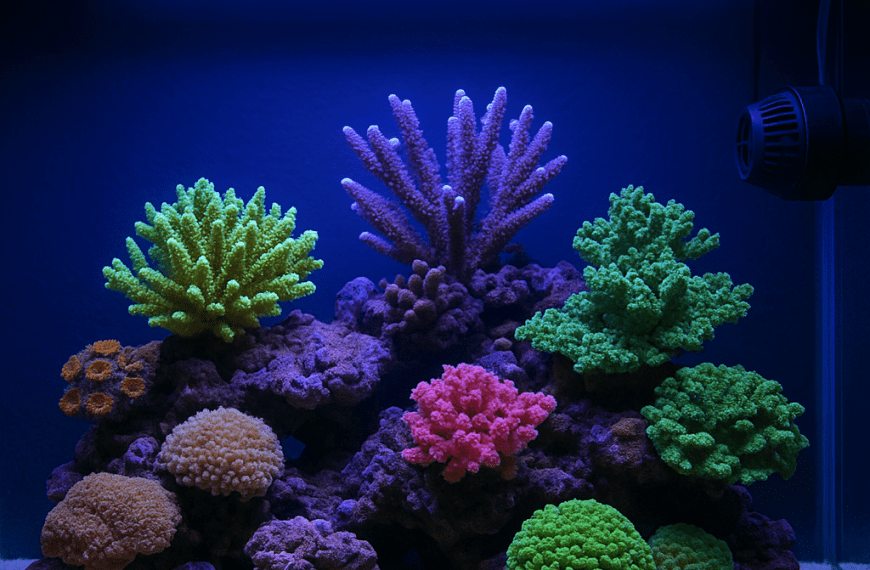
Select hardy corals and inverts first. Soft corals usually handle nano conditions better. Zoanthids, mushrooms, and leathers are good starters. Avoid demanding SPS until you gain experience. Go slow with stocking and changes.
Research your livestock before buying. Check compatibility and adult size. Plan your nano reef community. For more stocking ideas, see our beginner saltwater fish stocking guide.
Equipment and Daily Care
Good filtration is critical. Use a reliable hang-on-back filter or rear chamber system. Add filter floss, bio media, and possibly a small skimmer. Rinse or replace media regularly. Do not let detritus build up.
Lighting must match your coral choices. Soft corals need moderate reef lighting. Many nano LED fixtures work well. Avoid cheap, untested lights. Consistent light intensity and schedule matter more than brand.
Flow keeps detritus suspended and corals healthy. Use a small controllable powerhead. Aim for random, gentle movement. Avoid blasting corals directly. Watch how food and debris move in the tank.
Simple Daily Routine
- Top off evaporated water with fresh RO/DI water.
- Check temperature and salinity quickly.
- Observe fish and corals for stress or damage.
- Remove any visible algae or uneaten food.
Consistent routines prevent big problems. For water chemistry basics, review our reef tank water parameters guide.
Water Quality and Maintenance
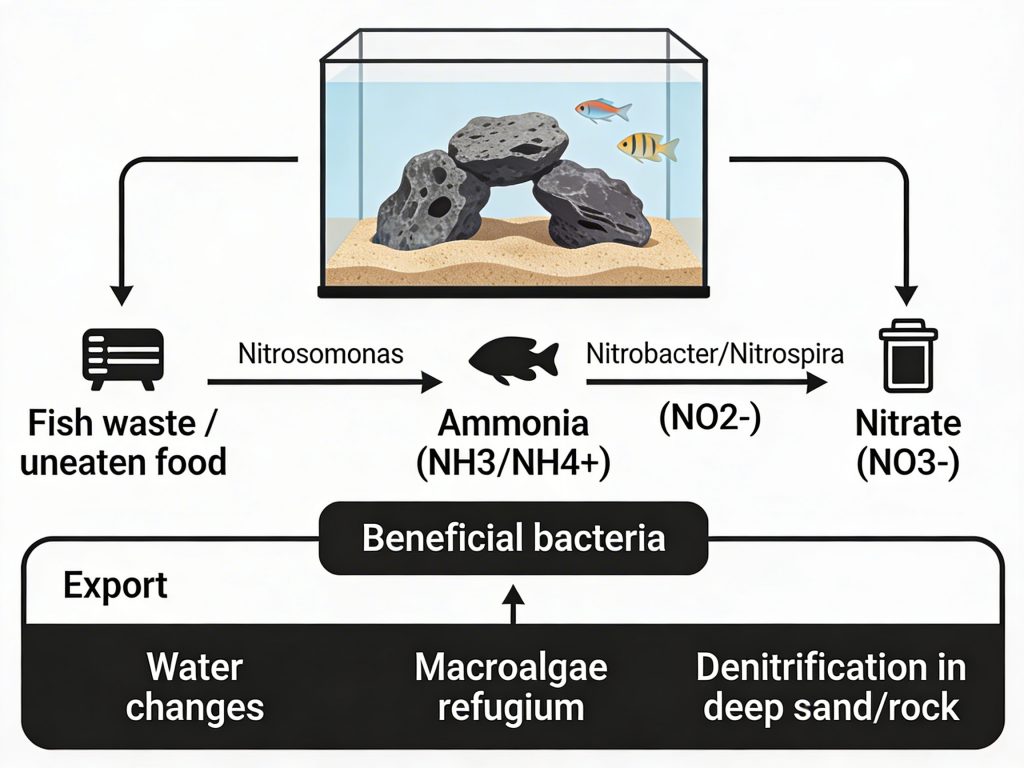
Water changes are your main tool. Perform 15–25% weekly on most nano reefs. This refreshes trace elements. It also removes dissolved waste. Use pre-mixed saltwater with stable parameters.
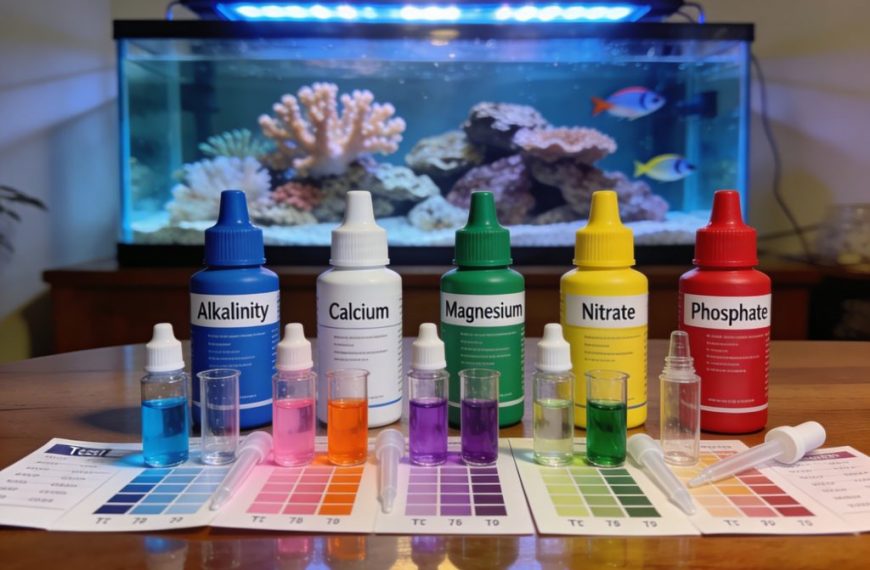
Test key parameters regularly. Focus on salinity, temperature, alkalinity, nitrate, and phosphate. Keep a simple log. Look for trends before problems appear. Adjust slowly when needed.
Practical Nano Reef Tips
- Keep feeding light. Overfeeding quickly raises nutrients.
- Use a refractometer for accurate salinity readings.
- Quarantine new fish when possible, even for nanos.
- Choose a stable heater with a guard.
- Label buckets and tools for saltwater only.
Algae will appear at some point. Do not panic. Reduce feeding slightly. Check your light schedule. Manually remove algae during water changes. Add a small clean-up crew suited for nanos.
In nano reefs, consistency beats perfection. Small, regular tasks prevent big, stressful fixes later.
As your nano reef matures, coral growth may slow. This can signal low nutrients or depleted elements. Test more often during these phases. Consider dosing only when you understand your tank’s consumption. For more growth strategies, read our coral growth tips for small reef tanks.
With patience and steady habits, nano reefs thrive. Enjoy the close-up view of your tiny ecosystem. Learn from each change. Your experience will grow along with your corals.
Sources
- Borneman, E. J. Aquarium Corals. TFH Publications.
- Fenner, R. The Conscientious Marine Aquarist. Microcosm.
- Sprung, J. Corals: A Quick Reference Guide. Ricordea Publishing.
 By
By