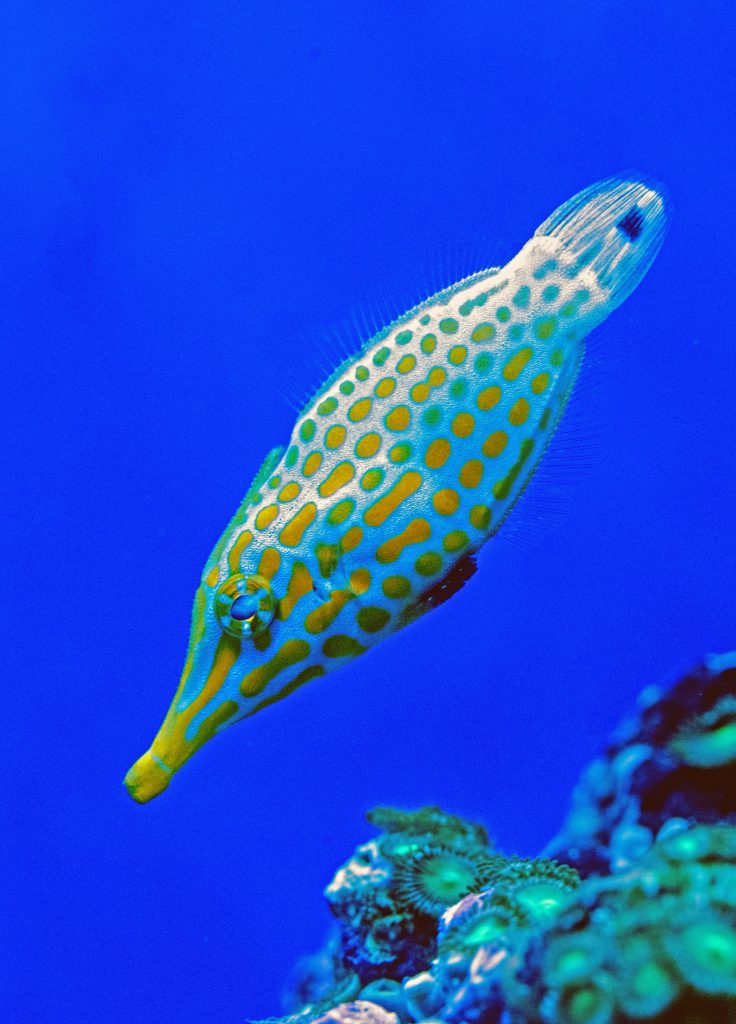
The orange spotted filefish is a true reef oddball. It looks peaceful and delicate. It also has very specific needs that surprise new keepers.
Oxymonacanthus longirostris is often sold as “reef safe.” That label can be misleading. Success depends on diet planning, tank maturity, and careful observation.
Natural behavior and what it means in your tank
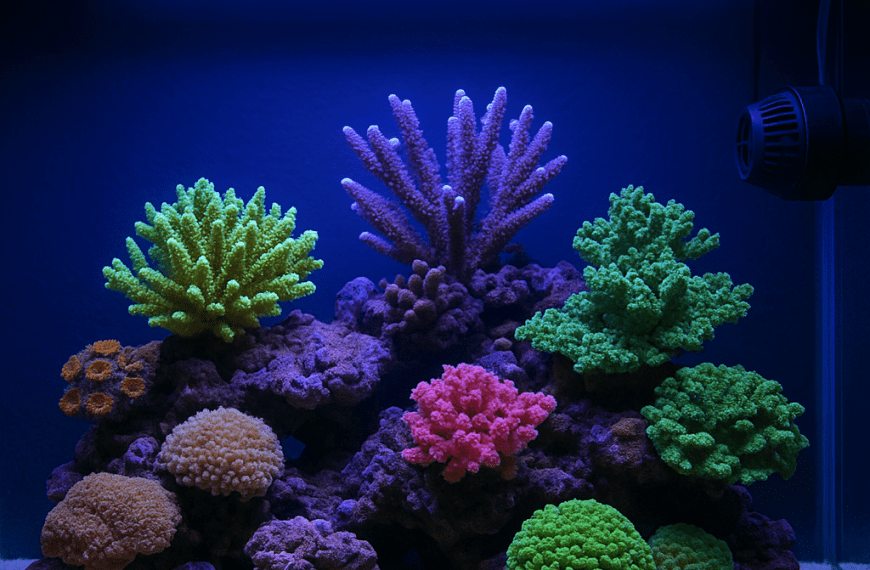
In the wild, this fish lives among branching Acropora corals. It picks at coral polyps all day. That constant grazing drives its body shape and metabolism.
Plan for a calm aquarium with stable conditions. A 40–55 gallon tank can work for one specimen. A larger tank, like 75 gallons, is easier to keep stable. Avoid fast, aggressive tankmates.
Give it structure and shelter. Use branching rockwork and coral-shaped hiding spots. Keep moderate flow with quiet zones. Strong, chaotic flow can exhaust this fish.
Expect a shy feeder at first. Many arrive thin with pinched bellies. Use a low-stress acclimation area. A social “dither” fish can help, but keep it peaceful.
- Target temperature: 24–26°C (75–79°F) with minimal swings
- Salinity: 1.025–1.026 specific gravity, measured with a calibrated refractometer
- Keep nitrates under 10–15 ppm and phosphate under 0.10 ppm
For tank planning help, review reef tank setup basics. For compatibility ideas, see peaceful reef fish.
Feeding: the make-or-break factor
Diet is the main reason these filefish fail in captivity. Many refuse standard foods. They can starve in weeks without a plan. You must confirm feeding before you commit.
Start with frequent, small meals. Aim for 4–6 feedings daily for the first month. Use frozen foods with fine texture. Offer enriched mysis, calanus, cyclops, and finely chopped clam.
Use a feeding station or a small dish. Place it near the fish’s hiding area. Turn pumps down for 10 minutes. This keeps food from blasting away.
Some individuals accept pellets later. Choose 0.5–1.0 mm soft pellets. Soak them in vitamins and HUFA. Watch the belly line each week. A rounded belly means you are winning.
- Feed frozen foods at least twice daily, even after “trained”
- Enrich foods 3–4 times weekly with a vitamin and HUFA supplement
- Use a quarantine “feeding box” to confirm eating before display transfer
If you need a step-by-step approach, read quarantine for reef fish. It helps you verify feeding and reduce stress.
Reef safety, coral risk, and troubleshooting
This species is not reliably coral safe. Many will nip Acropora and Pocillopora polyps. Some ignore corals once trained onto prepared foods. Others never stop grazing.
Use a clear decision rule. If you keep prized SPS, assume risk is high. If you still try, pick hardy frags first. Watch for reduced polyp extension and paling tips.
Common mistakes include low feeding frequency and unstable salinity. Another issue is bullying. Even “semi-aggressive” fish can outcompete it at meals. Use a feeding tube to deliver food close.
Troubleshoot early warning signs. Rapid weight loss means immediate action. Move the fish to a quiet tank and increase feedings. Try live foods like enriched baby brine or copepods to restart interest.
- If it stops eating for 48 hours, reduce stress and offer live copepods
- If coral nipping increases, add more feedings and remove if needed
- If breathing is fast, check ammonia, pH, and temperature right away
Sources: Allen, Steene & Humann, Reef Fish Identification; Fenner, The Conscientious Marine Aquarist; Borneman, Aquarium Corals.
Orange spotted filefish can thrive, but only with preparation. Plan for frequent feeding and stable water. Treat coral safety as uncertain, and watch behavior daily.
 By
By