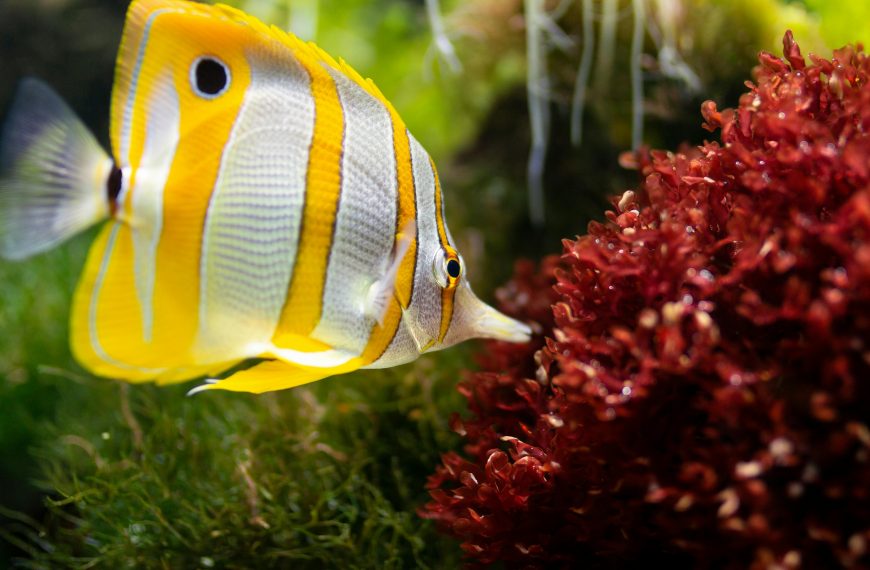
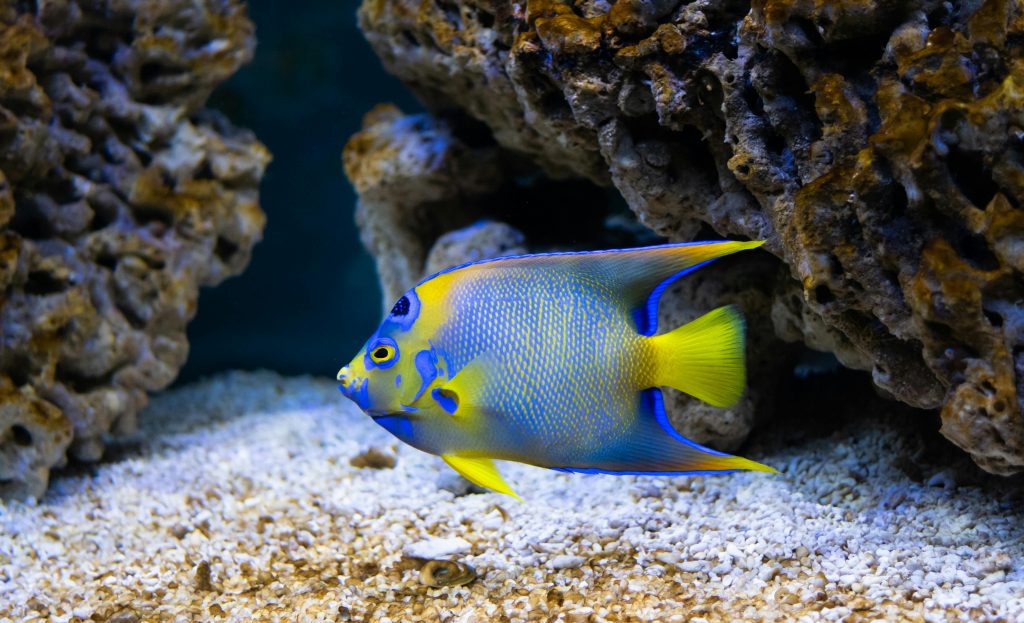
Queen Angelfish are showpiece fish with bold blue and yellow color. They also have real needs and strong opinions. Plan for size, diet, and temperament before you buy.
Natural behavior and what it means in your tank
Holacanthus ciliaris comes from Western Atlantic reefs. Adults patrol sponge-rich areas and defend territory. That mindset follows them into aquariums. Expect confidence and occasional aggression.
They grow fast with heavy feeding. Many reach 10–12 inches in captivity. Some exceed 15 inches in large systems. That size demands open swimming lanes and tall rockwork.
A 180-gallon tank is a practical minimum for an adult. Bigger is safer for stability and behavior. Aim for 240 gallons if you want multiple large fish. Provide caves for retreat and sleep.
Juveniles can be shy at first. Adults often become dominant. Add them after peaceful fish, but before other large angels. Review your stocking plan in reef tank stocking order.
- Minimum tank: 180 gallons, 6-foot length preferred
- Temperature: 76–79°F, keep daily swing under 1°F
- Salinity: 1.025–1.026, measured with a calibrated refractometer
- pH: 8.1–8.4, alkalinity 8–9 dKH for stability
Feeding, nutrition, and keeping color strong
Queen Angelfish are sponge and tunicate grazers in the wild. Many fail from slow starvation, not disease. Build a diet around marine sponge and varied proteins. Feed small portions two to three times daily.
Use an angelfish formula with sponge as the base. Add frozen mysis, chopped clam, and quality pellets. Offer nori sheets two or three times weekly. This supports gut health and reduces rock picking.
Watch the belly line behind the pectoral fins. A pinched look signals underfeeding or parasites. Increase frequency first, not portion size. If weight still drops, plan a fecal check and treatment.
Good color comes from steady nutrition and stable water. Sudden lighting changes can dull blues. Keep nitrate around 5–20 ppm and phosphate 0.05–0.15 ppm. Learn nutrient control in nitrate and phosphate in reef tanks.
- Morning: sponge-based frozen angelfish mix, thawed and rinsed
- Evening: mysis plus pellets soaked in vitamins twice weekly
- Weekly: offer clam on the half shell for enrichment
- Skip fasting days for new imports during the first month
Compatibility, reef risks, and a safe quarantine plan
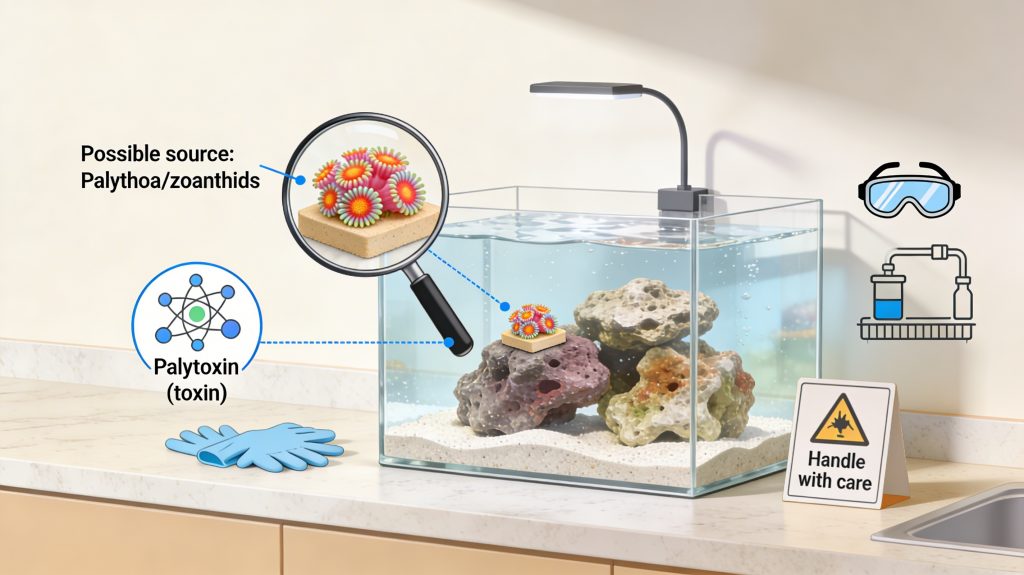
Queen Angelfish are not reef safe in most mixed reefs. Many nip LPS, zoas, and clam mantles. Some ignore corals for months, then start sampling. Treat them as “reef with caution,” at best.
They do well in fish-only with live rock systems. Pair them with robust tankmates like large tangs and triggers. Avoid timid butterflies and small angels. Keep one large Holacanthus per tank in most setups.
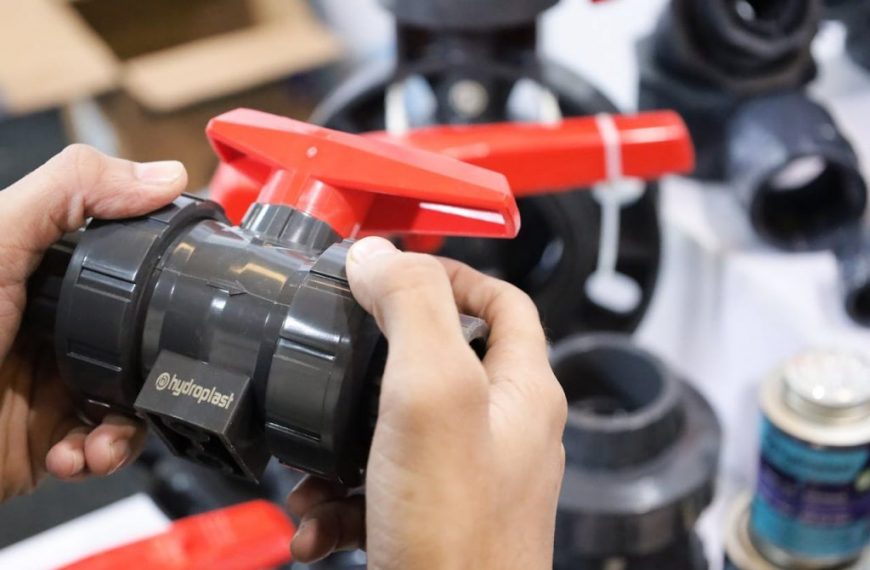
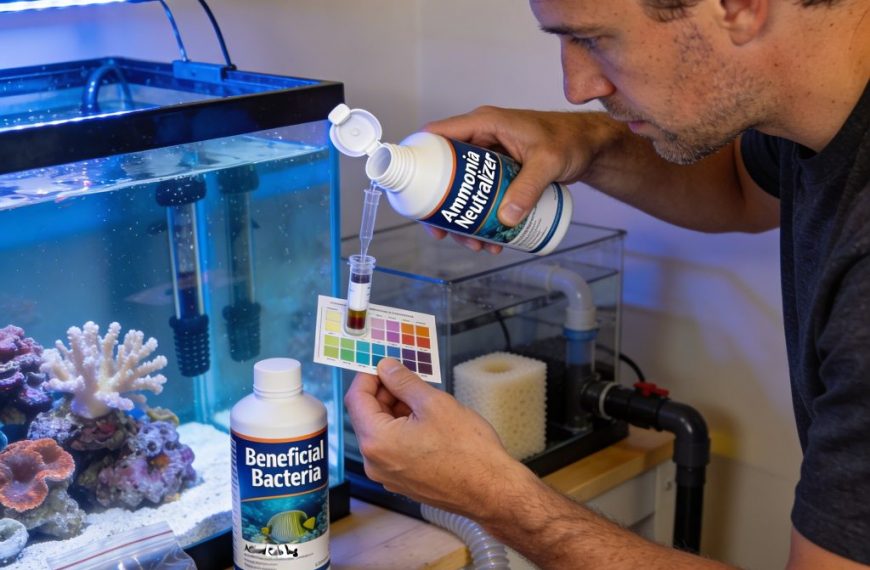
Quarantine protects your display and helps them start eating. Use a 40–75 gallon bare-bottom tank for a 4–6 inch fish. Provide PVC elbows and a dark background. Keep ammonia at zero with seeded media and testing.
Many imports carry flukes and ich. Observe for flashing, cloudy eyes, and rapid breathing. Consider praziquantel for flukes and a proven ich plan. Follow a step-by-step guide in marine fish quarantine guide.
- Match salinity slowly, no more than 0.001 per day change
- Use an acclimation box if adding to an established community
- Reduce aggression with extra caves and a larger feeding schedule
- If coral nipping starts, increase sponge foods and add a decoy clam shell
Queen Angelfish reward planning and patience. Give them space, stable parameters, and sponge-rich meals. Quarantine well and choose tankmates carefully. Do that, and you can keep this icon long term.
Sources: Burgess & Axelrod, Angelfishes of the World; Scott W. Michael, Marine Fishes; Fenner, The Conscientious Marine Aquarist.
 By
By