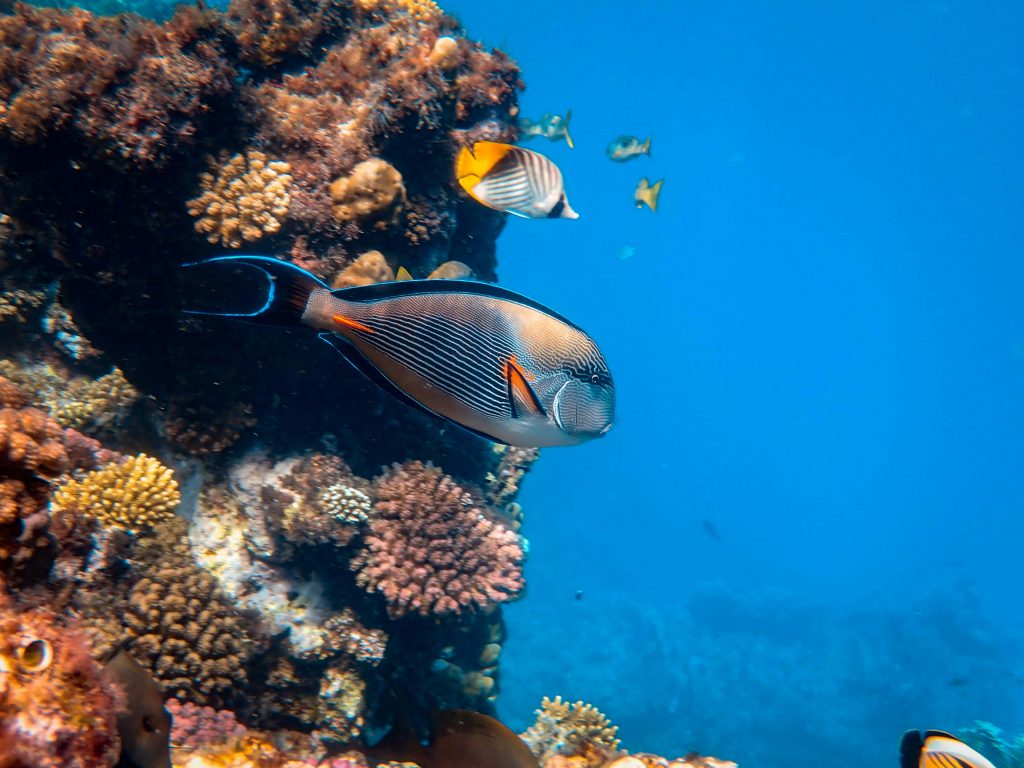
Reef tanks look stable, but they change every day. Good maintenance keeps corals growing and fish calm. It also prevents most “mystery” problems before they start.
Build a simple weekly routine
A reef tank runs best with repeatable habits. Pick two short maintenance windows each week. Many hobbyists choose a midweek check and a weekend water change. Consistency matters more than perfect timing.
Start with basic targets and track them. Keep salinity at 1.025–1.026 specific gravity. Hold temperature at 77–79°F with a 1°F swing. Aim for pH 8.0–8.3 and alkalinity 8–9 dKH. Test nitrate weekly and keep it 2–15 ppm. Keep phosphate 0.03–0.10 ppm for most mixed reefs.
Do a 10% water change each week for new tanks. For stable tanks, 10% every two weeks can work. Mix saltwater for 24 hours with heat and flow. Match salinity within 0.001 and temperature within 1°F. This avoids coral stress and fish flashing.
Keep a short log after each session. Note test results, dosing, and livestock changes. Patterns show up fast in a log. Use your reef tank parameters checklist to stay consistent.
Weekly routine checklist:
- Top off with RO/DI water daily, or use an ATO
- Test alkalinity 2–3 times weekly in coral-heavy tanks
- Clean glass and empty the skimmer cup
- Change 10% water and siphon detritus from bare spots
Keep equipment clean and predictable
Dirty gear causes drifting parameters. It also reduces oxygen and pH stability. Clean small parts often instead of deep cleaning rarely. Small effort prevents big swings.
Service your protein skimmer weekly. Wipe the neck and rinse the cup. A clean neck can double foam production. Check the air intake for salt creep. If bubbles look large, soak the venturi in warm water.
Powerheads need attention every four to six weeks. Pull them and remove the impeller. Soak parts in a 1:1 vinegar and water mix for 20 minutes. Rinse well and reassemble. Reduced flow often shows as cyano on the sand.
Replace or refresh media on a schedule. Activated carbon often lasts two to four weeks. GFO varies with phosphate load, but many tanks need changes every two to six weeks. If you run filter socks, swap them every two to three days. Dirty socks become nitrate factories.
Equipment tips that prevent failures:
- Use two heaters for redundancy, each sized for 50% load
- Calibrate refractometers monthly with 35 ppt solution
- Keep a spare return pump impeller and tubing clamps
- Label plugs and use drip loops on every cord
Troubleshoot common reef maintenance problems
Most reef issues come from instability. New hobbyists often chase numbers daily. That creates swings that corals hate. Make one change, then wait three to seven days. Let the tank respond before adjusting again.
If alkalinity drops fast, your corals are consuming more. Test at the same time each day for three days. Calculate the daily dKH loss. Dose alkalinity to replace that exact amount. Many mixed reefs use 0.3–1.0 dKH per day. Use a dosing pump for stability.
Algae blooms often follow overfeeding and weak export. Feed fish what they eat in 30–60 seconds. Rinse frozen food in RO/DI water. Increase skimming and replace clogged mechanical filtration. Consider a refugium light schedule of 12–16 hours. Review your reef tank algae control guide for targeted steps.
Cloudy water has a few common causes. A bacterial bloom can follow heavy dosing or overfeeding. Reduce feeding for two days and increase surface agitation. Run fresh carbon for 48 hours. If sand was stirred, use a filter sock and wait it out. For fish stress, review quarantine for reef fish to prevent disease cycles.
Quick “do this first” troubleshooting list:
- Check temperature and salinity before any other test
- Inspect pumps for flow loss and blocked intakes
- Test alkalinity, then nitrate and phosphate
- Stop dosing new products until the tank stabilizes
Reef tank maintenance is simple when it is routine. Stable salinity, alkalinity, and clean equipment do most of the work. Build a schedule you can keep, and your reef will reward you with growth and color.
Sources: Bulk Reef Supply Investigates (reef chemistry and husbandry summaries); Randy Holmes-Farley, Reefkeeping Magazine (alkalinity, calcium, and magnesium fundamentals); Julian Sprung, The Reef Aquarium (general reef husbandry).
 By
By