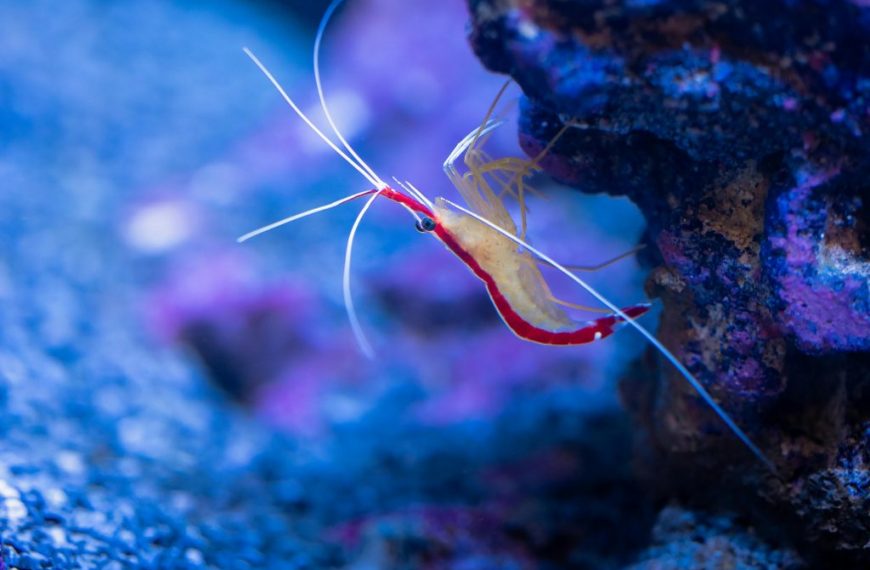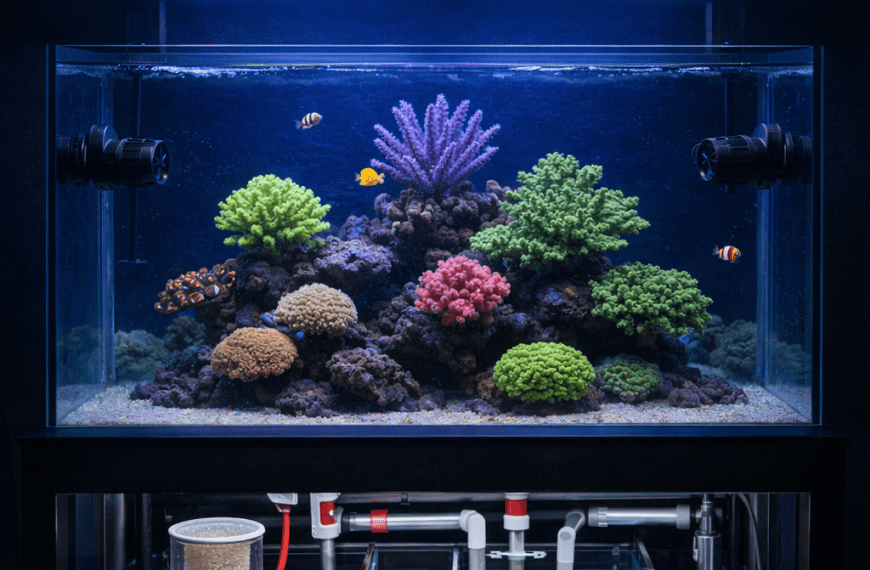
New fish look healthy at the store. Stress can hide disease signs. A quarantine protocol protects your display tank.
Quarantine also helps new fish eat well. It lets you treat problems early. You will lose fewer fish over time.
Set up a simple quarantine tank
Use a bare-bottom tank for easy cleaning. A 10 to 20 gallon tank fits most small fish. Use 29 to 40 gallons for tangs and angels.
Add a heater, lid, and simple light. Use a sponge filter or hang-on-back filter. Seed the sponge in your sump for 2 weeks.
Keep hiding places that do not absorb meds. Use PVC elbows and couplers. Avoid live rock and sand during medication.
Aim for stable baseline parameters. Match salinity to the seller when possible. Then adjust slowly over several days.
- Temperature: 77–79°F (25–26°C)
- Salinity: 1.024–1.026, unless matching shipping water first
- Ammonia: 0 ppm, Nitrite: 0 ppm, Nitrate: under 20 ppm
- pH: 8.0–8.3, with strong surface agitation
Test ammonia daily for the first week. Use an ammonia alert badge too. If ammonia hits 0.25 ppm, do a 25–50% water change.
For more on stability, review cycling a saltwater aquarium. Also keep a log of tests and doses. Notes prevent mistakes.
Day-by-day quarantine protocol
Day 0 starts with careful acclimation. Float the bag for 15 minutes. Then drip acclimate for 30–45 minutes.
Do not pour store water into quarantine. Net the fish into the tank. Keep lights low for the first day.
Feed lightly on day 1. Offer small meals two times daily. Remove leftovers after five minutes to limit ammonia.
Watch breathing and swimming each day. Rapid gilling can mean ammonia or parasites. Flashing can signal ich or flukes.
- Days 1–3: Observe, stabilize, and confirm the fish is eating
- Days 4–14: Treat if needed, or run structured prophylaxis
- Days 15–30: Continue observation and rebuild strength
Many hobbyists choose prophylactic treatment. A common plan targets ich and flukes. It reduces risk in high-value reefs.
For ich, use chelated copper at 2.0–2.5 ppm. Maintain that level for 14 days. Test copper daily with a matching kit.
For flukes, use praziquantel per the label. Dose, wait 5–7 days, then redose once. Increase aeration during treatment.
Never mix medications without a plan. Copper and some antibiotics can stress fish. If bacterial issues appear, pause and reassess.
Use a separate set of tools for quarantine. That includes nets, buckets, and towels. Cross-contamination ruins quarantine.
If you need help picking meds, see our reef fish medication guide. Keep dosages exact. Guessing causes failures.
Troubleshooting and common mistakes
Ammonia spikes are the top quarantine killer. They happen with unseeded filters and heavy feeding. Use daily testing and fast water changes.
Another mistake is rushing the timeline. Symptoms can appear after two weeks. A full 30 days gives you a safety margin.
Copper failures often come from wrong test kits. Use the kit designed for your copper type. Keep levels stable within 0.2 ppm.
Appetite loss is common in bare tanks. Add more PVC cover and reduce light. Offer frozen mysis, pellets, and nori for grazers.
- Do a 10–20% water change twice weekly during observation
- Match temperature and salinity during all water changes
- Run carbon only after medication is complete
- Quarantine inverts separately for 45–76 days if needed
When the fish looks strong, prepare for transfer. Match salinity to the display over 3–5 days. Then move the fish with a clean container.
After quarantine, disinfect the tank and gear. Use a 1:10 bleach solution and rinse well. Air-dry for 24 hours before storage.
For disease prevention in the main tank, read marine ich prevention. Quarantine is your best long-term insurance.
Sources: HumbleFish Disease Forum (quarantine methods); Noga, E.J. “Fish Disease: Diagnosis and Treatment”; Colorni & Burgess research on Cryptocaryon irritans; manufacturer dosing guides for chelated copper and praziquantel.
 By
By