Winter can change your home’s temperature and air quality fast. Those swings can stress marine fish more than you expect. With a few checks and habits, you can keep your reef stable all season.
Stabilize temperature and oxygen first
Most marine fish do best at 25–26°C (77–79°F). Aim to keep daily swings under 0.5°C (1°F). Winter drafts and nighttime setbacks can push tanks below target. That stress can trigger ich and bacterial issues.
Use a reliable heater sized for your system. Many hobbyists use 3–5 watts per gallon as a baseline. In cold rooms, use two smaller heaters instead of one large unit. Set both to the same temperature for redundancy.
Place the temperature probe in high flow. Keep heaters near a return section or powerhead. Test your heater cut-in with a separate thermometer weekly. A cheap backup thermometer can save a tank.
Cold air holds less moisture, but oxygen stays critical. Closed windows can raise indoor CO2. That can depress pH and reduce gas exchange. Add surface agitation and keep skimmers running wet enough for steady air draw.
- Set alerts at 24.5°C and 26.5°C (76°F and 80°F) on your controller.
- Clean powerhead guards monthly to keep flow and oxygen high.
- Keep a spare 150–300W heater and air pump for outages.
For more stability basics, review reef tank water parameters. If you run a controller, calibrate probes before winter peaks. Small errors matter during cold snaps.
Manage evaporation, salinity, and pH swings
Winter heating dries indoor air. Evaporation often increases, even in cooler rooms. That raises salinity if you top off late. Keep salinity at 35 ppt (1.026 specific gravity) and avoid daily jumps.
An ATO is your best winter tool. Use RO/DI water only, not premixed saltwater. Check the ATO sensor weekly for salt creep. A stuck float can swing salinity fast and harm fish.
Indoor CO2 can climb when the house stays closed. That pushes pH down, often to 7.8–8.0. Fish may breathe faster and act skittish. Improve room ventilation when possible, even for short periods.
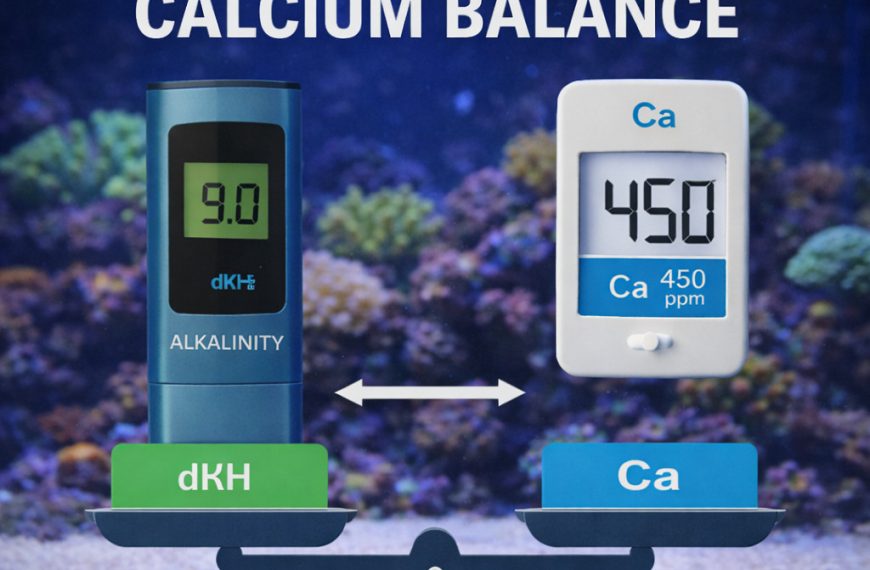
If pH stays low, check alkalinity first. Keep alkalinity stable at 8–9 dKH for mixed reefs. Avoid chasing pH with quick fixes. Stability beats a perfect number in winter.
- Log salinity daily for one week after the first cold front.
- Top off to the same sump level mark every time.
- Clean ATO tubing and check valves to prevent siphon issues.
Need a step-by-step salinity routine? See how to mix saltwater and match temperature before water changes. Cold new water can shock fish and corals. Warm new water to within 0.5°C (1°F) of the tank.
Boost disease prevention and winter feeding strategy
Winter stress can lower immune response. Temperature dips, low pH, and instability stack up. That is when parasites often show up. Watch for flashing, white spots, and frayed fins.
Quarantine becomes more valuable in winter. Run a simple 10–20 gallon QT with a sponge filter. Keep it at 25–26°C (77–79°F) with a tight lid. Observe new fish for 14–30 days before the display.
Feeding should support immunity without polluting water. Feed small portions two times per day for most community fish. Use a mix of frozen mysis, quality pellets, and algae sheets. Rinse frozen foods to reduce phosphate spikes.
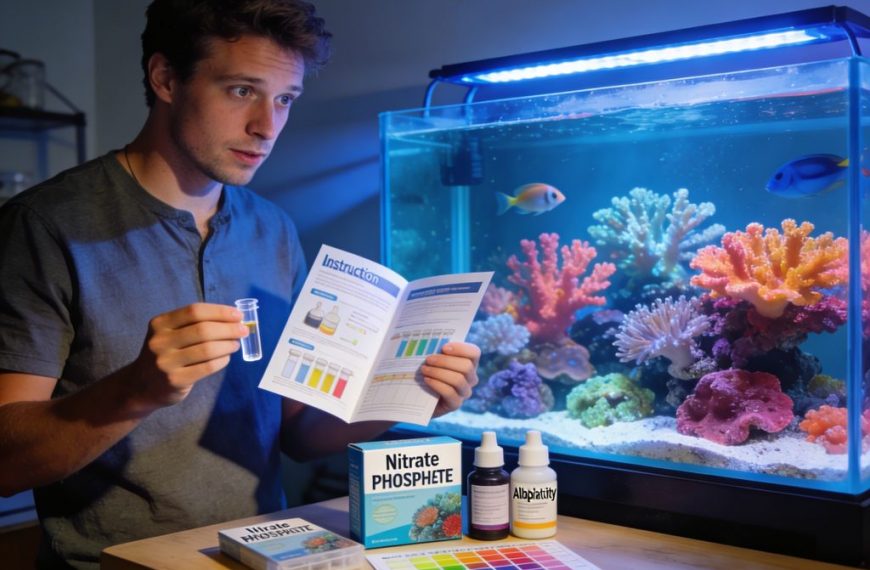
Watch nutrients during heavier feeding. Keep nitrate around 2–20 ppm for many reefs. Keep phosphate near 0.03–0.10 ppm. If algae rises, reduce feeding by 10–20% and increase export slowly.
- Keep activated carbon fresh for clear water and fewer irritants.
- Do a 10% water change weekly during active treatment periods.
- Use a battery air pump during outages to prevent suffocation.
For a full prevention workflow, revisit quarantine marine fish. It reduces emergency treatments in the display. It also protects your inverts and corals.
Winter care is mostly about stability and planning. Keep temperature, salinity, and oxygen steady every day. With smart monitoring and simple backups, your marine fish can thrive until spring.
Sources: Borneman, E. (2001) Aquarium Corals; Fenner, R. (2008) The Conscientious Marine Aquarist; Delbeek & Sprung (1994–2005) The Reef Aquarium (Vol. 1–3).
 By
By