
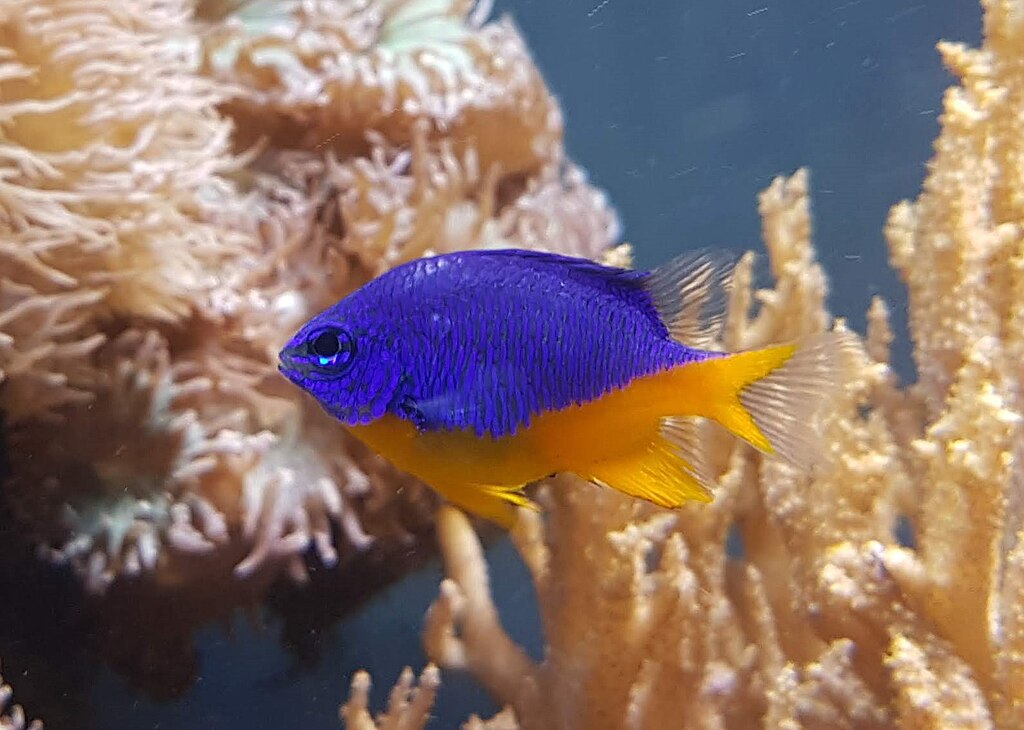
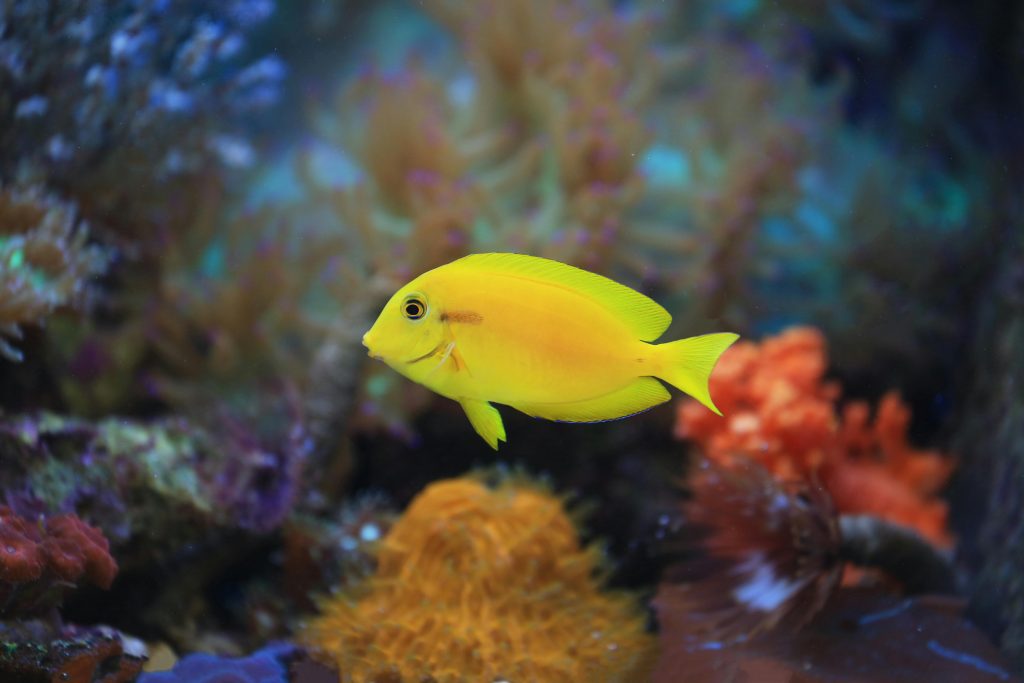
Azure damselfish are small, bright, and hardy. They fit many reef tanks. They also have a bold attitude. This guide helps you keep Chrysiptera hemicyanea thriving.
Tank size, aquascape, and water parameters
An Azure damselfish reaches about 2.5–3 inches as an adult. A single fish can live in a 20-gallon tank. A pair does best in 30 gallons or more. A small group needs 55 gallons or more. Crowding increases fighting fast.
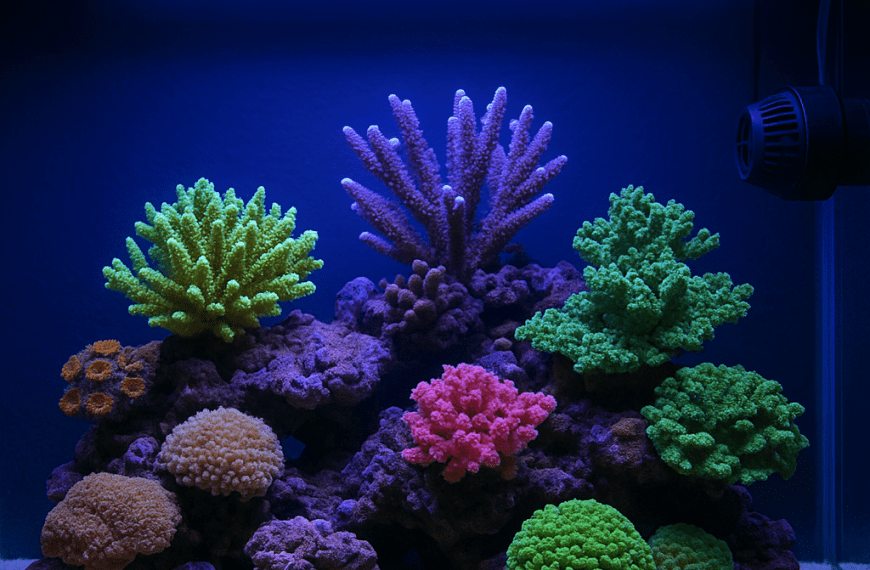
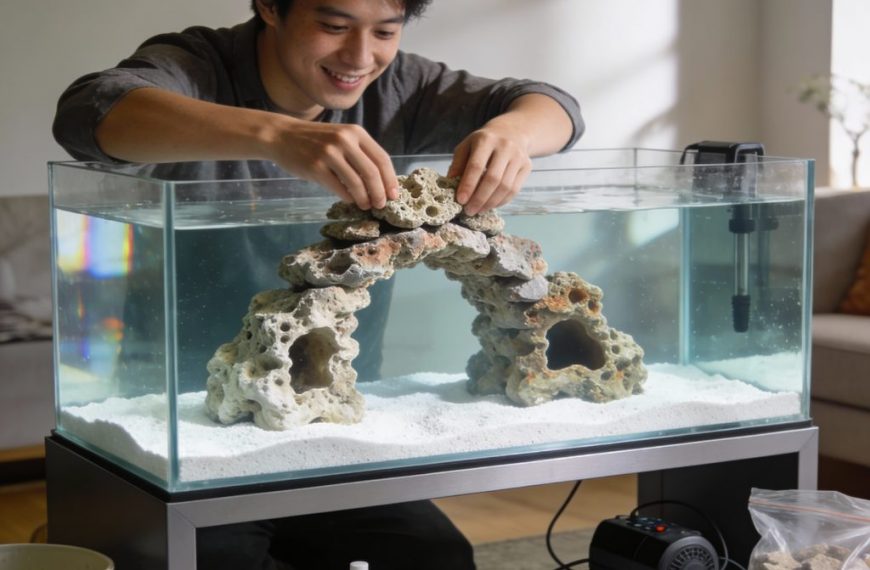
Build a rockscape with many caves and sight breaks. Use 0.5–1 pound of live rock per gallon as a rough guide. Create at least three separate “zones” of shelter. Add open sand and swim lanes too. This reduces constant chasing.
Keep reef-stable parameters and avoid swings. Aim for 76–79°F, with 1.025 specific gravity. Keep pH at 8.1–8.4 and alkalinity at 8–9 dKH. Target ammonia and nitrite at 0 ppm always. Keep nitrate under 10–20 ppm for best color.
Flow should be moderate to strong, but not blasting their cave. Use random flow if possible. Provide strong oxygenation at night. A skimmer helps, even on smaller tanks. For setup basics, see our cycling guide and reef water parameters.
- Use two or more rock “islands” to break lines of sight.
- Add a tight lid or mesh. Damsels can jump when chased.
- Do 10% weekly water changes on small systems.
Feeding, behavior, and tankmate planning
Azure damselfish are omnivores with a strong appetite. Feed small portions twice daily. Offer pellets in the morning and frozen in the evening. Use foods with spirulina or marine algae. This supports color and immune function.
Good frozen choices include mysis, brine shrimp, and finely chopped seafood blends. Rinse frozen food in a net to reduce phosphate input. Clip a small algae sheet once or twice per week. Remove uneaten nori after two hours.
Temperament is “semi-aggressive.” One fish is often peaceful in a community reef. A bonded pair can defend a nest area. Add them late if your tank has shy fish. Add them early if you want them to claim one corner only.
Choose tankmates that can handle some attitude. Clownfish, wrasses, and many gobies work well. Avoid very timid firefish in small tanks. Avoid mixing with similar blue damsels in tight spaces. For stocking strategy, read reef stocking order.
- Feed 2x daily. Use 30–60 seconds as a portion limit.
- Introduce multiple damsels at once to spread aggression.
- Provide one cave per fish, plus one extra.
Quarantine, acclimation, and common problems
Quarantine is worth it, even for hardy damsels. Use a 10–20 gallon bare tank with a sponge filter. Match temperature and salinity to your display. Observe for 14–30 days. Watch for scratching, flashing, or white spots.
Use drip acclimation for 30–45 minutes after temperature matching. Keep lights dim for the first day. Offer food within six hours. If they refuse, try smaller pellets or thawed mysis. Appetite usually returns by day two.
Common issues include bullying, fin damage, and stress ich outbreaks. If one fish gets pinned in a corner, act quickly. Rearrange rockwork to reset territories. Use an acclimation box for 3–7 days if needed. In severe cases, remove the aggressor.
Also watch nutrient creep from heavy feeding. Damsels beg and you may overfeed. Test nitrate weekly in the first month. Increase export if nitrate rises above 20 ppm. Add a small refugium or run fresh carbon monthly.
- If aggression spikes, add more caves and visual barriers.
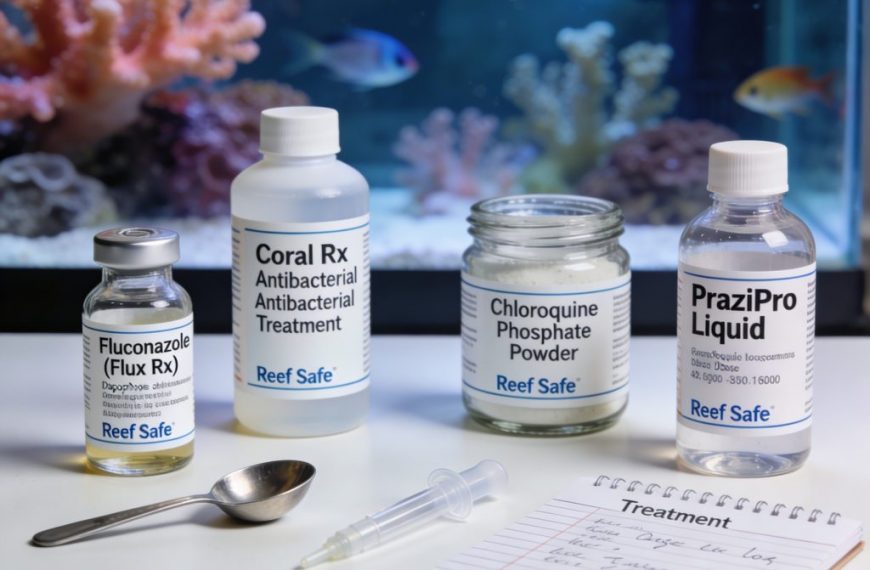
- If ich appears, isolate fish and treat in quarantine.
- If algae blooms, cut feeding by 20% and increase water changes.
Azure damselfish reward good planning with constant color and activity. Give them space, structure, and steady water. Feed a varied diet and manage aggression early. With those steps, they can be a reliable reef centerpiece.
Sources: FishBase (Chrysiptera hemicyanea species summary); Scott W. Michael, Marine Fishes; Fenner, The Conscientious Marine Aquarist.
 By
By
.jpg)