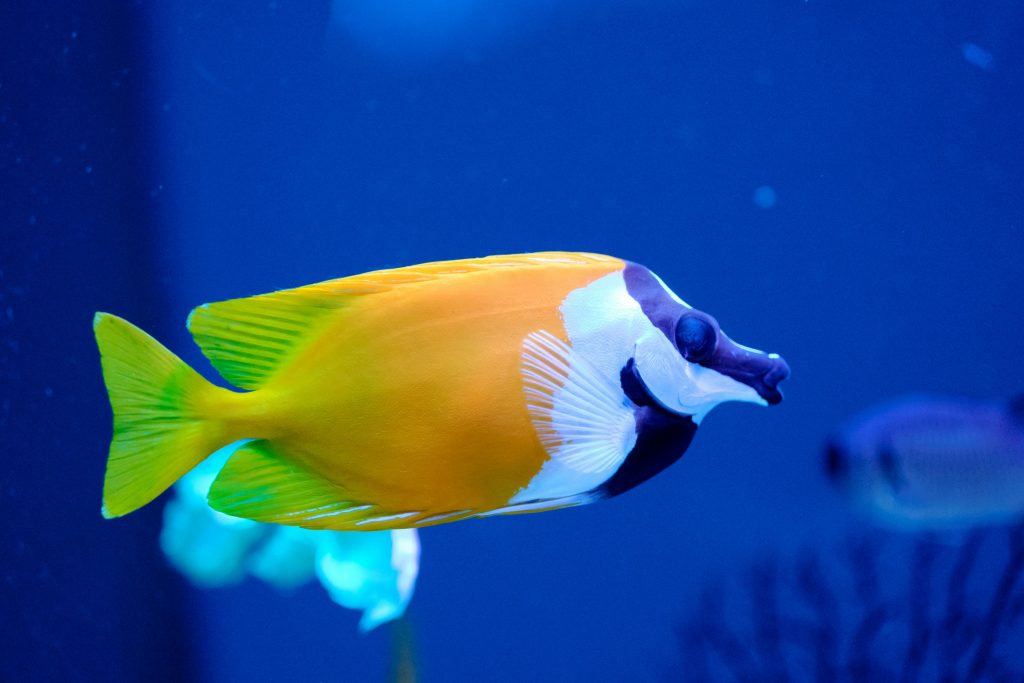
Foxface Lo (Siganus vulpinus) is a hardy, helpful fish for many reef tanks. It eats nuisance algae and stays active all day. It also has venomous spines, so good handling habits matter.
Tank size, aquascape, and water parameters
Plan for an adult that reaches 8 to 9 inches in length. Use a 90-gallon tank as a solid minimum. A 125-gallon tank gives better swimming room and calmer behavior. Tight lids help because foxfaces can jump when startled.
Build open lanes for cruising and caves for retreat. Use stable rockwork with wide arches and shaded pockets. Add a few algae-friendly grazing zones on rock faces. Avoid sharp coral skeletons that can snag fins during night fright.
Keep parameters steady, not perfect on paper. Aim for 24–26°C (75–79°F) and salinity 1.024–1.026. Keep pH 8.1–8.4 and alkalinity 8–9 dKH for reef systems. Hold nitrate at 5–20 ppm and phosphate at 0.03–0.10 ppm.
Use strong oxygenation and moderate flow. Foxfaces eat a lot and produce heavy waste. Run a skimmer sized for your tank volume. Add a refugium or algae scrubber if nutrients climb fast. For setup help, see reef tank parameters.
- Minimum tank: 90 gallons, with 4-foot length preferred.
- Rockwork: one main cave plus two smaller hideouts.
- Stability: avoid salinity swings over 0.001 per day.
Diet, feeding schedule, and algae control
Foxface Lo is an omnivore with a strong algae focus. It grazes film algae, some hair algae, and many macroalgae types. It may ignore tough turf algae once established. It can also nip certain soft corals when underfed.
Feed twice daily for best results. Offer dried nori or seaweed sheets in the morning. Use a veggie clip near its favorite rock. At night, feed frozen mysis, brine, or a quality herbivore blend. Add pellets with spirulina for consistency.
Use targeted algae control, not starvation. If you want it to work on hair algae, reduce other grazing options first. Shorten photoperiod by 1 hour for two weeks if needed. Keep nutrients in the target range so algae stays manageable. Pair this plan with clean-up crew basics for better coverage.
Watch for iodine and vitamin gaps in veggie-heavy diets. Soak nori in a vitamin supplement once or twice weekly. Rotate greens like red nori, green nori, and seaweed blends. This keeps color strong and reduces head and lateral line issues.
- Morning: 1 to 2 inches of nori sheet for a medium adult.
- Evening: 1 cube frozen food, rinsed, plus a pinch of pellets.
- Weekly: one fasting half-day to reduce nutrient spikes.
Temperament, compatibility, and safe handling
Foxface Lo is usually peaceful and shy at first. It can become bold once settled. It may spar with other rabbitfish or similar-shaped algae grazers. Introduce it before aggressive tangs when possible. Provide multiple feeding stations to reduce food guarding.
Quarantine is worth the time. Use a 20–40 gallon bare tank with PVC shelters. Observe for 14–21 days and watch for marine ich signs. Keep ammonia at 0 ppm with seeded media. Match salinity and temperature before transfer. For step-by-step, read how to quarantine saltwater fish.
Handle with care because dorsal spines are venomous. Use a container, not a net, for moves. If you must net, use a large soft mesh and go slow. Never pin the fish against glass. Keep hands away from the dorsal ridge during capture.
Troubleshoot common issues early. If it hides all day, check bullying and low oxygen. If it stops eating, test for ammonia and check for rapid salinity shifts. If it nips corals, increase algae feedings and add more nori time. Also remove tempting fleshy LPS from its grazing path.
- Use a specimen container for transfers and acclimation.
- Add the fish with lights dimmed for the first 6 hours.
- Keep a first-aid plan for spine stings before maintenance.
Foxface Lo can be a strong algae manager and a great display fish. Give it space, steady parameters, and frequent greens. Respect the venomous spines and plan compatibility. With those basics, it often thrives for many years.
Sources: FishBase (Siganus vulpinus species summary); Scott W. Michael, “Marine Fishes”; Fenner, “The Conscientious Marine Aquarist”
 By
By