
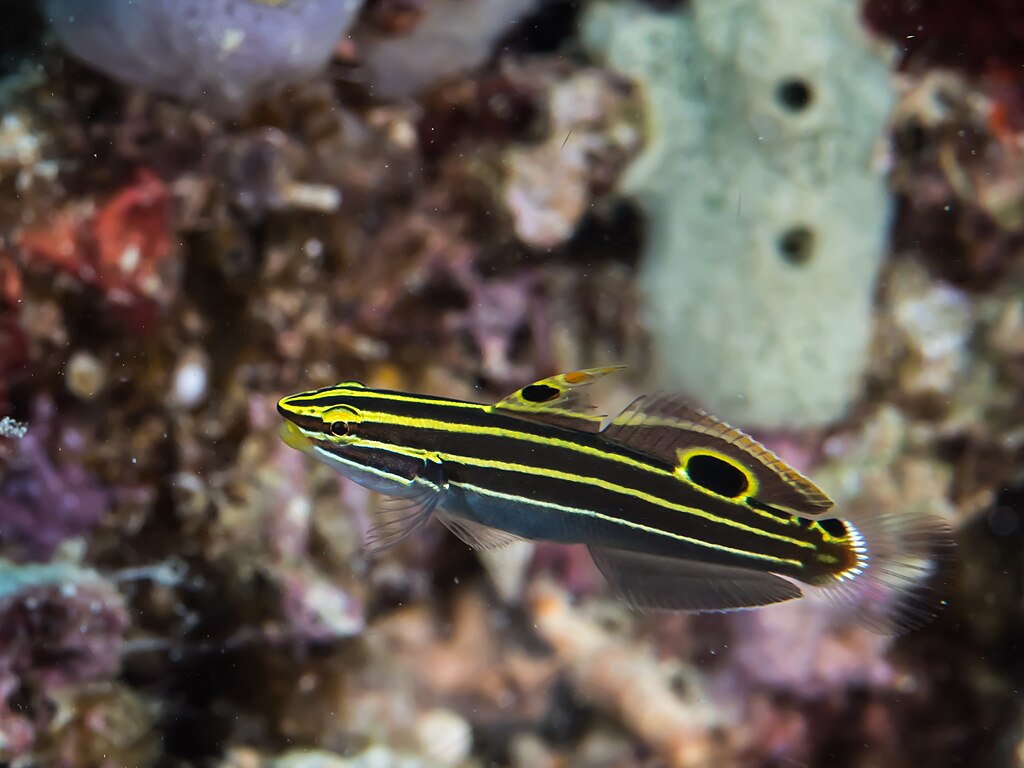
Hectors Goby (Koumansetta hectori) is a small sand-sifting fish. It suits peaceful reef tanks with mature sand beds. Success depends on food access and stable conditions.
Natural behavior and tank setup
Hectors Goby spends most of its day on the sand. It takes mouthfuls of sand and spits it out. This helps it find tiny worms and crustaceans. It also keeps the sand surface cleaner.
Choose a tank of 20 gallons or larger for one goby. A 30-gallon tank is easier to stabilize. Use a sand bed of 2–3 inches. Pick fine sand, around 0.5–1.5 mm grain size. Coarse gravel can injure its mouth.
Provide calm zones and gentle flow. Strong flow can keep it from feeding. Add several small caves and overhangs. Use stable rockwork on the glass, not on sand. This prevents collapses during digging.
Target reef parameters and keep them steady. Aim for 25–26°C (77–79°F), salinity 1.025, and pH 8.1–8.4. Keep ammonia and nitrite at 0. Keep nitrate under 10–20 ppm. Maintain alkalinity 8–9 dKH for stability. For more baseline targets, see reef tank water parameters.
- Use a tight lid, since gobies can jump when startled.
- Run a mature tank, ideally 4–6 months old.
- Keep sand open in at least one feeding lane.
Feeding, nutrition, and long-term care
Many losses come from slow starvation. Some fish never accept prepared foods. A mature sand bed helps, but it may not be enough. Plan a feeding strategy before you buy the fish.
Offer small meaty foods 2–3 times daily. Use thawed mysis, enriched brine, and finely chopped clam. Add copepods if the tank is new to pods. Try sinking pellets sized 0.5–1 mm. Feed near the sand so it can find food quickly.
Watch the belly line each week. A healthy fish looks slightly rounded behind the head. A pinched belly suggests it is losing weight. If weight drops, increase feeding frequency and add live foods. You can also reduce competition by feeding other fish first.
Quarantine helps, but bare tanks can be risky for this species. Use a small container of clean sand in quarantine. Keep it shallow for easy cleaning. Observe for 2–4 weeks and treat only if needed. For a step-by-step plan, read quarantine saltwater fish.
- Feed at the same spots, so it learns a routine.
- Soak foods in vitamins twice weekly.
- Turn pumps down for 10 minutes during feeding.
Compatibility and troubleshooting common problems
Hectors Goby is peaceful and shy. Avoid aggressive wrasses and dottybacks. Skip larger sand-sifters that outcompete it. Watch for food bullies like some damsels. Pair it with calm fish and small reef-safe inverts.
Do not mix with other Koumansetta gobies in small tanks. They can spar over feeding areas. In larger tanks, add them as a bonded pair when possible. Provide multiple sand zones and extra caves.
Cloudy water after sifting is common at first. It often improves as bacteria and biofilm develop. Use a filter sock during the first week if needed. Replace it daily to avoid nitrate spikes. Avoid ultra-fine dust sands that stay suspended.
If the goby hides all day, check stress triggers. Look for bright lighting with no shade. Check for high flow at the bottom. Confirm salinity stability with a calibrated refractometer. If it refuses food, try live baby brine or copepods. Also review copepods in a reef tank for boosting natural prey.
- Common mistake: adding to a new tank with sterile sand.
- Common mistake: relying on one daily feeding.
- Quick fix: add pods and feed small foods more often.
Hectors Goby can be a great reef companion with the right setup. Prioritize a mature sand bed and frequent small feedings. Keep stress low, and monitor body condition weekly.
Sources: FishBase (Koumansetta hectori species notes); Allen, Steene & Humann, Reef Fish Identification (behavior and habitat); Delbeek & Sprung, The Reef Aquarium (marine husbandry fundamentals).
 By
By

_(36717202045).jpg)