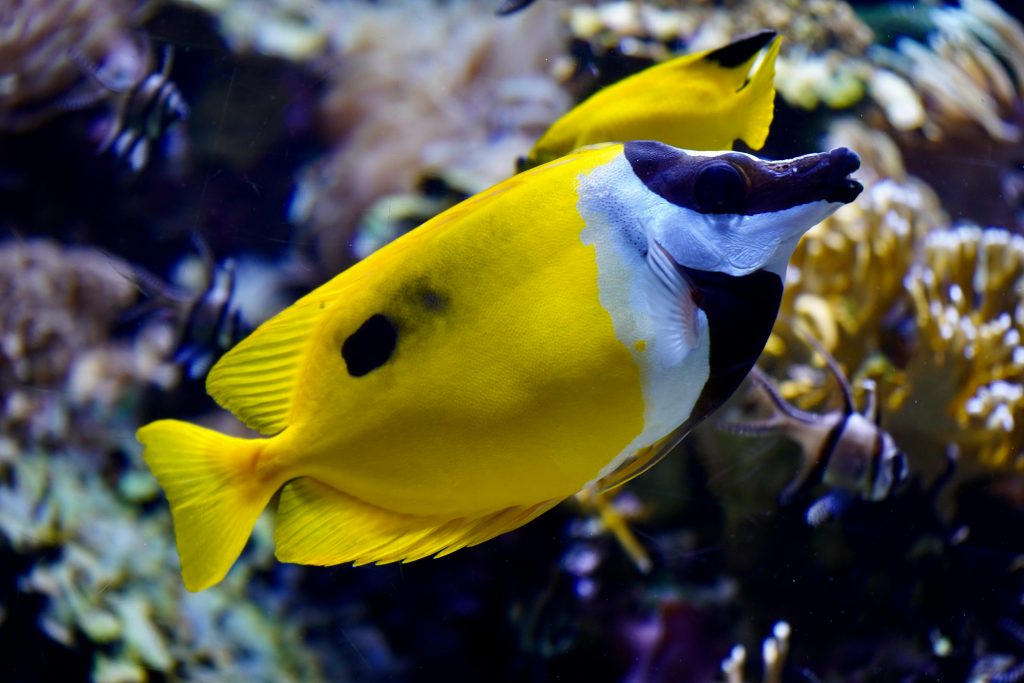
The One Spot Foxface (Siganus unimaculatus) is a hardy reef fish. It controls nuisance algae and adds calm movement. It also has venomous spines, so plan your handling.
Tank size, aquascape, and safe handling
Start with a tank of 75 gallons or larger. Aim for 90 gallons if you keep other grazers. Adults reach about 8 to 9 inches in many home tanks. Give them long swim lanes and open water.
Build a rockscape with caves and shaded ledges. Foxfaces spook easily in bare tanks. Add several bolt-holes across the tank. Use a tight lid, since startled fish can jump.
Handle this fish with care. Dorsal and anal spines can sting. Use a specimen container instead of a net. If you must net, use a large, soft net and go slow.
- Minimum tank: 75 gallons, with strong flow and oxygenation.
- Provide 2 to 3 caves and at least one deep overhang.
- Use a container for transfers to avoid spine snags.
Plan tankmates with intent. Peaceful fish work best. Avoid very aggressive tangs in small tanks. For more pairing ideas, see our reef fish compatibility guide.
Water parameters, diet, and daily care
Stable parameters matter more than chasing perfect numbers. Keep temperature at 76 to 79°F. Hold salinity at 1.025 to 1.026 specific gravity. Maintain pH between 8.1 and 8.4.
Keep nutrients present but controlled. Target nitrate at 5 to 15 ppm. Keep phosphate at 0.03 to 0.10 ppm. Foxfaces graze better when the tank is not ultra-sterile.
Feed twice daily for best condition. Offer nori or seaweed sheets in the morning. Feed frozen mysis or brine plus spirulina at night. Add a pellet with marine algae for consistency.
- Clip nori near a rock so the fish can “browse” naturally.
- Soak food once weekly in vitamins for 10 minutes.
- Remove uneaten sheets after 4 to 6 hours.
Watch coral safety with hunger in mind. Many One Spot Foxfaces ignore corals when well fed. Some individuals nip LPS or zoas when underfed. Keep a feeding routine and provide algae options.
Need a baseline for stability? Use our reef tank water parameters checklist during weekly testing. It helps you spot trends early. It also reduces sudden swings.
Quarantine, common issues, and troubleshooting
Quarantine for 14 to 30 days when possible. Use a 20 to 40 gallon bare tank for juveniles. Add PVC elbows for shelter. Match salinity and temperature before transfer.
Common problems include ich and bacterial fin damage. Look for flashing, white dots, or rapid breathing. Keep ammonia at 0 ppm in quarantine. Use an ammonia badge and test daily.
Stress shows as blotchy color or hiding all day. Check for bullying and poor oxygen. Increase surface agitation and clean pumps. Confirm temperature stability within 1°F per day.
- If algae control drops, increase nori and reduce competing grazers.
- If coral nipping starts, feed more often and add macroalgae.
- If the fish refuses food, try live blackworms or clam on half shell.
Avoid common mistakes. Do not add a foxface to a new tank under 60 days old. Do not chase zero nitrate and zero phosphate. For a safer start, follow our quarantine for saltwater fish walkthrough.
The One Spot Foxface rewards steady care and a good diet. Give it space, shelter, and algae to graze daily. With stable parameters and smart tankmates, it becomes a reliable reef helper.
Sources: FishBase (Siganus unimaculatus species summary); Scott W. Michael, “Marine Fishes”; Fenner, “The Conscientious Marine Aquarist.”
 By
By