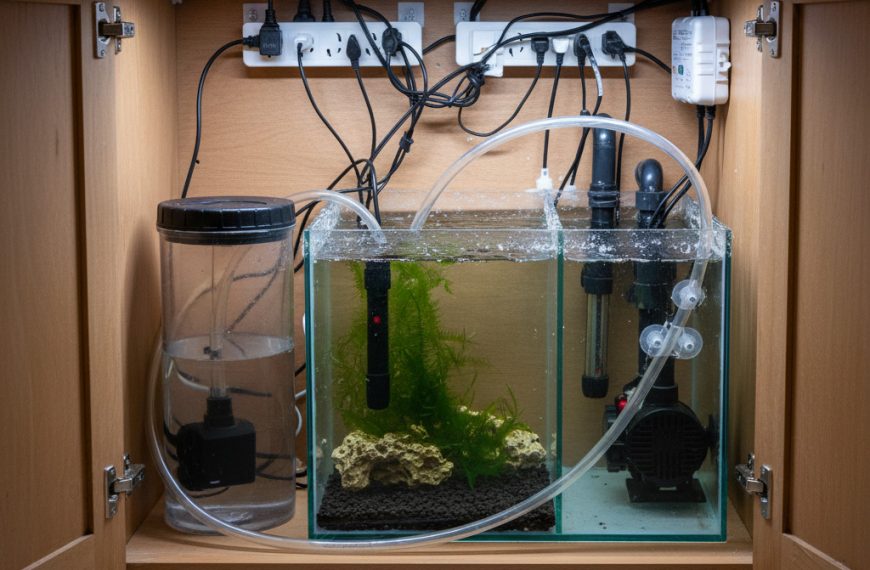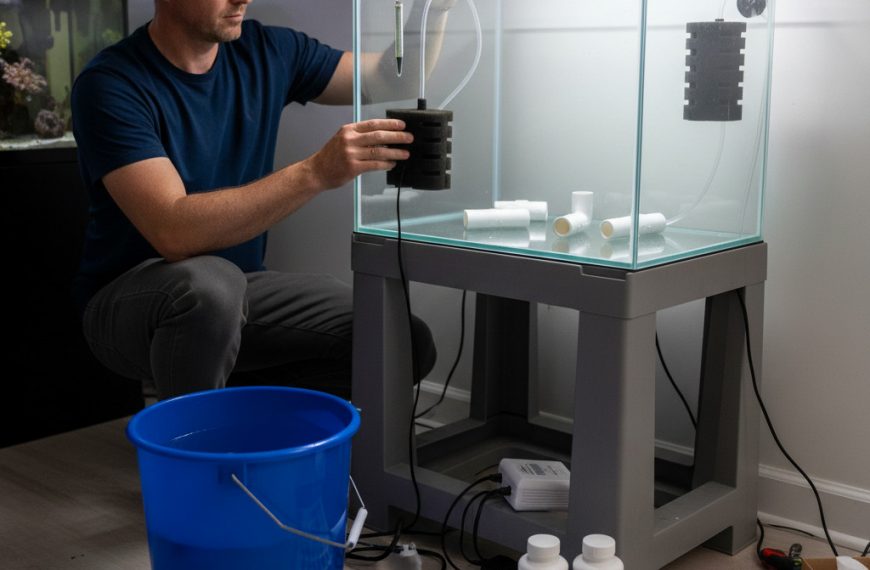
Gate valves make sump plumbing easier to control. They can also cause headaches when they drift or chatter. This guide shows how to tune a gate valve for stable flow.
Know what you are tuning and why it matters
A gate valve is for fine control, not quick shutoff. Ball valves are better for fast on and off. Use a gate valve on a main siphon drain or a manifold branch. Avoid using it as the only safety device.
Your goal is stable water height in the overflow box. You also want a quiet drain line. In a Herbie setup, the main drain runs as a full siphon. The emergency drain stays dry. In a BeanAnimal, you tune the siphon and let the open channel handle small changes.
Open the gate valve fully on the main siphon drain. The overflow will be loud at first. Slowly close the valve until the overflow water level rises. Stop when the level is near the standpipe intake. Wait 60 to 90 seconds after each small turn.
Flow changes with head height, filter socks, and algae growth. Even a 1/8 turn can change a siphon a lot. Plan to tune in small steps. Wait between steps so the system can settle.
- Use a true-union gate valve for easy removal and cleaning.
- Place the valve where you can reach it without tools.
- Keep the valve on the vertical drop if possible.
If your overflow design is new, review overflow box basics. It helps to know how air and water mix. That mix drives most drain noise.
Step-by-step gate valve tuning for a silent siphon
For a Herbie, close the valve until the emergency drain is just barely dry. You want a steady siphon with no flushing. For a BeanAnimal, close until the open channel has a thin trickle. The siphon should carry most flow. The open channel should not gulp air.
Start with clean plumbing and a stable return pump setting. Set your return pump to the speed you will keep. A DC pump at 60% today and 80% tomorrow will ruin the tune. Let the sump run for 10 minutes first.
- Turn the valve in 1/16 to 1/8 turns only.
- Wait at least one minute between adjustments.
- Aim for a stable overflow level within 1/4 inch.
Confirm sump safety after tuning. Turn off the return pump and watch the sump rise. Mark the maximum safe water line. If you need help, see back siphon prevention. A small mistake can cause a flood.
Troubleshooting drift, noise, and inconsistent flow
Flushing and surging often means air is trapped. The siphon is not fully established. Close the gate valve slightly and wait. Also check the drain outlet in the sump. It should stay submerged by 1 to 2 inches. Too deep can cause backpressure.
If the tune drifts over days, suspect buildup. Snails and algae can restrict the standpipe. Filter socks can clog and raise sump water. That changes drain behavior. Clean the overflow teeth weekly. Rinse socks every two to three days.
Microbubbles can show up after tuning changes. A too-fast drain can splash in the sump. Add a short length of pipe to calm the outlet. Use a bubble trap if needed. You can also reduce return flow by 10% and retune.
- Noise at the overflow often means too much air in the drain.
- Noise at the sump often means the outlet is splashing.
- Frequent retuning often means return flow keeps changing.
Do not chase perfection during the first week. New plumbing “slimes up” and changes friction. Expect one or two small adjustments. After that, the system should hold steady for months. For more flow planning, read return pump sizing.
Gate valve tuning is slow but reliable. Make tiny moves and wait for stability. Once set, your overflow should run quiet and safe. Keep it clean and keep your pump settings consistent.
Sources: Reef Aquarium Plumbing Basics (Borneman); The Reef Aquarium Vol. 3 (Delbeek & Sprung); Manufacturer manuals for Spears and Cepex gate valves.

 By
By