Understanding the Building Blocks of Reef Chemistry
Reef chemistry is the invisible engine that keeps your saltwater aquarium thriving. Corals, clams, and coralline algae all depend on stable water parameters to grow strong skeletons and vibrant tissue. Once you grasp a few fundamentals—alkalinity, calcium, magnesium, and pH—you’ll find reef keeping less mysterious and much more predictable.
If you’re brand new to the hobby, you may also want to read our guide on beginner saltwater tank setup before diving too deep into fine-tuning chemistry.
Core Parameters: Alkalinity, Calcium, and Magnesium
Alkalinity (dKH)
Alkalinity is a measure of the water’s ability to neutralize acids, but in reef terms it mainly reflects bicarbonate and carbonate levels used by corals to build skeletons. Most reef tanks do best in the range of 7–9 dKH, with stability being more important than the exact number.
- Test at least 2–3 times per week in growing SPS-dominated tanks.
- Avoid swings greater than 0.5 dKH in a single day.
- Use a balanced dosing method (like 2-part or kalkwasser) to maintain consistency.
Calcium (Ca)
Calcium is the main building block of coral skeletons and coralline algae. Target 400–450 ppm. If alkalinity is stable but coral growth seems slow, low calcium is a common culprit.
- Test weekly in established tanks; more often in high-demand systems.
- Match your salt mix’s calcium level to your tank’s target to reduce correction dosing.
Magnesium (Mg)
Magnesium quietly stabilizes both alkalinity and calcium. When magnesium is low, it becomes much harder to keep the other two parameters in line. Aim for 1250–1400 ppm.
- Test monthly or whenever you struggle with recurring calcium/alkalinity issues.
- Use magnesium supplements sparingly; it changes slowly and overdosing is easy.
Tip: Adjust magnesium first, then fine-tune calcium and alkalinity. This sequence saves time and avoids constant chasing of numbers.
pH, Nutrients, and Practical Stability Tips
pH and Gas Exchange
Most reef tanks thrive at a pH of 8.0–8.4. In modern homes with closed windows, excess CO2 often pushes pH lower. Instead of chasing pH with chemicals, focus on gas exchange:
- Increase surface agitation and skimmer aeration.
- Run an airline from the skimmer to outside air if indoor CO2 is high.
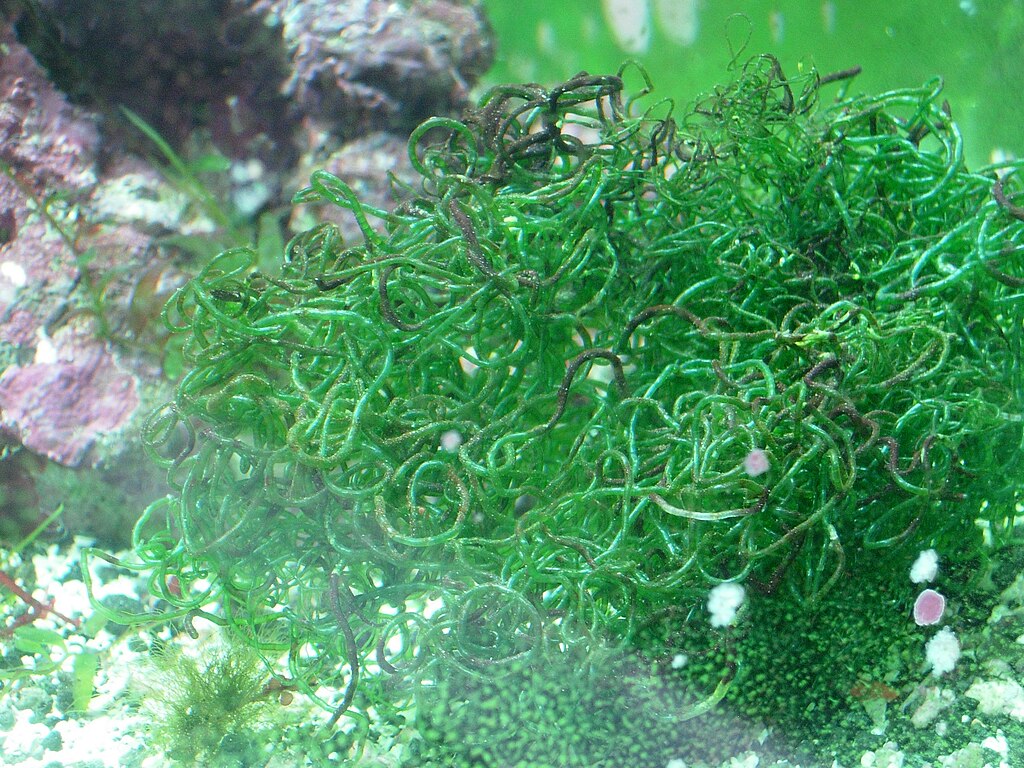
- Consider a refugium with macroalgae on a reverse light cycle to help buffer daily pH swings.
For more on natural nutrient and pH control, see our article on refugium benefits for reef tanks.
Nitrate, Phosphate, and the Big Picture
While not strictly part of “reef chemistry” in the classic sense, nitrate and phosphate strongly influence coral health and coloration. Ultra-low nutrients can be just as harmful as high ones. As a general guideline:
- Nitrate: 2–20 ppm for most mixed reefs.
- Phosphate: 0.03–0.10 ppm is a common target range.
Use regular water changes, appropriate feeding, and export methods (skimming, refugiums, or media) to keep nutrients in a healthy range rather than at zero.
Putting It All Together
Reef chemistry fundamentals come down to three ideas: know your target ranges, test consistently, and make changes slowly. Start with a reliable salt mix, maintain alkalinity, calcium, and magnesium, and support them with good gas exchange and sensible nutrient control. Over time, you’ll learn how your specific tank consumes elements and how often you need to dose.
When you’re ready to move from theory to practice, check out our dosing overview in reef tank maintenance schedule to build a routine that keeps your reef stable, colorful, and growing.
Sources
- Holmes-Farley, R. (2002–2006). Reef chemistry articles. Reefkeeping Magazine.
- Sprung, J. & Delbeek, J. C. (1994–2005). The Reef Aquarium series.
- Borneman, E. (2001). Aquarium Corals: Selection, Husbandry, and Natural History.
 By
By