Your return line is the backbone of sump-to-display flow. Good plumbing keeps your tank quiet, stable, and easy to service. This guide covers parts, layouts, and settings that work in real reef systems.
Plan your flow, pipe size, and layout
Start with a flow target that matches your overflow. Many reef tanks run 3–7x display volume per hour through the sump. A 75-gallon display often runs 225–525 GPH at the return outlet. Higher flow is not always better.
Choose pipe size to reduce restriction and noise. For most hobby pumps, 3/4 inch return plumbing is common. Use 1 inch if your pump outlet is large. Upsizing after the pump can reduce head loss. It can also lower pump heat and sound.
Map your head height and fittings before buying parts. Every 90-degree elbow adds resistance. Two 45-degree elbows often flow better than one 90. Keep the run straight when possible. Place unions where you will actually need them.
- Target sump turnover: 3–7x per hour for most reefs.
- Pipe size: match pump outlet, then consider upsizing one step.
- Fittings: minimize 90s and long runs where possible.
If you want more in-tank flow, use wavemakers instead. The return line is for filtration turnover. It is not for blasting corals. For setup basics, see sump basics.
Build a serviceable, leak-resistant return line
Use a union right after the return pump. This lets you remove the pump for vinegar cleaning. Add a second union near the bulkhead or return manifold. This makes future changes less painful. It also reduces the chance of cutting pipe later.
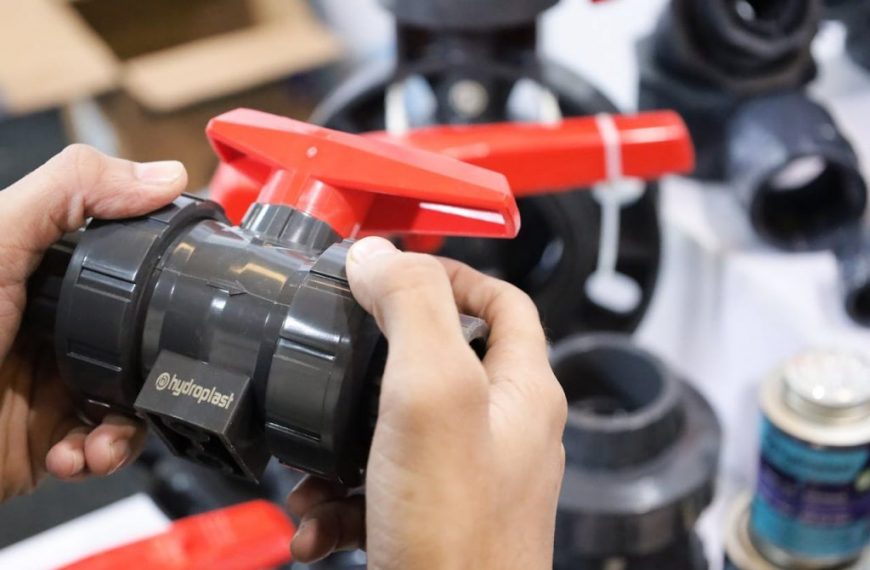
Install a true-union ball valve on the return line. Use it to fine-tune flow. Avoid throttling a pump with a gate valve made for drains. Ball valves are fine for returns. Put the valve after the union so you can remove it.
Use PVC primer and cement on rigid PVC joints. Give each joint a quarter-turn when seating. Hold it for 10–15 seconds. Let it cure at least 2 hours before a wet test. Wait 24 hours for full cure when possible.
Flexible tubing can reduce vibration. Vinyl tubing works but can kink. Reinforced braided vinyl is better. Silicone tubing is quiet but needs good clamps. For mixed systems, use a short flex section at the pump. Then transition to rigid PVC.
- Must-have parts: union at pump, valve for tuning, and a union near the tank.
- Glue tip: prime, cement, seat, twist, and hold 10–15 seconds.
- Noise tip: add a short flex section to isolate pump vibration.
If you plan reactors, consider a small manifold. Tee off the return with a valve to each device. Keep the main line as straight as possible. For pump selection, see return pump sizing.
Control back-siphon, aim outlets, and troubleshoot problems
Back-siphon is the top return line risk. When power stops, water drains until air breaks the siphon. Keep return outlets close to the surface. A good starting depth is 1/2 to 3/4 inch below the waterline. Test this during setup.
Do not rely on check valves as your only protection. They can fail from sand, snails, or coralline. If you use one, choose a clear, serviceable check valve. Clean it monthly. Still size your sump to hold the drain-down volume.
Aim your nozzles to avoid microbubbles and salt spray. Point outlets slightly down and toward the front glass. Use two returns to spread flow on larger tanks. Loc-Line makes aiming easy. Keep the outlet away from the overflow teeth to reduce noise.
If you hear gurgling, your overflow may be starved. Your return may be pushing too much. Reduce flow with the return valve. If you see bubbles, check the sump water level. Ensure the skimmer output is not near the return pump intake.
- Back-siphon test: shut off power and mark the sump high-water line.
- Outlet depth: keep returns 1/2–3/4 inch below the surface.
- Common mistake: using a check valve instead of sump capacity.
Stable parameters help returns run quietly. Keep salinity at 1.025–1.026. Keep temperature at 76–79°F. Maintain pH stability with good gas exchange. For noise control ideas, see quiet overflow tuning.
Sources: Reef2Reef return plumbing discussions; Bulk Reef Supply plumbing guides; PVC manufacturer cure-time instructions; Neptune Systems plumbing best practices.
 By
By