Flow Techniques for a Healthy Saltwater Aquarium
Water flow is one of the most important – and most misunderstood – parts of reef keeping. Good flow keeps detritus suspended, brings food to corals, delivers oxygen, and helps maintain stable water chemistry. Poor flow, on the other hand, leads to dead spots, cyanobacteria, and stressed corals. In this post, we’ll look at practical flow techniques you can use in your saltwater aquarium, from basic powerhead placement to advanced random flow strategies.
Understanding Types of Flow
Before you position a single pump, it helps to understand the main types of flow you can create:
- Laminar flow – A strong, straight stream of water. Useful for long tanks but can be too harsh if pointed directly at corals.
- Turbulent flow – Chaotic, swirling movement that helps keep detritus suspended and creates more natural conditions for most corals.
- Random or alternating flow – Changing direction and intensity, often created with controllable powerheads or wave makers. This best mimics the reef environment.
If you’re new to flow, start by reviewing your overall aquarium equipment setup so you know what your return pump and powerheads are already contributing.
Practical Flow Techniques and Pump Placement
The goal is to move water around the tank, not just blast it across the front glass. Use these techniques as a starting point and then fine-tune based on your livestock.
Use Opposing Powerheads
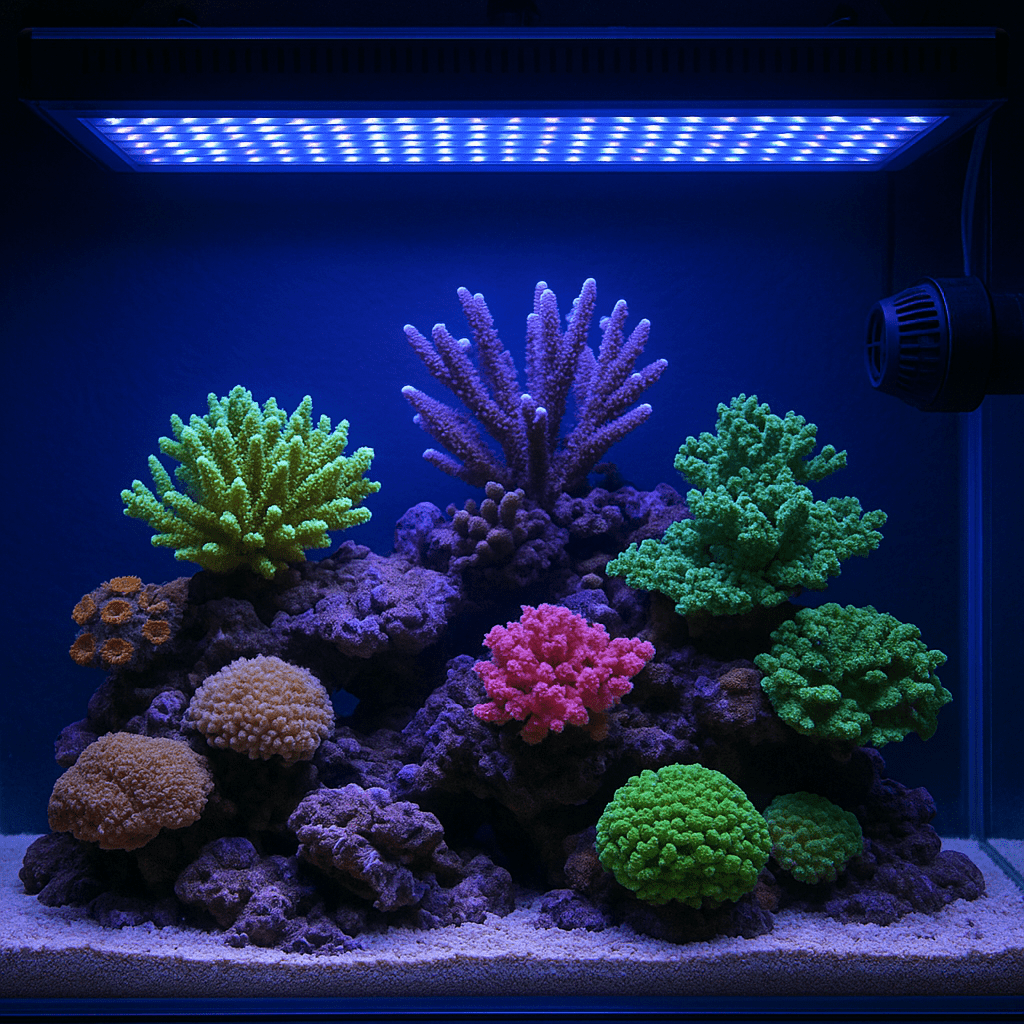
Place two powerheads on opposite ends of the tank, slightly offset from each other, and aim them so their streams meet and collide in the middle. This creates a broad, turbulent zone instead of a single harsh jet.
- Aim slightly upward to ripple the surface and improve gas exchange.
- Avoid pointing directly at sand to prevent bare spots and sandstorms.
- Use lower power but wider flow nozzles for LPS and soft coral tanks.
Bounce Flow off Rock and Glass
Instead of aiming pumps at corals, aim them at rockwork or the side glass so the flow diffuses and wraps around structures. This helps eliminate dead spots behind rocks and under ledges where detritus tends to collect.
- Watch where food particles settle; that’s where you need more indirect flow.
- Rotate pumps slightly each week during maintenance to change patterns and reduce buildup.
Create Random Flow with Controllers
If you have controllable DC powerheads or a wave maker, experiment with modes that alternate speed and direction. Short pulses can create a gentle sway for SPS corals, while longer ramp cycles are often better for mixed reefs.
Tip: Start at 30–40% power and slowly increase over several days while watching coral polyp extension and fish behavior. Fish breathing hard or corals retracting for long periods are signs of too much flow.
For more detail on matching flow to your livestock mix, see our guide to beginner reef tank setup, where we pair common corals with recommended flow ranges.
Tuning Flow for Corals and Long-Term Stability
Different corals prefer different flow patterns:
- SPS corals (Acropora, Montipora) generally like strong, random, high-turnover flow.
- LPS corals (Euphyllia, Acanthastrea) prefer moderate, indirect flow that makes tentacles sway but not whip.
- Soft corals (Zoanthids, leathers) are more forgiving but still benefit from alternating patterns.
As your corals grow, they will block and redirect water, creating new dead spots. Revisit your flow every few months:
- Clean powerheads regularly to maintain output.
- Check behind rock structures for detritus buildup and adjust angles.
- Increase or redistribute flow as colonies get larger and more dense.
If you’re planning a new system, designing rockwork with arches and channels from the start makes it much easier to achieve good circulation. Pair this with proper filtration and nutrient export and you’ll have a stable, low-maintenance reef.
Dialed-in flow is an ongoing process, not a one-time setup. By combining opposing pumps, indirect bounce flow, and, when available, controllable random modes, you can create a dynamic environment that keeps your fish comfortable, your corals thriving, and your tank cleaner with less effort.
Sources
- Borneman, E. H. Aquarium Corals: Selection, Husbandry, and Natural History. TFH Publications.
- Delbeek, J. C., & Sprung, J. The Reef Aquarium Vols. 1–3. Ricordea Publishing.
- Randy Holmes-Farley, articles on water movement and reef chemistry, Advanced Aquarist and Reefkeeping Magazine.
Was this helpful?
Related Posts
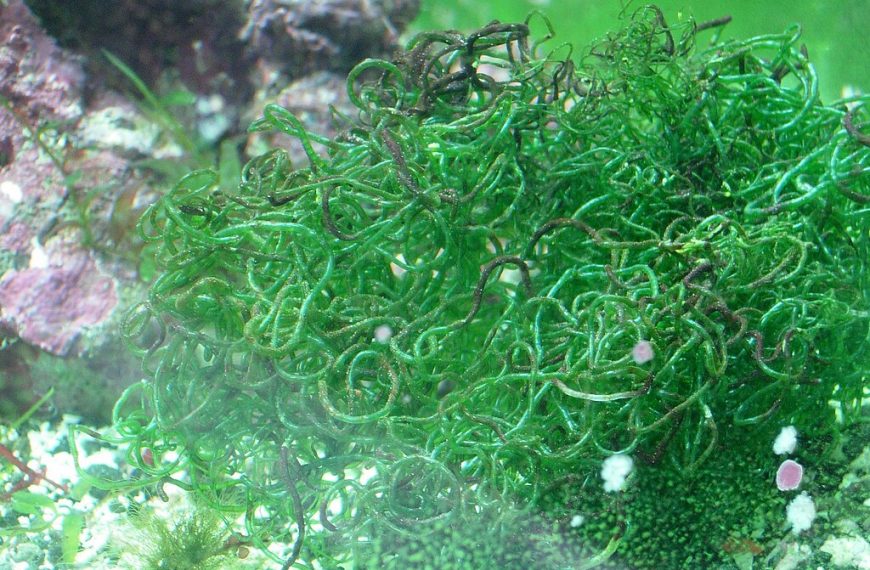
What is a Chaeto Reactor, and How Does it Help Control Nutrients?
A chaeto reactor grows macroalgae in a sealed chamber to remove nitrate and phosphate, helping reef tanks control…
 By
By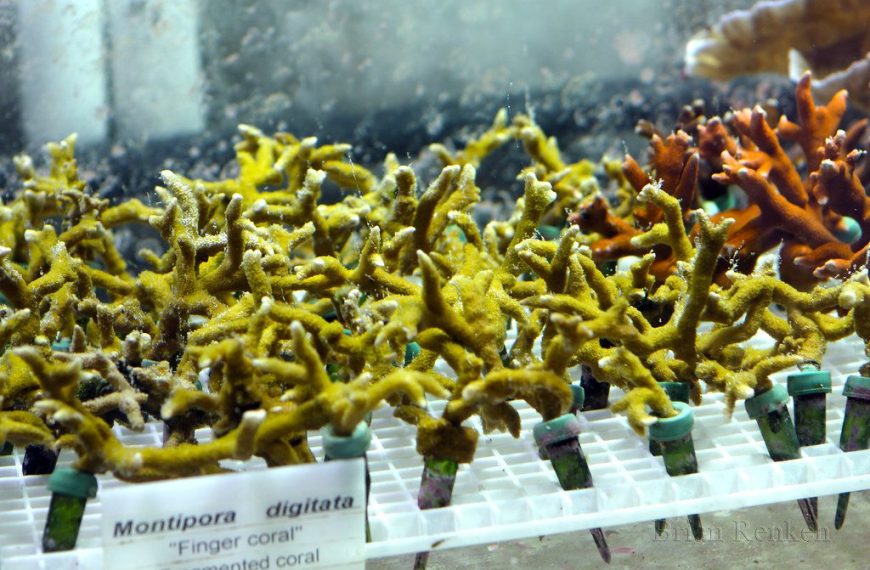
What is a Propagation Tank, and How Do Reef Hobbyists Use it to Grow Coral Frags?
A propagation tank is a dedicated coral grow-out system. It helps reef hobbyists heal, organize, and multiply coral…