A good frag rack setup keeps coral frags stable, easy to view, and easy to maintain. It also helps you grow out new pieces without turning your display into a cluttered garden. With a few smart choices, you can reduce pests, improve flow, and boost survival.
Choose the right rack type and placement
Start by picking a rack style that matches your tank and goals. Magnetic racks are best for glass walls and quick repositioning. Egg crate racks work well in frag tanks and sumps. Ceramic plug boards look clean in displays, but cost more.
Place the rack where you can reach it without getting soaked. Front side placement makes dipping and inspection easier. Avoid dead zones behind rockwork. Keep it away from sand storms and from fish that like to perch.
Match light and flow to the coral type. Many SPS frags do well at 200–350 PAR once adapted. Many LPS frags prefer 80–150 PAR. Soft corals often settle in at 50–120 PAR. Use a slow acclimation over 7–14 days.
Flow should keep detritus from settling on plugs. Aim for moderate, chaotic flow across the rack. A common target is 20–40x display turnover per hour. Watch for tissue recession on the upflow side. If you see it, reduce direct blast.
- Keep racks at least 2–3 inches from the sand bed.
- Leave 1–2 inches between frags for growth and airflow.
- Test magnet strength before loading expensive frags.
Build stability with safe materials and smart mounting
Use reef-safe materials only. Acrylic, PVC, and coated magnets made for aquariums are reliable. Avoid unknown metals and cheap magnets with thin coatings. A cracked coating can rust and leach contaminants.
Pick a plug size that fits your rack holes. Common plug stems are 3/8 inch and 1/2 inch. If plugs wobble, frags can fall and sting neighbors. You can sleeve loose holes with small silicone tubing. You can also switch to disks for flat racks.
Mount frags with the right adhesive for the job. Use thick cyanoacrylate gel for quick bonds. Use two-part epoxy for heavy colonies or uneven plugs. Many hobbyists use both for best hold. Gel grabs fast, and epoxy fills gaps.
Keep the rack easy to remove for cleaning. Detritus and film algae will build up. A removable rack lets you scrub it in old tank water. If your rack is in the display, plan a spot that does not disturb aquascape. For more layout ideas, see reef aquascape basics.
- Rinse new racks in RO/DI water before use.
- Label plugs with a paint pen for tracking growth.
- Use a small turkey baster to blast detritus weekly.
Daily care, parameter targets, and troubleshooting
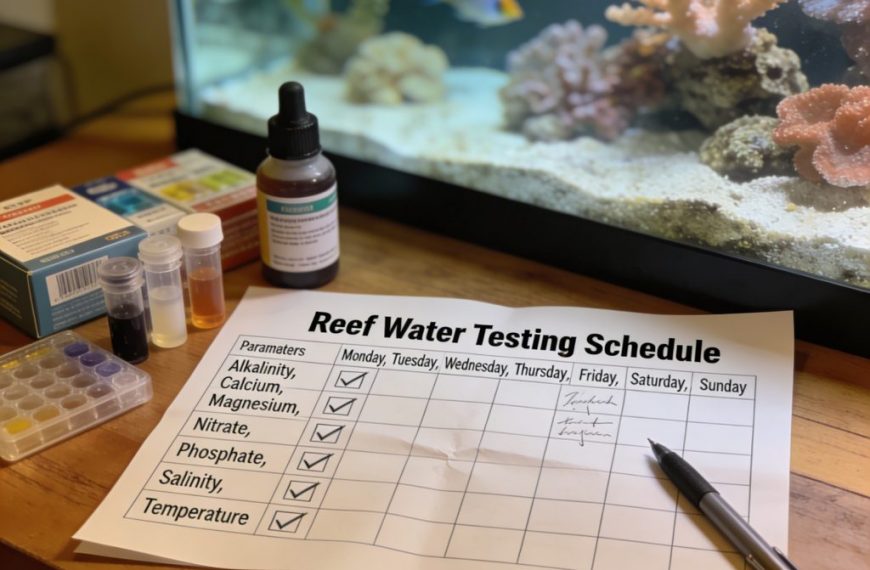
Frag racks succeed when parameters stay stable. Keep salinity at 1.025–1.026 specific gravity. Hold temperature at 77–79°F with minimal swings. Aim for alkalinity 8–9 dKH, calcium 420–450 ppm, and magnesium 1300–1400 ppm.
Control nutrients so frags color up without starving. Many mixed reefs do well at nitrate 5–15 ppm. Phosphate often sits well at 0.03–0.10 ppm. If you run ultra-low nutrients, frags can pale. If nutrients spike, algae can smother bases.
Quarantine and dip every new frag before it hits the rack. Pests spread fast on a shared platform. Common threats include flatworms, nudibranchs, and vermetid snails. Use a coral dip and inspect with a flashlight. Keep a separate rack in QT when possible. For a step-by-step, read coral quarantine guide.
Troubleshoot by reading the coral, not just test kits. If polyps stay closed, check flow direction and fish picking. If tips burn on SPS, check alkalinity swings and light intensity. If bases recede, look for detritus buildup and low flow. Log changes so you can spot patterns. A simple routine helps, like our reef tank maintenance schedule.
- Acclimate light by lowering the rack, then raise it weekly.
- Clean rack surfaces every 7–10 days to prevent algae mats.
- Re-glue loose frags right away to avoid falls and stings.
A frag rack setup is more than a holder for plugs. It is a controlled grow-out zone with planned light, flow, and access. Keep it stable, keep it clean, and keep pests out. Your frags will encrust faster and show better color.
Sources: Delbeek & Sprung, The Reef Aquarium (Vol. 1–3); Borneman, Aquarium Corals; Riddle, articles on reef lighting and PAR measurement.
 By
By