
Hermit crabs are some of the hardest-working and most entertaining members of a saltwater clean-up crew. From bulldozing through sand to picking at algae between rocks, these tiny crustaceans add movement, personality, and utility to a reef tank. Understanding their needs and behavior will help you get the most from them while keeping your corals and invertebrates safe.
Popular Hermit Crab Species for Reef Tanks
Not all hermits are equal in a reef aquarium. Some stay small and peaceful, while others can become bulldozers that knock over rockwork and harass tankmates.
Great Beginner Choices
- Blue Leg Hermit Crab (Clibanarius tricolor) – Small, active, and excellent at grazing hair algae and film algae on rock and sand.
- Scarlet Reef Hermit Crab (Paguristes cadenati) – Bright red legs, generally more peaceful, and less likely to bother snails when provided with spare shells.
- Dwarf Zebra Hermit Crab (Calcinus laevimanus) – Striking black-and-white banded legs and a strong appetite for algae and leftover food.
For tanks focused on soft corals and LPS, these smaller species are usually the safest bet. If you’re planning a clean-up crew from scratch, you may want to read our guide on balancing clean-up crew snails and crabs to match your tank size and bioload.
Hermit Crab Care and Behavior in the Aquarium
Hermit crabs are hardy, but they still have specific needs. Good care starts with stability and appropriate tankmates.
Tank Requirements
- Tank size: For nano reefs, start with 1–2 small hermits per 5 gallons. Avoid overcrowding, which leads to shell fights and aggression.
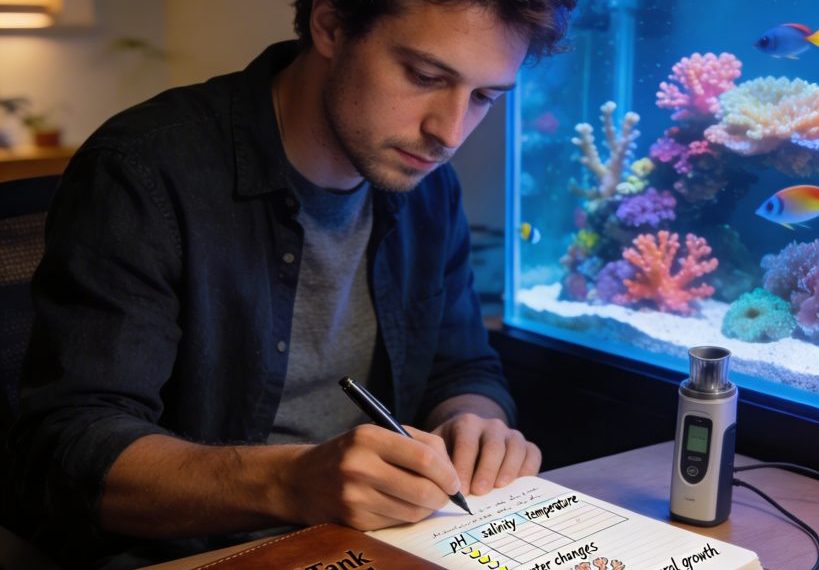
- Water parameters: Aim for reef-standard conditions: salinity 1.024–1.026, temperature 76–80°F (24–27°C), ammonia and nitrite at 0, and low nitrate.
- Substrate & rock: A sandy bottom with plenty of live rock gives them surfaces to graze and crevices to hide in during molts.
Feeding and Shell Management
Hermits will eat film algae, leftover fish food, and detritus, but they still benefit from targeted feeding:
- Offer small amounts of sinking pellets, algae wafers, or tiny pieces of frozen food.
- Provide a mix of meaty and plant-based foods to support healthy growth and coloration.
- Drop in a piece of dried seaweed occasionally to keep them busy and well-fed.
One of the biggest keys to keeping hermit crabs peaceful is spare shells. Hermits do not grow their own shells; they must “upgrade” as they grow. Without options, they may kill snails just to take a better shell.
Practical tip: Keep a small pile of empty shells of various sizes and shapes in a low-flow corner of the tank. Add more when you notice shells disappearing or new molts.
For more habitat ideas, check out our article on aquascaping for reef tanks, which covers rock structures that work well for crabs and other inverts.
Hermits, Corals, and Clean-Up Crew Balance
Most dwarf hermit crabs are considered reef-safe with caution. They typically ignore healthy corals but may climb over them while foraging. In tanks with delicate frags or loosely attached pieces, this can cause irritation or even knock corals over.
- Secure coral plugs firmly into the rock using reef-safe epoxy or glue.
- Avoid large, aggressive hermit species in small or delicately aquascaped tanks.
- Balance your clean-up crew: too many hermits and not enough algae will push them to compete with snails.
If you notice a hermit repeatedly harassing snails or sitting on top of corals for long periods, consider moving it to the sump or rehoming it. Pairing hermits with a strong snail crew, like trochus and nassarius, can provide a more complete clean-up team; our beginner reef tank stocking guide goes into more detail on mixing invertebrates safely.
With the right species, spare shells, and a balanced approach, hermit crabs can be both entertaining and effective members of your reef. They bring constant motion to the rockwork, help keep nuisance algae in check, and make your aquarium feel more alive—all while rewarding you with fascinating behavior to watch day after day.
Sources
- Sprung, J. & Delbeek, J. C. The Reef Aquarium, Vol. 1–3. Ricordea Publishing.
- Michael, S. W. Marine Invertebrates: 500+ Essential-to-Know Aquarium Species. Microcosm.
- Fenner, B. The Conscientious Marine Aquarist. TFH Publications.
 By
By