Reef tanks look simple. The chemistry is not. Stable numbers keep corals growing and fish calm.
This guide explains the core parameters. You will learn targets, testing habits, and safe correction steps.
The Big Three: Alkalinity, Calcium, and Magnesium
Alkalinity supports coral skeleton growth. It also buffers pH swings. Most mixed reefs do well at 7.5–9.0 dKH.
Calcium fuels calcification. Aim for 400–450 ppm. If calcium is low, corals can stall and tips may fade.
Magnesium stabilizes alkalinity and calcium balance. Target 1250–1400 ppm. Low magnesium can cause rapid carbonate precipitation.
Test alkalinity often. Test calcium and magnesium weekly. If alkalinity drops more than 0.5 dKH per day, increase dosing.
Use small corrections. Raise alkalinity by 0.5–1.0 dKH per day max. Raise calcium by 20–30 ppm per day max.
Common mistake: chasing numbers after one odd test. Re-test before dosing. Also check expiration dates and storage.
- Start targets: 8.0 dKH, 430 ppm calcium, 1350 ppm magnesium.
- Match new saltwater to tank alkalinity within 0.5 dKH.
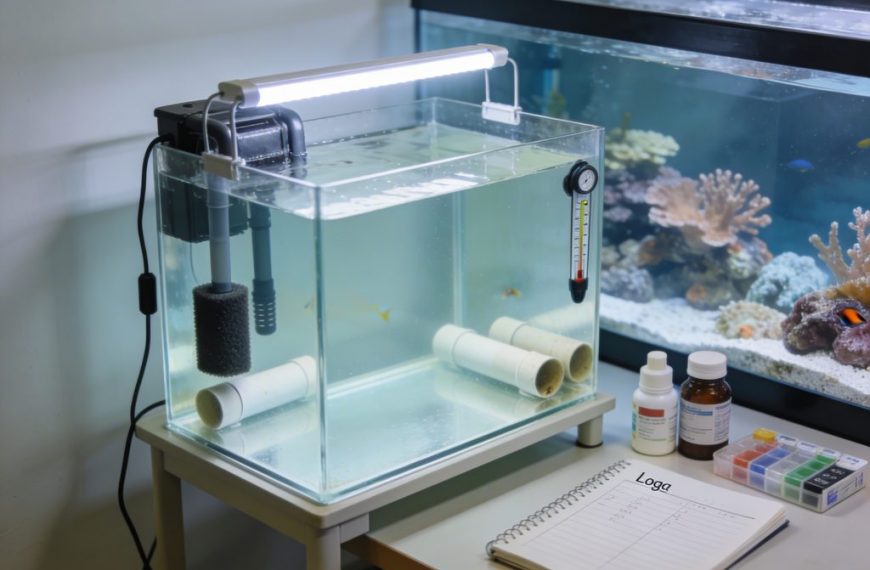
- Log results in a notebook or app for trend spotting.
For setup help, review our reef tank cycling guide. It prevents early instability.
Nutrients and pH: Feeding the Reef Without Fueling Algae
Nitrate and phosphate drive both coral health and algae. Ultra-low nutrients can pale corals. High nutrients can smother them.
Good starting ranges are 2–15 ppm nitrate and 0.03–0.10 ppm phosphate. Keep them stable. Avoid sudden drops from aggressive media.
pH matters, but stability matters more. Many reefs run 7.8–8.3 daily. Low pH often comes from high indoor CO2.
Test pH at the same time daily. Compare morning and evening. A swing over 0.3 can stress sensitive SPS.
If nitrate is high, reduce feeding by 10–20%. Increase skimming and export. Add a refugium light cycle for macroalgae growth.
If nutrients are too low, feed more often. Add amino acids carefully. Stop overusing GFO or oversized carbon dosing.
- Rinse frozen foods and feed smaller portions twice daily.
- Change 10% weekly when nutrients creep upward.
- Clean the skimmer neck every 2–3 days for steady foam.
Need a plan for algae control? See our clean-up crew guide for practical stocking ideas.
Salinity, Temperature, and Testing Habits That Prevent Crashes
Salinity sets the baseline for every test result. Aim for 1.025–1.026 specific gravity. Use a calibrated refractometer or digital meter.
Calibrate with 35 ppt solution, not RO water. Recalibrate monthly. Top off daily with fresh water to prevent salinity creep.
Keep temperature stable at 77–79°F. Use a controller if possible. A 2°F swing is fine, but 4°F daily is risky.
Build a testing rhythm. Test alkalinity 3–4 times per week in growing reefs. Test nitrate and phosphate weekly or biweekly.
When a number is off, change one thing. Wait 24 hours, then re-test. Multiple changes hide the real cause.
Troubleshooting example: alkalinity keeps falling. Check for new stony coral frags. Also check coralline growth and dosing pump output.
- Mix saltwater for 4–24 hours with heat and flow.
- Match temperature within 1°F during water changes.
- Replace test kits every 12–18 months for accuracy.
For dosing methods, our two-part dosing basics article breaks down daily routines.
Sources: Randy Holmes-Farley, “Reef Aquarium Water Parameters” (Reefkeeping Magazine); Julian Sprung, “The Reef Aquarium” series; Dana Riddle, articles on coral calcification and light-nutrient balance.

 By
By