Reef fish get sick fast when stress and parasites stack up. Early disease symptoms are often subtle. If you spot them early, you can save the fish and protect the tank.
Common reef fish symptoms and what they usually mean
Start with breathing and behavior. Rapid gilling is a top warning sign. Count gill beats for 15 seconds. Multiply by four for breaths per minute. Many reef fish sit near 60 to 90 per minute at rest. Numbers above 120 suggest trouble.
Look for skin and fin changes under white light. White dots like salt grains often suggest ich. A dusty gold sheen can suggest velvet. Thick slime, cloudy patches, or peeling skin can suggest brooklynella or heavy irritation. Frayed fins can point to bacterial infection or fin nipping.
Watch feeding response and posture. A fish that spits food may have gill damage. A fish that hides all day may be stressed or bullied. Flashing against rocks suggests parasites or ammonia burn. Head shaking can also point to gill flukes.
Use a quick symptom checklist during daily feeding. Note changes for two days before acting. Some fish sulk after a new addition. True disease usually worsens daily. Log what you see in a notebook.
- Breathing: fast gills, surface hovering, or powerhead seeking
- Skin: spots, dusting, excess slime, cloudy eyes, or ulcers
- Behavior: flashing, clamped fins, hiding, or swimming into flow
- Appetite: reduced bites, spitting food, or sudden fasting
For deeper fish-by-fish planning, review your quarantine protocol. It helps you match symptoms to likely causes. It also reduces guesswork during a crisis.
First response: test, stabilize, and isolate
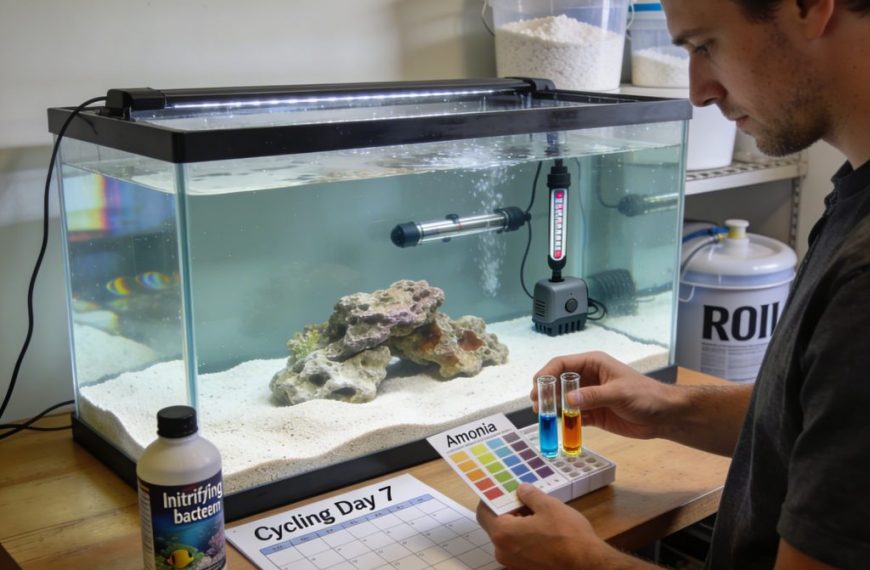
Test water first. Bad water can mimic disease. Check ammonia, nitrite, nitrate, pH, salinity, and temperature. Aim for ammonia 0 ppm and nitrite 0 ppm. Keep nitrate under 20 ppm for mixed reefs. Hold salinity at 1.025 to 1.026 and temperature at 77 to 79°F.
Stabilize oxygen next. Add an airstone in the sump or display. Point a powerhead at the surface. Many parasites hit the gills first. Low oxygen makes symptoms look worse. It also speeds up losses overnight.
Move the sick fish to a hospital tank if possible. Use a 10 to 20 gallon bare tank for small fish. Add a heater, sponge filter, and PVC elbows. Match salinity and temperature during transfer. Keep light low to reduce stress.
Do not treat the display with copper or formalin. These can kill invertebrates. Treat in the hospital tank instead. If you suspect velvet, act the same day. Velvet can kill within 24 to 48 hours in warm water.
- Run a full test panel before dosing any medicine
- Increase surface agitation for better gas exchange
- Isolate the fish and observe for 30 minutes after transfer
- Feed small portions twice daily to reduce waste
Keep a simple kit ready. Include a thermometer, refractometer, ammonia alert badge, and air pump. Our reef tank testing guide covers target ranges and common errors.
Troubleshooting and common mistakes that delay recovery
Many hobbyists treat the wrong problem first. White spots can be ich, sand, or lymphocystis. Ich spots often come and go in waves. Lymphocystis looks like cauliflower lumps and grows slowly. If breathing is fast, think gills first, not skin.
Another mistake is mixing medications. Copper plus some antibiotics can stress fish. Formalin needs strong aeration. Always remove carbon before dosing. Measure doses with a syringe for accuracy. Test copper daily if you use it.
Watch for secondary infections after parasites. Torn fins and red sores can appear later. Keep ammonia at 0 ppm in the hospital tank. Do small water changes of 10% daily if needed. Use pre-mixed saltwater at the same salinity.
Use real scenarios to guide decisions. A new tang that flashes and breathes fast often has flukes. A clownfish with heavy slime and rapid decline may have brooklynella. A wrasse that stops eating after shipping may just need sand and calm. Use observation plus testing to narrow it down.
- Do not “shotgun treat” without a likely diagnosis
- Do not chase pH with buffers during an outbreak
- Do not skip acclimation when moving to a hospital tank
- Do not add new fish during treatment or fallow periods
Plan prevention once the fish stabilizes. Quarantine new arrivals for 30 days. Observe feeding and breathing daily. Consider a fallow period if parasites are confirmed. Our fallow period reef tank article explains timing and steps.
Sources: Humblefish Disease Forum (symptom reference); Noga, “Fish Disease: Diagnosis and Treatment”; Colorni & Burgess (Cryptocaryon and marine ich research); Woo & Bruno, “Fish Diseases and Disorders.”
Reef fish disease symptoms are easier to manage with a calm process. Test water, boost oxygen, and isolate fast. With good notes and stable parameters, you can treat earlier and lose fewer fish.
 By
By