A reef tank journal turns guesswork into repeatable success. It helps you spot trends before corals show stress. It also makes equipment and dosing changes safer.
What to track each day and week
Start with a simple daily check. Log temperature, salinity, and livestock behavior. Note feeding amounts and any skipped meals. Write down anything that looks “off.”
Use specific targets and stick to them. Keep temperature at 25.5–26.1°C (78–79°F). Keep salinity at 1.025–1.026 specific gravity. Aim for pH 8.0–8.3 with stable swings.
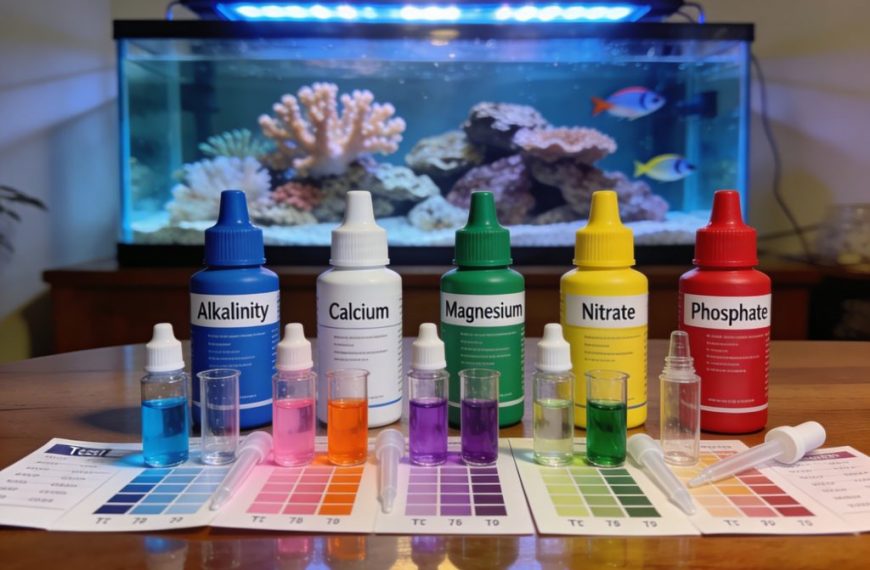
Add weekly chemistry that drives coral growth. Track alkalinity at 7.5–9.0 dKH for mixed reefs. Track calcium at 400–450 ppm and magnesium at 1250–1400 ppm. For nutrients, target nitrate 2–15 ppm and phosphate 0.03–0.10 ppm.
Record actions, not just numbers. Log water changes by percent and salt brand. Note filter sock swaps and skimmer adjustments. Link entries to photos for context in our reef parameter guide.
- Daily: temp, salinity, fish breathing, polyp extension, feeding notes
- Weekly: alkalinity, calcium, magnesium, nitrate, phosphate, glass algae rate
- Monthly: PAR spot checks, pump cleaning dates, RO/DI TDS readings
How to format entries for fast troubleshooting
Use a consistent template. Start each entry with date, time, and lights schedule. Add a short “tank status” line. Then list test results in the same order every time.
Write dosing as exact amounts. Use mL per day and product name. Example: “Alk: 12 mL/day of soda ash.” Note the method, like doser channel or manual pour. This prevents double dosing after busy days.
Track changes as experiments. Change one thing at a time when possible. Example: reduce phosphate remover by 25% for one week. Then compare coral color and phosphate trend. Use your notes to avoid chasing numbers.
Add a “symptoms” field for problems. List tissue recession, algae type, or cloudy water. Include where it appears in the tank. Then cross-check with your reef maintenance checklist to find missed tasks.
- Use the same test kit brands for trend accuracy
- Write results with units, like “PO4 0.06 ppm”
- Attach one top-down photo each week for color tracking
Common patterns your journal will reveal
Alkalinity swings often show up first. A 1.0 dKH drop in 24 hours is a warning. It can follow a new coral addition or a clogged dosing line. Your log will show when demand changed.
Nutrient crashes are also common. Phosphate can fall to 0.00 after heavy media use. Corals may pale and stop growing. The journal helps you correlate the crash with a reactor refill.
Temperature drift can explain “random” stress. A heater may overshoot at night. A 1.5°F daily swing can irritate SPS. Logging morning and evening readings catches this fast.
Use the journal for quarantine and disease events too. Record new fish dates and treatments. Note copper level targets, like 2.0–2.5 ppm for chelated copper. For more, see our fish quarantine basics.
- If algae spikes, check feeding grams and nitrate trend for two weeks
- If corals brown, compare phosphate and PAR changes since last frag
- If fish gasp, review pH, temperature, and skimmer airflow notes
A reef tank journal is a simple habit with big payoffs. It makes your tank more stable and your decisions more confident. Start small today, then let your records guide each upgrade.
Sources: Randy Holmes-Farley, “Reef Aquarium Water Parameters”; Julian Sprung, “The Reef Aquarium” series; Dana Riddle, articles on PAR and coral lighting.
 By
By