Good flow keeps a reef tank clean and stable. It also helps corals feed and breathe. This guide breaks flow into simple, testable steps.
Section 1: Set your flow targets and map the tank
Start with a clear turnover goal. Mixed reefs do well at 20–40x display volume per hour. SPS-heavy systems often need 40–70x. LPS and soft coral zones prefer calmer pockets.
Turnover is not just one number. You need broad, random movement across most rock. You also need enough bottom flow to prevent detritus piles. Dead spots often form behind rock and in corners.
Use a simple visual check to map flow. Add a pinch of thawed mysis juice or reef snow. Watch where it stalls for more than five seconds. Mark those zones and adjust pumps.
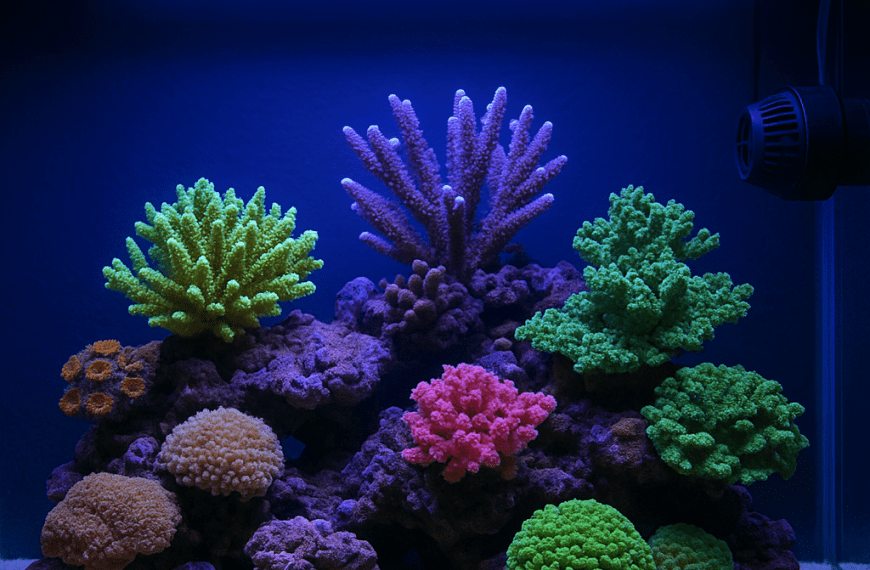
Plan for coral growth now. A branchy SPS colony can block flow in months. Leave channels between rock structures. Keep at least 2–3 inches from glass for cleaning and circulation.
- Baseline targets: Softies 15–25x, mixed 20–40x, SPS 40–70x.
- Sandbed safety: Fine sand blows out above about 30–40 cm/s in jets.
- Quick dead spot test: Food cloud should clear each area in under 10 seconds.
If you are new to reef setup, review reef tank cycling basics first. Stable biology makes flow tuning easier. Also check reef aquarium water parameters before major changes.
Section 2: Pump placement, modes, and real-world tuning
Place powerheads to create crossing currents. Aim one pump slightly up for surface ripples. Aim the other across the rock face. Avoid pointing a tight stream at coral tissue.
Use random or pulse modes with restraint. Short pulses can create standing waves. Waves look nice but can expose corals at low tide levels. Start with 20–30% power and increase weekly.
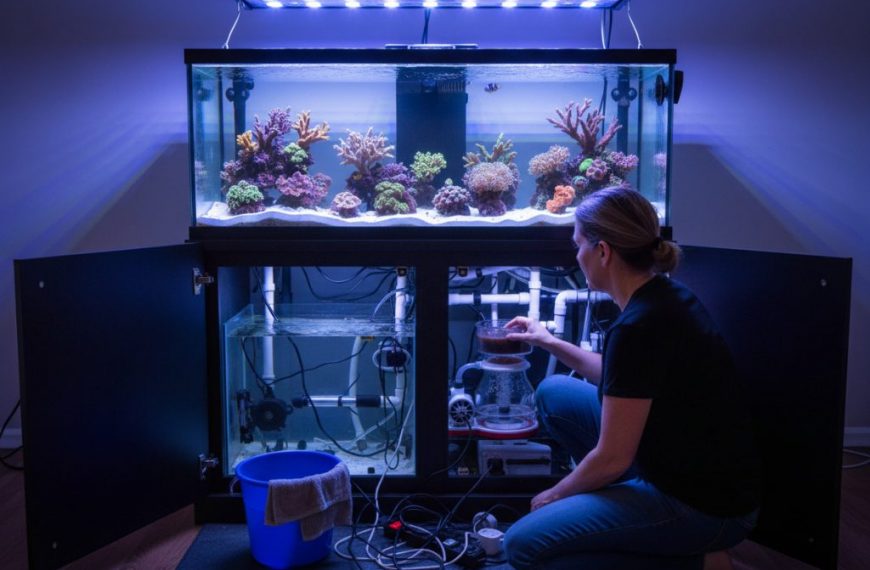
Use your overflow and return as part of the plan. Surface agitation improves gas exchange. Target 5–10x turnover through the sump for most tanks. Let powerheads handle most display flow.
Here is a common 75-gallon mixed reef example. Two controllable pumps at 1,500–2,000 gph each works well. Run them at 40–60% and alternate every 30–60 seconds. Keep a calmer LPS corner behind a rock spur.
- Surface: Ripples across the whole top, not splashing.
- Corals: Polyps sway, not whip hard in one direction.
- Detritus: No daily piles under rock shelves or behind islands.
Flow changes can stress fish at first. Watch tangs and anthias for constant fighting. Strong laminar jets can pin weaker fish. Redirect flow or add a diffuse guard if needed.
Section 3: Troubleshooting common flow problems
Sandstorms mean flow is too focused. Raise the pump higher on the glass. Angle it toward the surface by 10–20 degrees. Reduce power by 10% and retest after an hour.
Cyanobacteria often signals low flow plus excess nutrients. Increase flow across the sandbed and behind rock. Then confirm nitrate and phosphate levels. Many reefs do well near 5–15 ppm nitrate and 0.03–0.10 ppm phosphate.
Receding SPS tips can be a flow and alkalinity combo issue. Avoid blasting the same spot all day. Add more randomness and check alkalinity stability. Keep alkalinity swings under 0.3 dKH per day.
Dirty pumps reduce output fast. Clean wet sides every 4–6 weeks. Use a 50/50 vinegar and water soak for 20–30 minutes. Rinse well before reinstalling.
- Dead spots: Add a small nano pump aimed behind rock.
- Too noisy: Reduce pulse intensity and check magnet alignment.
- Film on surface: Increase surface agitation or adjust overflow weir.
For nutrient control support, see reef tank maintenance schedule. Flow works best with consistent export. Skimming, socks, and siphoning all help.
Great reef flow is strong, varied, and predictable for you. Make small changes and observe for a week. When detritus stays suspended and corals extend well, you are close.
Sources: Delbeek & Sprung, The Reef Aquarium (Vol. 1–3); Borneman, Aquarium Corals; Paletta, The New Marine Aquarium.
 By
By