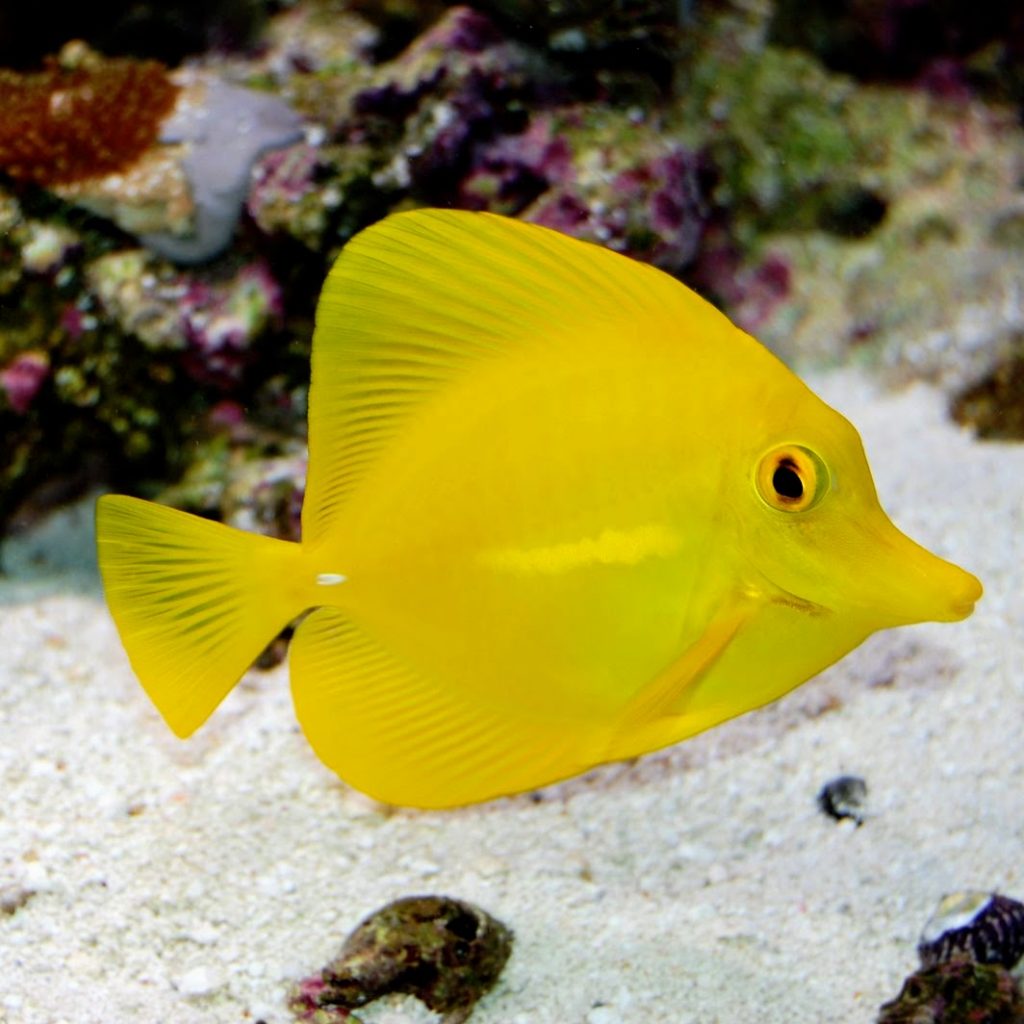
Tangs and rabbitfish are constant grazers in the wild. In aquariums, smart feeding keeps them colorful, calm, and disease resistant. The goal is steady plant matter, plus targeted protein.
Build a daily feeding plan that matches grazing behavior
Start with tank size and fish size. A 4 to 6 inch tang needs more frequent feeding than a juvenile. Plan for two to four feedings per day. Use smaller portions each time. This reduces nutrient spikes.
Make algae the base food. Offer a 2 x 3 inch sheet of nori per medium tang. Do this once or twice daily. Use a clip on the opposite side of the main flow. Replace uneaten nori after two hours. Old nori can foul water.
Add prepared herbivore foods for variety. Use pellets with spirulina and kelp. Feed 10 to 20 pellets per fish per feeding. Adjust to body condition. A full belly is fine, but avoid bloating. Use an autofeeder for midday pellets.
Rabbitfish often eat faster than tangs. They can bully shy tankmates at feeding time. Spread food across two spots. Use a second algae clip. You can also feed after lights dim slightly. This reduces chasing in bright light.
- Feed algae first, then protein later in the day.
- Remove algae sheets after two hours to limit nutrients.
- Use two feeding zones to reduce aggression.
For setup tips, review your quarantine routine. Diet changes are safer in a controlled tank. Also check reef tank nutrient control if algae sheets raise nitrate.
Balance plant foods with protein and key supplements
Tangs and rabbitfish still need protein. Offer frozen mysis, brine, or chopped clam. Feed protein three to five times per week. Use about one cube per two medium fish. Rinse frozen food in RO water first. This reduces phosphate input.
Watch for head and lateral line erosion risk. Poor diet and stress can contribute. Keep vitamin intake steady. Soak food in a vitamin supplement two to three times weekly. Add a few drops, then wait five minutes. Feed before it disperses.
Include fiber-rich greens to prevent constipation. Dried nori helps, but mix types. Rotate red, green, and brown seaweed. You can also offer blanched spinach or romaine. Use a small clip and remove after one hour. Avoid seasoned human foods.
Keep water parameters stable while feeding heavier. Aim for salinity 1.025, temperature 77 to 79°F, and pH 8.1 to 8.4. Keep nitrate near 2 to 15 ppm in mixed reefs. Keep phosphate around 0.03 to 0.10 ppm. Tune skimming and refugium to match input.
- Rinse frozen foods to cut phosphate.
- Soak food in vitamins two to three times weekly.
- Rotate seaweed colors to broaden micronutrients.
If you want a deeper algae strategy, see refugium macroalgae guide. A healthy refugium can offset heavier herbivore feeding. It also stabilizes pH through the night.
Troubleshooting common feeding problems in real tanks
If a new tang refuses nori, try smaller strips. Rub the sheet on live rock first. This adds scent and texture. You can also rubber-band nori to a rock. Many fish accept it faster this way. Keep offering daily for two weeks.
If aggression spikes, reduce single large feedings. Switch to three smaller feedings. Add a second algae station. In a 120-gallon tank, place clips at opposite ends. Feed pellets at one end and nori at the other. This splits attention and reduces fin nips.
If nutrients climb, measure and react. If nitrate rises above 20 ppm, cut portions by 20% for a week. Increase export instead of starving fish. Clean the skimmer neck twice weekly. Replace filter socks every two days. Siphon uneaten food from bare areas.
If you see pinched bellies, increase frequency first. Do not jump to huge meals. Add one extra algae feeding daily. Also check for parasites in quarantine. Heavy breathing and flashing are clues. Treat before the fish loses more weight.
- Use rock-banded nori for picky eaters.
- Cut portions by 20% if nitrate stays above 20 ppm.
- Fix bullying with more stations, not less food.
Feeding tangs and rabbitfish is about steady grazing and clean export. Use algae daily, add protein several times weekly, and keep vitamins consistent. Track nutrients, then adjust portions with small changes. Your fish will reward you with better color and calmer behavior.
Sources: Fenner, R. (The Conscientious Marine Aquarist); Delbeek & Sprung (The Reef Aquarium, Vol. 1–3); Hemdal, J. (Diseases of Marine Fishes); NOAA general herbivory and reef fish ecology references.
 By
By