Water changes are your best reset button in a saltwater tank. They remove waste and restore key elements. This guide shows a simple, repeatable process.
Section 1: Plan the right water change
Most reef tanks do well with 10% weekly changes. Fish-only tanks often handle 15% every two weeks. Pick one schedule and stay consistent. Stability beats big swings.
Match new saltwater to your tank before you start. Aim for 1.025 specific gravity, or 35 ppt. Keep temperature within 1°F of the display. Hold pH within 0.1 when possible.
Mix saltwater for 12 to 24 hours with a pump. Add a heater if your room is cool. Test salinity with a calibrated refractometer. Calibrate with 35 ppt fluid, not RO water.
Use a clean food-safe container and dedicated hose. Avoid buckets that held cleaners. If you use a trash can, label it “aquarium only.” Cross contamination causes mystery losses.
- Target parameters: 35 ppt, 77–79°F, alkalinity within 0.5 dKH of tank
- Typical change size: 10% weekly for reefs, 15% biweekly for fish-only
- Mix time: 12–24 hours with strong circulation
For more setup basics, review reef tank basics. If you run a sump, see sump plumbing guide for safe drain points.
Section 2: Step-by-step water change process
Turn off your return pump and skimmer first. Leave powerheads on for oxygen, if water level stays safe. Mark your sump’s normal level with tape. This prevents overfilling later.
Siphon water into a marked container to measure volume. Remove 5 gallons from a 50-gallon system for a 10% change. Vacuum small sections of sand each time. Do one-third of the bed per week.
Clean the glass and remove detritus from easy spots. Avoid blasting rockwork right before the change. That can cloud water and irritate corals. Use a turkey baster after refilling instead.
Add new water slowly to avoid stirring sand. Pour into the sump, not the display, when possible. Restart the return pump and check the water line. Wait 5 minutes, then restart the skimmer.
- Shut off: return pump, skimmer, ATO
- Drain: measured volume, vacuum small sand sections
- Refill: slow pour, match temp and salinity
- Restart: return first, skimmer after level stabilizes
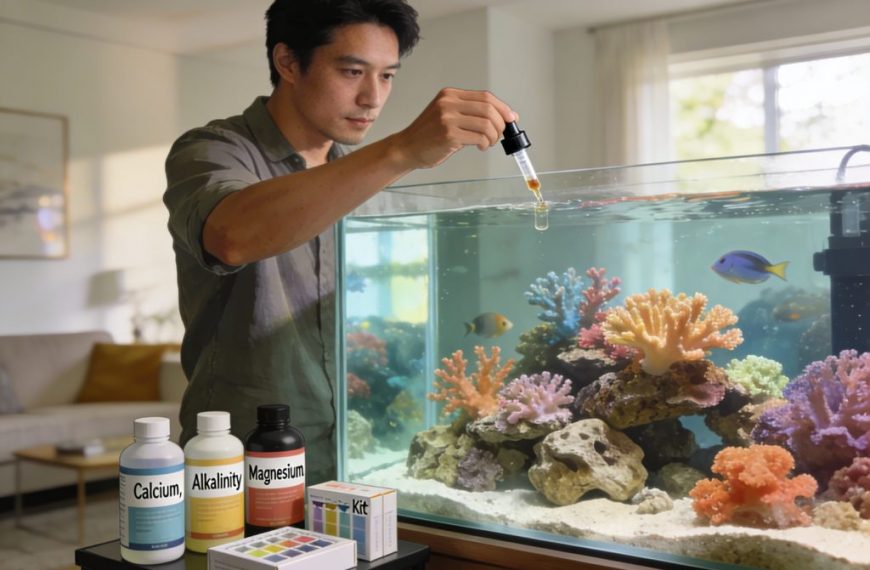
After the change, test salinity and temperature again. Then check alkalinity the same day for reef tanks. If alk shifts more than 0.5 dKH, reduce change size next time. You can also match new water alkalinity closer.
Section 3: Troubleshooting and common mistakes
Cloudy water after a change often comes from sand disturbance. Slow the refill and use a plate or bowl to diffuse flow. Also check that your salt fully dissolved. Undissolved salt can burn tissue on contact.
Corals closing up can point to parameter mismatch. Temperature swings are a common cause. Salinity creep also happens when you “eyeball” the mix. Always measure 35 ppt and verify with calibration.
Skimmers can overflow after water changes. Oils from hands and new saltwater change surface tension. Keep the skimmer off for 10 to 20 minutes. Then start it with the air slightly restricted.
High nitrate can persist even with changes. A 10% change only reduces nitrate by about 10%. If nitrate is 40 ppm, it drops to 36 ppm in one change. Pair changes with better export and feeding control. See nitrate control in reef tanks for options.
- Skimmer overflowing: wait 10–20 minutes, restart slowly
- Salinity off: calibrate refractometer, recheck at tank temperature
- Detritus storms: vacuum less sand, add water slower
Sources: Instant Ocean Sea Salt instructions; Red Sea Reef Care Program guidance; Randy Holmes-Farley, Reefkeeping Magazine articles on salinity and water changes.
Water changes work best when they are boring and repeatable. Match parameters, measure volumes, and move slowly. Your fish breathe easier, and your corals keep better color and polyp extension.
 By
By