Starting a reef tank feels exciting and confusing. A simple checklist keeps you focused. It also prevents rushed buys and early crashes.
Section 1: Plan the tank size, gear, and water
Pick a tank size you can maintain. A 20–40 gallon reef works well for beginners. It is stable but still affordable. Avoid tiny tanks under 10 gallons at first.
Choose a heater and thermometer you trust. Target 77–79°F with less than 1°F swing daily. Add a reliable auto top-off if you can. Evaporation shifts salinity fast in small tanks.
Use RO/DI water for mixing salt. Aim for salinity 1.025 specific gravity at 77°F. Use a refractometer and calibrate it with 35 ppt solution. Mix salt for 24 hours with a powerhead.
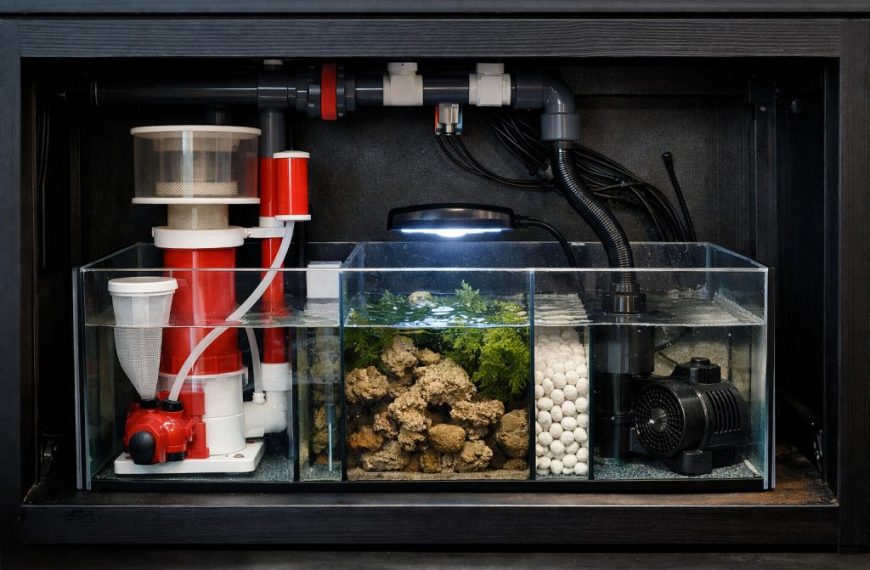
Plan basic filtration and flow. A simple HOB filter or sump both work. Use a quality skimmer for tanks above 30 gallons. Add powerheads for 20–40x turnover each hour.
- Tank and stand rated for full weight
- Heater sized at 3–5 watts per gallon
- Refractometer, RO/DI, and mixing bucket
- Two powerheads for crossflow and fewer dead spots
For deeper setup steps, see reef tank setup guide. For stable topping off, read auto top-off basics.
Section 2: Cycle the tank and lock in target parameters
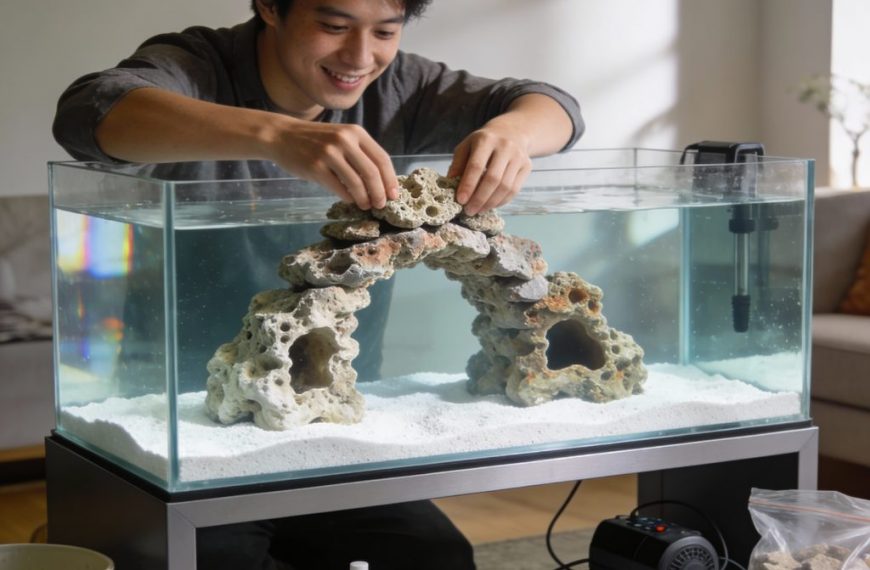
Start with dry rock or cured live rock. Add sand after you rinse it well. Then begin a fishless cycle with bottled bacteria. Dose ammonia to 1–2 ppm to feed the bacteria.
Test every few days with reliable kits. Ammonia should drop to zero within 24 hours near the end. Nitrite should also hit zero. Nitrate will rise and usually lands at 10–30 ppm.
Do a large water change after the cycle finishes. Change 30–50% to reduce nitrate. Match salinity and temperature before you refill. This prevents stress and cloudy water.
Set your baseline reef parameters early. Keep alkalinity 8–9 dKH, calcium 400–450 ppm, and magnesium 1250–1350 ppm. Keep phosphate 0.03–0.10 ppm for most mixed reefs. Keep pH 8.0–8.3 with good gas exchange.
- Cycle goal: 0 ppm ammonia and 0 ppm nitrite
- Beginner nitrate target: 5–20 ppm for mixed reefs
- Stability goal: test twice weekly for the first month
Common mistake: adding fish “to start the cycle.” This often causes losses. Another mistake is chasing pH with chemicals. Fix aeration and surface agitation instead.
For test kit routines, check reef water testing schedule.
Section 3: Add livestock slowly and avoid early disasters
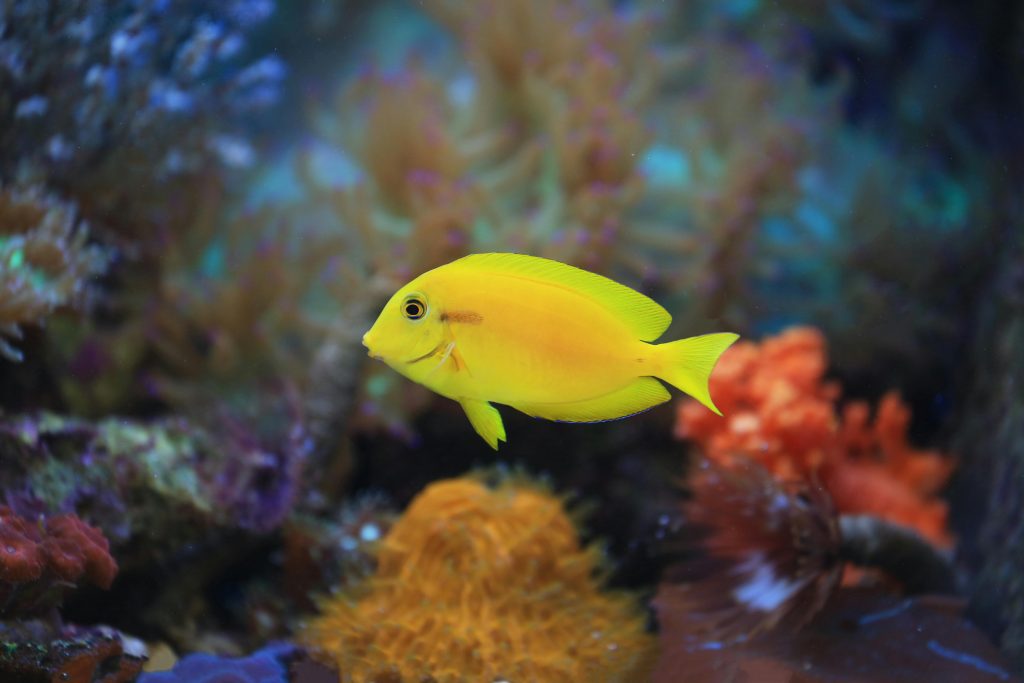
Stocking pace matters more than brand names. Add the first fish only after the cycle and water change. Start with one hardy fish in a 20–40 gallon tank. Wait 10–14 days before the next fish.
Quarantine prevents most heartbreak. Use a simple 10–20 gallon bare tank. Add a sponge filter and heater. Observe new fish for 2–4 weeks before display entry.
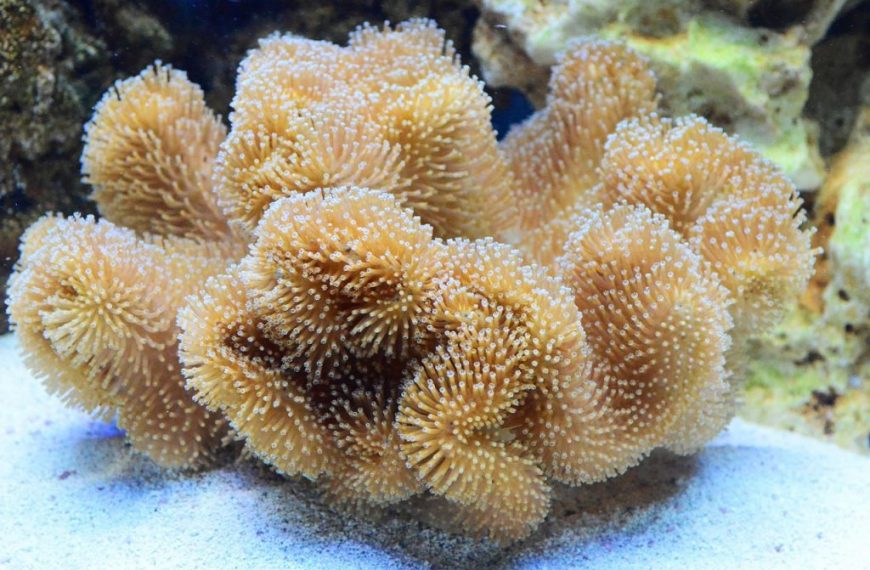
Start corals after the tank settles for 4–6 weeks. Begin with soft corals and hardy LPS. Keep light moderate at first. Many beginners bleach corals with sudden high PAR.
Feed lightly and measure results. Offer small meals once or twice daily. Remove uneaten food after five minutes. If nitrate rises above 25 ppm, cut feeding by 20% and add a 15% water change.
- First clean-up crew: 1–2 snails per 5 gallons
- Acclimation: drip 30–45 minutes for inverts
- Weekly maintenance: 10–15% water change and glass cleaning
Troubleshooting example: brown algae blooms in week two. This is common diatoms. Reduce white light intensity by 20%. Increase flow and use fresh RO/DI. Add a few trochus snails and wait it out.
Another example: salinity creeps up to 1.028. This usually means top-off was skipped. Correct slowly over two days with RO/DI. Drop no more than 0.001 per day.
Sources: Reef Aquarium Vol. 1 (Delbeek & Sprung); The Reef Aquarium Vol. 3 (Delbeek & Sprung); Fenner, The Conscientious Marine Aquarist.
Reef tanks reward patience and consistency. Use this checklist to set stable water and smart habits. Go slow, test often, and enjoy the progress.
 By
By