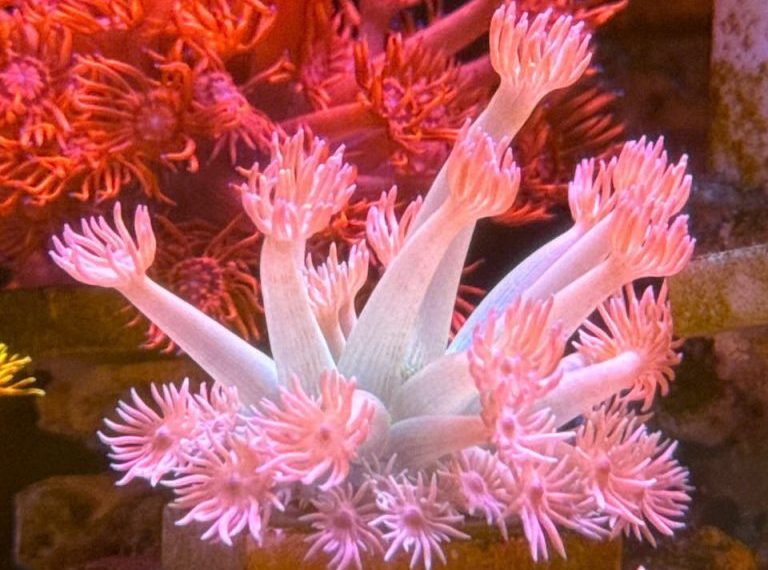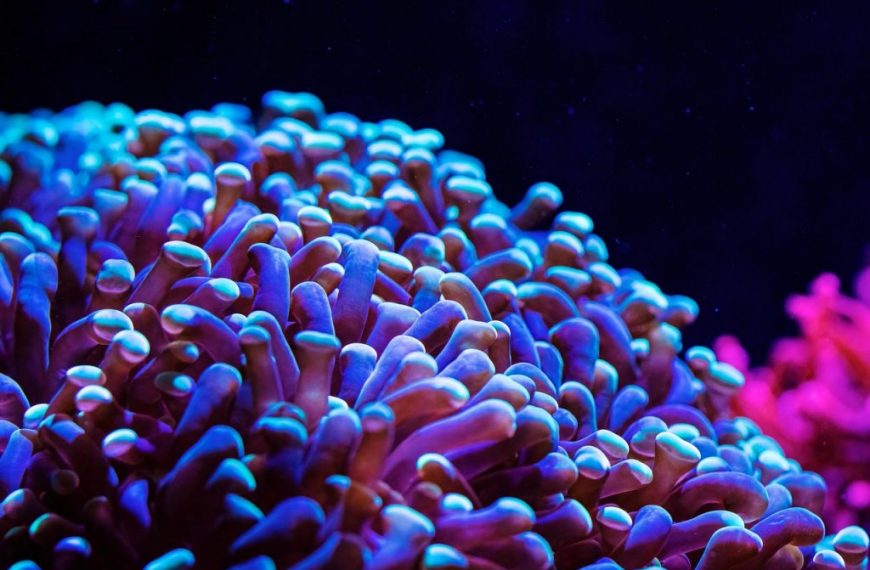
Mushroom corals are often the first soft corals reef keepers try—and for good reason. They’re hardy, colorful, and forgiving of minor mistakes, making them perfect for newer hobbyists and low-maintenance reef tanks. With the right placement and stable water, mushroom corals can spread into lush, vibrant colonies that add movement and depth to your aquascape.

Ideal Conditions for Mushroom Coral Care
Mushroom corals (Discosoma, Rhodactis, Ricordea and related genera) generally thrive in low to moderate light and gentle flow. This makes them a great choice for the lower half of the tank or shaded rock ledges.
Lighting & Flow
Most mushroom corals prefer:
- Light: Low–medium PAR (40–120). Start them in lower light and move them up slowly if needed.
- Flow: Low, indirect flow. Their discs should gently sway, not flap or fold.
Watch their body language:
- Too much light: They stay small, pale, or detach and “walk” to shaded areas.
- Too little light: They stretch upward and look elongated or “reaching.”
- Too much flow: Edges curl up, or the coral refuses to fully open.
Water Parameters
Mushrooms are tolerant, but they still appreciate stability. Aim for:
- Temperature: 24–26°C (75–79°F)
- Salinity: 1.025–1.026 specific gravity
- pH: 8.0–8.4
- Alkalinity: 8–10 dKH
- Nitrate: 5–20 ppm
- Phosphate: 0.03–0.1 ppm
Unlike many SPS corals, mushrooms usually do better with a bit of nutrient in the water rather than an ultra-sterile tank.
Feeding, Placement, and Growth Tips
Do Mushroom Corals Need Feeding?
Mushroom corals host symbiotic zooxanthellae and can meet much of their energy needs from light, but they benefit from occasional feeding:
- Target feed once a week with fine meaty foods (mysis slurry, reef roids, or similar).
- Turn off flow briefly so food can settle on the coral.
- Avoid overfeeding to keep nutrients in check.
If you’re dialing in your nutrient export system, our guide on nutrient control in the reef tank walks through practical options.
Placement & Compatibility
Mushrooms are excellent for filling in lower rockwork and shaded areas. When placing them:
- Give them space from high-end LPS and SPS; some mushrooms can overgrow slower corals.
- Avoid placing them directly on loose sand where they can detach and drift.
- Use a small rock island if you want to limit their spread.
Tip: If your mushrooms keep detaching, reduce flow and place them in a low-flow “coral cup” with rubble until they reattach.
Managing Spread and Long-Term Care
With good conditions, mushroom corals multiply by splitting and leaving behind new polyps as they move. To keep them under control:
- Concentrate them on isolated rocks that can be moved or traded later.
- Regularly inspect nearby corals for encroaching mushrooms.
- Use a scalpel or coral shears to remove unwanted polyps, then cover the spot with epoxy if they keep returning.
Stable parameters, consistent maintenance, and thoughtful aquascape planning are the keys to healthy, colorful mushrooms. For a broader overview of system setup, check out our main reef tank setup guide and our article on soft coral care basics.
With a bit of planning and regular observation, mushroom corals can become one of the most rewarding and forgiving residents of your reef aquarium, adding color and texture while teaching you the fundamentals of coral care.
Sources
- Borneman, E. H. (2001). Aquarium Corals: Selection, Husbandry, and Natural History. TFH Publications.
- Sprung, J. (2005). Corals: A Quick Reference Guide. Ricordea Publishing.
- Delbeek, J. C., & Sprung, J. (1994–2005). The Reef Aquarium Vol. 1–3. Ricordea Publishing.
 By
By