Pakistan Butterflyfish Overview
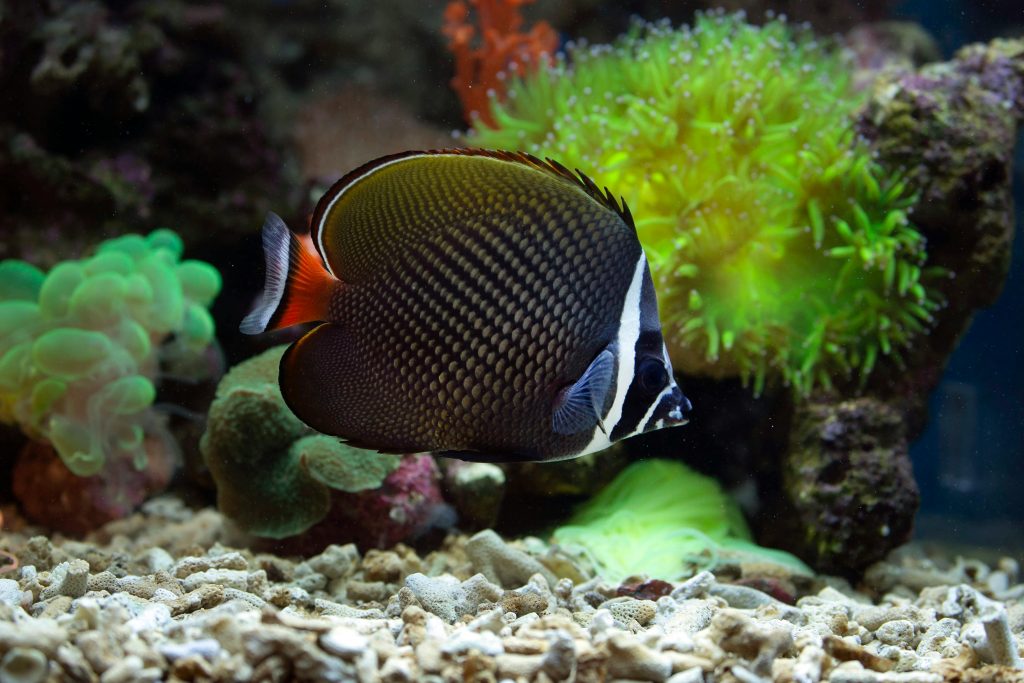
The Pakistan Butterflyfish, Chaetodon collare, is a striking saltwater species. Its dark body and copper mask stand out in any display tank. Many hobbyists call it the Redtail Butterflyfish. It is moderately hardy with proper care.
This fish suits intermediate marine keepers. It needs stable water and careful tankmate choices. It can work in some reef tanks. However, it may nip certain corals.
For general butterflyfish care, see our guide on butterflyfish care in marine aquariums. That article covers diet, acclimation, and quarantine basics.
Tank Size, Setup, and Water Conditions
Pakistan Butterflyfish need room to swim. A 75-gallon tank is the minimum. Larger tanks offer more stability and territory. Long tanks are better than tall, narrow ones.
Provide plenty of live rock for grazing and shelter. Create caves and arches for security. Leave open areas at the front for cruising. Use gentle to moderate flow. Avoid blasting them with strong powerheads.
Target these water parameters:
- Temperature: 24–27°C (75–81°F)
- Salinity: 1.023–1.026 specific gravity
- pH: 8.1–8.4
- Ammonia and nitrite: 0 ppm
- Nitrate: under 20 ppm, lower is better
Use a reliable protein skimmer. Perform regular water changes. Test weekly, especially in new systems.
Diet and Feeding Tips
Pakistan Butterflyfish are omnivores with strong grazing behavior. They pick at rocks and surfaces. In nature, they eat small invertebrates and algae. In captivity, offer a mixed diet.
Feed small portions two to three times daily. Frequent, smaller meals reduce stress and aggression. Use a variety of foods:
- Frozen mysis shrimp and enriched brine shrimp
- Finely chopped seafood mixes
- High-quality marine pellets and flakes
- Sheets of nori on a clip for grazing
New specimens may refuse dry food at first. Start with frozen foods to trigger feeding. Then slowly mix in pellets.
Tip: Soak foods in vitamins or garlic extract. This can boost appetite and immunity.
For more feeding ideas, check our article on feeding saltwater fish a varied diet.
Reef Compatibility and Tankmates
Pakistan Butterflyfish are considered semi-reef safe. They often ignore many corals. However, they may nip at fleshy LPS corals. They might also sample some soft corals and clam mantles.
If you try them in a reef, avoid prized fleshy LPS in the same tank. Start with hardy soft corals instead. Watch closely for nipping behavior. Be ready to move either the fish or the coral.
Choose peaceful to semi-aggressive tankmates. Good options include:
- Peaceful tangs and surgeonfish
- Wrasses that are not overly aggressive
- Peaceful clownfish species
- Smaller reef-safe angelfish, with caution
Avoid fin-nippers and bullies. Large aggressive triggers and damsels can stress butterflyfish. Also avoid mixing with very similar butterflyfish species in small tanks. This can cause territorial fights.
Acclimation, Health, and Long-Term Care
Pakistan Butterflyfish can be sensitive during shipping. Careful acclimation is vital. Use a slow drip acclimation method. Take at least 45–60 minutes.
Quarantine new fish for four weeks. Watch for ich, flukes, and bacterial infections. Provide hiding spots in the quarantine tank. Keep lighting moderate and stable.
Common stress signs include rapid breathing and hiding constantly. Loss of color or clamped fins also indicate problems. Check water quality first. Then review tankmates and feeding.
Once settled, these fish can live many years. They become bolder and more interactive over time. Keep a consistent routine. Feed at similar times each day. Maintain stable parameters.
For more stocking ideas, see our guide on peaceful community saltwater fish. It can help you plan compatible tankmates.
Final Thoughts
The Pakistan Butterflyfish rewards patient, attentive keepers. It offers stunning coloration and graceful movement. Provide space, stable water, and a varied diet. Respect its semi-reef-safe nature. With good planning, it can become a centerpiece fish.
Sources
- Michael, S. W. 2001. Marine Fishes: 500+ Essential-To-Know Aquarium Species. Microcosm.
- Debelius, H., & Baensch, H. A. 2006. Marine Atlas Volume 1. Mergus.
- FishBase: Species summary for Chaetodon collare (accessed 2024).
 By
By