Palytoxin is one of the most serious hazards in reef keeping. It can appear in common coral frags and rock. Simple habits can prevent exposure and keep your tank work safe.
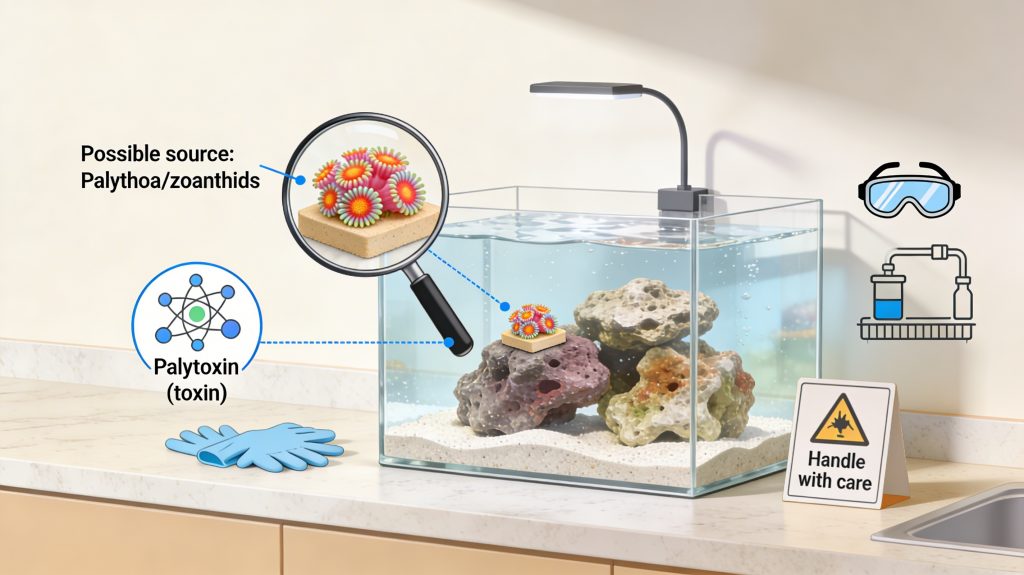
What palytoxin is and where it hides
Palytoxin is a powerful toxin found in some zoanthids and palythoas. Hobbyists often call them “zoas” and “palys.” Risk varies by species and even by colony. You cannot confirm safety by color alone.
The highest risk comes from cutting, scrubbing, or crushing polyps. Toxin can enter through cuts or splashes. Aerosols are also a concern. Hot water and steam can spread droplets fast. Never boil live rock to “clean it.”
Common scenarios include fragging on a kitchen counter. Another is scraping a mat off an overflow. People also get exposed during rock curing and pest removal. Symptoms can begin within minutes to hours.
Keep a simple rule in mind. Treat unknown zoas and palys as toxic. Plan your work before hands enter the tank. Use the same caution you use with electricity and saltwater.
- Assume risk when you cut, scrub, or blast polyps with a turkey baster.
- Avoid face-level work over the tank. Keep your head back.
- Do not boil rock or coral. Do not use hot water to “melt” tissue.
Safe handling: PPE, tools, and work setup
Use personal protective gear every time you frag zoas or palys. Wear nitrile gloves that cover the wrist. Add eye protection with side shields. If you expect splashes, use a face shield. Cover cuts with waterproof bandages first.
Work in a ventilated area with a dedicated tray. Keep pets and kids away. Use paper towels to catch drips. Keep a lidded waste cup for used blades and tissues. Disinfect tools after work with a 10% bleach solution. Rinse and air dry them.
Use the right tools to reduce crushing. A sharp scalpel makes cleaner cuts. Bone cutters can shatter plugs and spray fluid. Cut underwater in a small container when possible. This limits splatter. Then lift the frag out in the container.
Plan your tank tasks in one session. Do not bounce between tank work and food prep. Wash hands and forearms with soap for 20 seconds. Change clothes if you get splashed. Store coral tools away from kitchen items. For more basics, review our reef tank safety basics.
- Gloves: nitrile, single use, 4–6 mil thickness or higher.
- Eye protection: safety glasses every time you cut or scrape.
- Ventilation: open window or fan that moves air away from you.
Exposure response, symptoms, and prevention in daily care
Symptoms vary by route of exposure. Skin contact can cause burning, redness, and numbness. Eye exposure can cause severe pain and swelling. Inhalation can cause cough, fever, and chest tightness. Some people report muscle aches and weakness.
If exposure may have happened, act fast. Rinse skin with running water for 15 minutes. Remove contaminated clothing. For eye exposure, flush with clean water for 15 minutes. Do not rub the eye. Seek urgent medical care for eye, breathing, or systemic symptoms.
Bring clear details to the clinician. Say “possible palytoxin exposure from zoanthid or palythoa coral.” Note the time and route of exposure. Share what you were doing, like fragging or scraping. Ask a friend to drive if you feel weak. For more on quarantine habits, see our coral quarantine guide.
Prevention also fits daily maintenance. Use long tongs for rock moves. Wear gloves during algae scraping near zoa colonies. Run carbon after major coral work. Use 1 cup of activated carbon per 50 gallons as a baseline. Replace it every 2 to 4 weeks. Improve your routine with our activated carbon in reef tanks article.
- Keep a first-aid plan near the tank. Include eyewash and clean towels.
- Label containers used for coral dips. Do not reuse for food.
- Run fresh carbon after fragging sessions. Watch fish for stress signs.
Palytoxin risk is real, but it is manageable. Use PPE, avoid aerosols, and plan clean work habits. Treat every unknown zoa or paly as potentially toxic. Your reef will thrive, and you will stay safe.
Sources: CDC case reports on palytoxin-like poisoning; peer-reviewed reviews on palytoxin mechanism and zoanthid-associated exposures; aquarium industry safety advisories on zoanthid handling.
 By
By