“Reef safe” sounds simple. In practice, it is a moving target. Fish behavior shifts with tank size, feeding, and coral type.
This guide breaks down common reef safe fish myths. You will get practical rules, numbers, and warning signs. You will also learn how to test any fish safely.
Myth 1: “Reef safe” means the fish will never nip
Many “reef safe” fish still sample coral and clams. Nipping is often opportunistic. It increases with hunger, stress, or competition.
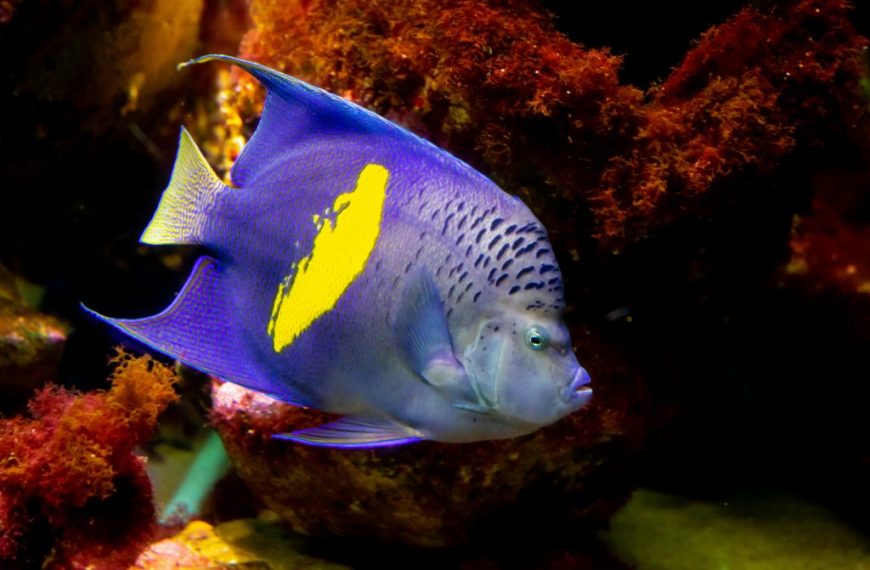
Dwarf angels are a classic example. A coral beauty may ignore SPS for months. It may then start picking at LPS flesh. The risk rises in tanks under 70 gallons.
Even “safe” grazers can cause damage. Some tangs and rabbitfish can rasp at fleshy LPS. They may also knock frags while grazing. Strong flow can hide the cause.
Use a risk label instead of a yes or no. Ask what corals you keep. A fish can be “SPS safe” but not “LPS safe.” Keep notes in your reef tank journal.
- Feed herbivores 2–3 times daily with nori and pellets.
- Watch for new bite marks on acans, euphyllia, and zoas.
- Move the fish to a holding box for 48 hours if nipping starts.
Myth 2: If it is reef safe in a store tank, it is reef safe at home
Store systems often run heavy feeding. They also have low coral density. That reduces the urge to pick. Your home reef may be the opposite.
Tank size changes outcomes. A “safe” wrasse in a 180 may behave poorly in a 40. Crowding raises stress hormones. Stress drives hunting and pecking.
Water stability matters too. Keep salinity at 1.025–1.026. Hold temperature at 77–79°F. Aim for nitrate 5–15 ppm and phosphate 0.03–0.10 ppm. Hungry corals and fish both act weird in ultra-low nutrients.
Quarantine also changes the story. A fish that is thin may learn to hunt. Build weight first. Use a 20–40 gallon QT for 14–30 days. Follow the steps in our quarantine for reef fish guide.
- Test feeding response in QT with pellets, frozen, and nori.
- Introduce the fish after lights out to reduce aggression.
- Use an acclimation box for 3–7 days in the display.
Myth 3: “Reef safe with caution” is just a warning label
“With caution” often means a known failure mode. It may be coral nipping. It may be shrimp predation. It may be clam mantle picking.
Define your inverts before you buy. Cleaner shrimp, peppermint shrimp, and small crabs are common targets. Many hawkfish and larger wrasses will eat them. A 2-inch shrimp can vanish overnight.
Plan a controlled test. Start with hardy frags on a rack. Watch the fish for 20 minutes after each feeding. Use a phone tripod for a time-lapse. You will catch subtle pecks you miss live.
If trouble starts, act fast. Increase feeding for a week. Add more grazing stations. If nipping continues, remove the fish. Use a fish trap and patience. Review our how to catch fish in a reef tank tips.
- Keep a backup plan tank or a friend ready for rehoming.
- Avoid adding “caution” fish right after a major aquascape change.
- Do not starve fish to “make them eat algae.” It backfires.
Reef safe fish myths persist because every tank is different. Focus on risk, not labels. Feed well, keep parameters stable, and test new fish in a controlled way.
When you plan for the worst, you enjoy the best. A thoughtful process keeps corals open and fish well behaved. Your reef will look better for years.
Sources: Borneman, Eric H. “Aquarium Corals.” 2001; Fenner, Robert M. “The Conscientious Marine Aquarist.” 2001; Delbeek, J. Charles & Sprung, Julian. “The Reef Aquarium” Vol. 1–3. 1994–2005.
 By
By